
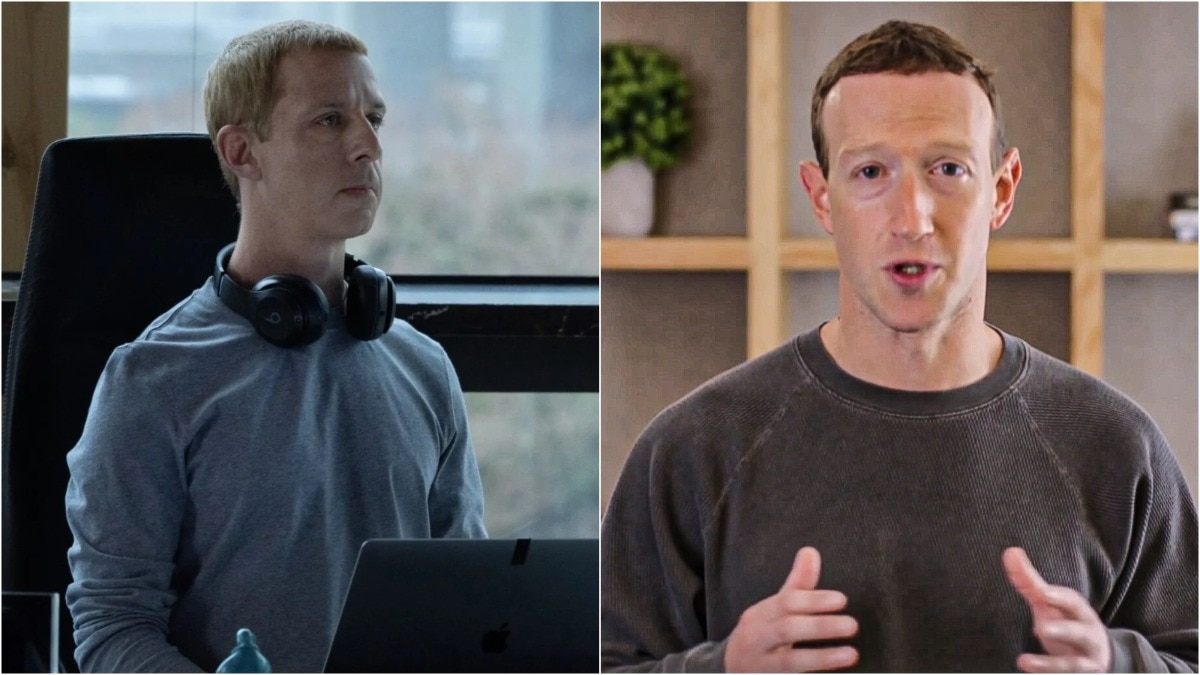
Director Aaron Sorkin is making The Social Reckoning, a film about Mark Zuckerberg and the Facebook Files. The story focuses on misinformation and the 2020 US election. Sorkin said, "This is a whistleblower story. It's a newspaper story." Jeremy Strong plays Zuckerberg in this look at social media’s dark side.
Mark Zuckerberg is back on the big screen, but the Zuckerberg of The Social Reckoning is a far cry from the awkward Harvard student Jesse Eisenberg played 16 years ago. In an interview, director Aaron Sorkin revealed that his new film turns its gaze on the darker side of Facebook, with Zuckerberg's decisions placed at the centre of a story about misinformation, political division and the damage social media can do to democracy.
The plot draws heavily from the real-life Facebook Files, the 2021 revelations that turned whistleblower Frances Haugen into one of the company's biggest critics.
Jeremy Strong plays Zuckerberg, while Mikey Madison plays Haugen and Jeremy Allen White portrays Wall Street Journal reporter Jeff Horwitz. Haugen and Horwitz were key figures behind the revelations that sparked a major crisis for Facebook. But Sorkin, who wrote the screenplay for 2010's The Social Network, isn't interested in getting inside Zuckerberg's head this time.
"This is a whistleblower story. It's a newspaper story," he told AFP. In The Social Network, Sorkin said he tried to understand Zuckerberg's motivations. The Social Reckoning, he explained, takes a different route.
"I put him in a single situation and have him make a single argument so that by the end of the film he is confronted with the consequences of what he's done," Sorkin explained.
That situation centres on Facebook's decision not to fact-check political advertising ahead of the 2020 US election. The film then connects that choice to the fallout that followed, including Donald Trump's refusal to accept the election result and the January 6 Capitol attack.
From outsider to Silicon Valley overlord
Sorkin's earlier Zuckerberg was a young man who felt shut out of the social hierarchy at Harvard. His answer was to build his own world. "I suggested back in 2010 that he was a guy uncomfortable with the social structure of college. And so he created his own cool kids table, which he's now the mayor of," Sorkin said.
The new film isn't as interested in what made Zuckerberg that person. As Meta's boss, with Instagram, WhatsApp and the metaverse under his umbrella, his motivations are harder to pin down anyway.
The filmmaker continued, "It can't possibly be money. There's nothing you can buy for $120 billion that you couldn't buy for $119 billion."
Jeremy Strong, meanwhile, has said he approached the role seriously and with respect, even emailing Zuckerberg to tell him so. In the film, his Zuckerberg is also aware of how the world sees him. "I know what people think of me," he says.
Why Silicon Valley keeps ending up on screen
The Social Reckoning arrives as tech billionaires continue to become irresistible material for filmmakers. From Elon Musk-inspired characters to documentaries and dramas about Silicon Valley power, the industry has increasingly turned its camera towards the people shaping the digital world.
Even Sorkin's film faced extra scrutiny. Sony brought in an outside law firm to review the script, given the legal muscle surrounding Zuckerberg and Meta. Sorkin said there were only a few notes from the lawyers and that they didn't affect the film.
Sixteen years after The Social Network made Zuckerberg a pop-culture character, The Social Reckoning is asking a different question: what happens when the person who built the social network has to face what it helped create?
The film releases in India and in the US on October 9, with the rest of its international rollout beginning a couple of days earlier, from October 7-8.