
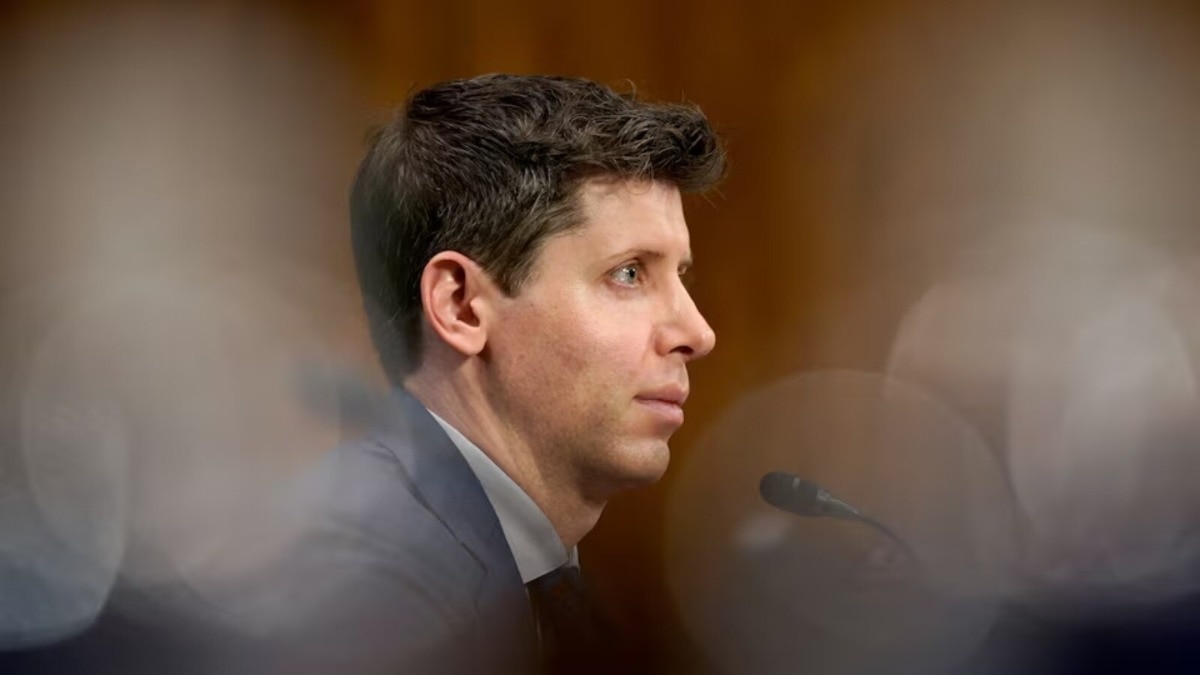
OpenAI CEO Sam Altman said the world should accept some bad things for the benefits of AI. He told Politico, “We believe that the world should accept some bad things happening for the benefits of this technology.” Altman wants labs to keep improving tech rather than fearing potential risks.
AI may have risks, but that might be okay. At least that is what some in Silicon Valley seem to believe. OpenAI CEO Sam Altman has now said that we should accept some bad things that may happen because of AI, if that means that we get the benefits of the technology.
Altman was asked about his views around AI regulation in comparison to Anthropic’s Dario Amodei. The two AI CEOs have made comments on the need for such regulation in recent weeks, but Sam Altman says they have differences. “I think there’s a lot of daylight,” he told Politico.
The OpenAI chief made it clear – in his view – the world should be able to accept some risks for the benefits AI brings to the table. “We (OpenAI) believe that the world should accept some bad things happening for the benefits of this technology and people having the agency,” Altman explained.
This is not the first time Altman and Amodei have had differences. During the India AI Impact Summit in February this year, the two went viral after refusing to hold hands on stage.
Sam Altman says he doesn’t want one lab to control AI
At a time when Anthropic has pushed for stricter regulations, something that Altman has publicly backed, the OpenAI chief pointed out a difference between the two companies. According to Sam Altman, giving one AI lab complete control of the technology was a “a completely unacceptable trade-off” that was counter to the “lighter-touch regulatory stance” backed by OpenAI.
Altman insisted that he would rather have AI labs work on the tech to make more improvements than to sit back due to safety fears. “I wouldn’t take a trade of saying, ‘We’ll make sure there’s no major hacks, there’s no misuse of this technology, there’s zero scams, there’s zero all the other bad things that will happen,’” he explained. “Because I think people will do tremendously — orders of magnitude more — good stuff than bad stuff.”
Sam Altman’s comments come just a few weeks after Dario Amodei had publicly claimed that the AI industry had been lying about risks. “I won't lie to you, there are real dangers. And I think for too long the industry lied to people about the fact that this technology had risk,” Amodei told CBS last month. “The biggest risk could be the end of humanity.”
Previously, AI researchers like Jacob Coxon and Evan Hubinger have claimed that AI, if left unregulated, may kill all humans within the next decade. Though Nvidia CEO Jensen Huang has dismissed such claims. Huang, in particular, has also mentioned that while AI may make children forget basic math skills, it could open the door for new skills to have.
Last week, US President Donald Trump stepped in to address AI safety concerns following such comments from AI leaders. At the White House, Trump and several tech leaders, including Dario Amodei and Jensen Huang, signed the AI accords, a voluntary agreement that focusses on safe AI development. Trump also signed an executive order that directs federal agencies to use the term “super intelligence,” or SI, instead of artificial intelligence.