
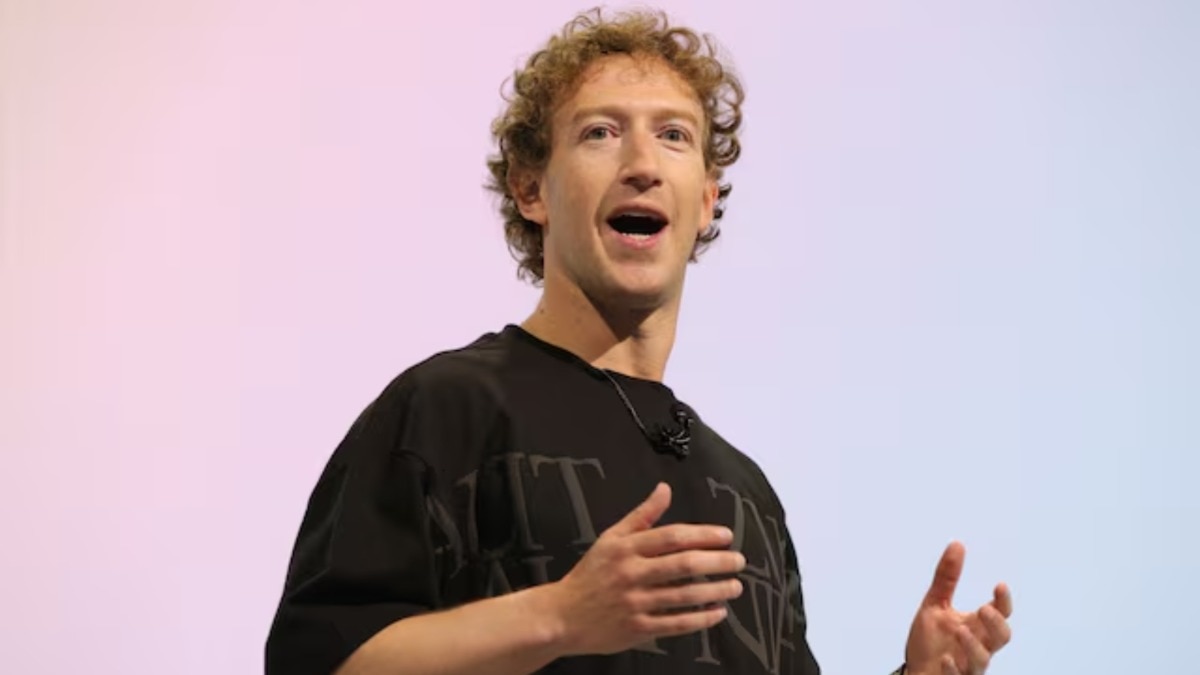
Meta launched Muse Wonder, a new family of advanced AI models. Mark Zuckerberg said, “Muse Wonder is a much larger and more advanced class of models that brings us to the frontier.” The company invested billions to compete with rivals. These models now power the Muse personal AI assistant app.
Mark Zuckerberg is back, and so is Meta. After months of trailing OpenAI and Anthropic in the AI race, the Meta chief says that his company now stands at the frontier of AI following the release of the Muse Wonder model.
On X, Zuckerberg announced Muse Wonder, a new family of larger models compared to the previous Muse Spark models. “Muse Spark was our first family of models, and now Muse Wonder is a much larger and more advanced class of models that brings us to the frontier,” he wrote.
Mark Zuckerberg told Financial Times that Muse Wonder was “going to allow much more sophisticated behaviours that are at the frontier of what is being done in the AI field.” Meta said the model, internally dubbed Watermelon, performs better than comparable models such as Anthropic’s Opus 5.5 and OpenAI’s GPT-6 Astra on some tasks, according to company benchmarks and data it cited from Artificial Analysis.
Meta has invested billions of dollars into AI over the past year as it focused on closing the gap to rivals. “Getting to this point both required a large amount of compute and investment, and a lot of very rigorous scientific work by the group working on it over an extended period of time,” Zuckerberg said.
In June last year, Meta made a $14 billion investment in Scale AI and brought in its co-founder Alexandr Wang to lead its AI push. Wang, who now leads Meta’s Superintelligence Labs, called the Muse Wonder’s launch “the big moment.” He added “We really think they are competitive with the best models out there, and particularly state of the art on personal and professional agentic work.”
Muse Wonder to power Muse AI assistant
Meta has launched two models – the standard Muse Wonder and the more powerful Muse Wonder Full. As per the company, Muse Wonder will power the paid version of its Muse personal AI assistant, which the company launched last month.
Muse uses autonomous bots for tasks such as ordering groceries and booking travel, and Meta said the app became and remains the most downloaded on both Apple and Android app stores in the US.
Unlike OpenAI or Anthropic, which have focused largely on coding agents, Alexandr Wang said Meta tried to stand apart by building big models for broad consumer use. “I think the rest of the ecosystem has been really focused on coding agents,” he said. “We do genuinely think that we’ve taken a differentiated focus to make the personal-agent use case really sing.”
He said Muse Wonder had “active memory” capabilities that allow it to remember relevant information “across days, weeks, months” and keep working through dead ends by trying new tactics.
Meta said the model is available through the Meta Model API and Muse Code, with pricing ranging from $0.20 (roughly Rs 19) per million tokens for basic use to $200 (roughly Rs 19,000) a month for Muse Wonder Full. The launch, however, was hit by a bug affecting how usage counted against limits for Meta’s Code subscription. Wang later wrote on X, “There’s a bunch of bugs right now that we’re looking into.”
Muse Wonder also marks a shift away from Meta’s previous emphasis on open-source AI. The model will be “closed,” with its best versions sold directly to businesses. Zuckerberg also signalled more investment, saying Meta was “already working on the next step up” and that model progress would “probably feel like it’ll go quite a bit faster from here.
At the same time, Meta has cut costs elsewhere. In May, the company laid off 10 per cent of its workforce, or 8,000 jobs. Meta also had plans for employee-tracking software to capture mouse movements and keystrokes to train AI models. Though it later pulled it back after backlash from employees. The company has also faced legal scrutiny. Meta agreed to pay $18 billion in August to settle a legal battle with US states over alleged failures on child protection and social media addiction.