
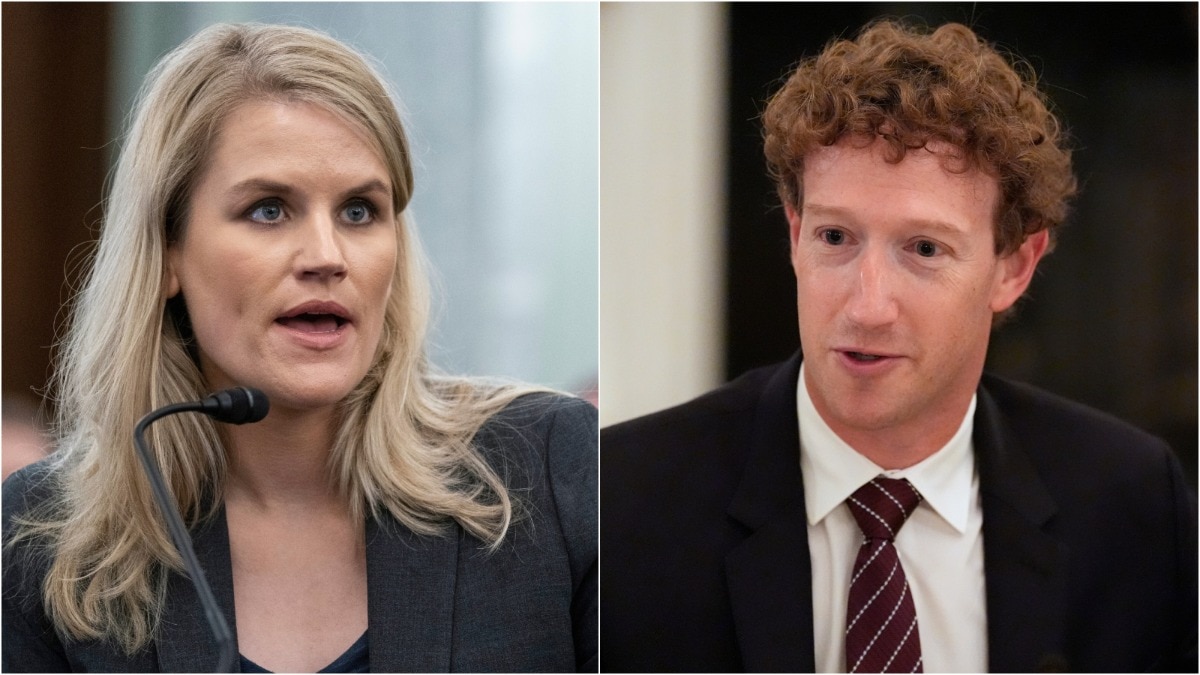
In 2021, Frances Haugen left Facebook with internal research that exposed the company’s dark side. These documents, known as the Facebook Files, showed how the platform ignored harm to protect growth. Now, director Aaron Sorkin uses this real story for his new film, The Social Reckoning, hitting screens this weekend.
Some scandals arrive like a sudden explosion. Others begin with someone quietly deciding they can no longer look away. In 2021, Frances Haugen, a product manager at Mark Zuckerberg's office, walked out of Facebook carrying thousands of pages of the company's internal research. She wasn't carrying a dramatic secret in the conventional sense. What she had was harder to dismiss: Facebook's own words, its own studies, and its own warnings about what its platforms were doing to the people who used them.
A lot of it was already portrayed in the 2010 David Fincher film The Social Network. 16 years later, the story moves on in a new film - Aaron Sorkin's The Social Reckoning, slated to hit the screens this weekend. Before the film picks up the story, though, it's worth going back to the moment when Facebook's own secrets began to surface - what is today known as the infamous the 2021 Facebook Files.
For years, the company had been studying the effects of its products on everything from teenage mental health to misinformation and political division. Haugen's decision to take those findings public turned an internal debate into a global reckoning - and raised a question that still hangs over social media: what happens when a company knows its products can cause harm, but changing them could come at the cost of growth?
The documents would become known as the Facebook Files. They would take Haugen from an anonymous former employee to the face of a global debate about social media, corporate responsibility and the cost of keeping billions of people online.
They would also become the real-life foundation for director Aaron Sorkin's upcoming film The Social Reckoning.
The woman who decided to speak
Haugen wasn't an outsider looking in. She knew how technology companies worked because she had spent years inside them.
A data scientist and product manager, she had worked at Google, Yelp and Pinterest before joining Facebook in 2019. At Facebook, she became part of the Civic Integrity team, working on some of the internet's most difficult problems: elections, misinformation and the ways online platforms could distort public conversation.
She had joined believing in the promise of technology. Over time, that belief began to crack. Haugen became increasingly concerned that Facebook understood the damage its platforms could cause but was often unwilling to make changes that might affect engagement or growth.
Then came the 2020 US election, followed by the attack on the US Capitol on January 6, 2021. Facebook had introduced stronger safeguards around the election, but many of those measures were later scaled back. Haugen would argue that the company had begun dismantling protections just when the consequences of misinformation were becoming impossible to ignore.
She resigned in May 2021. Before she left, she copied the documents.
Frances Haugen and Mark Zuckerberg may never have been personally close, but The Social Reckoning puts them in the same dramatic orbit.
Inside Facebook's own research
What made the leak so powerful was not simply what Haugen believed. It was what Facebook's own researchers appeared to know.
* Among the most widely reported findings were internal studies into Instagram's effect on teenagers. Researchers found that the platform could worsen body-image issues among young users. One study found that 32 per cent of teenage girls surveyed said Instagram made them feel worse about their bodies.
* Other documents explored links between social media use and anxiety, depression and suicidal thoughts.
* There was another problem hiding in Facebook's algorithms. A 2018 change, intended to encourage "meaningful" interaction, could also push users towards angry and divisive material. The reason was painfully simple: outrage travelled well. People reacted to it. They shared it. They stayed.
* The documents also raised questions about XCheck, a system that reportedly gave some high-profile users a different set of rules from ordinary accounts.
* There were concerns about Facebook's ability to police hate speech and violence, particularly in languages other than English.
* And then there was the Civic Integrity team itself. Haugen believed its dissolution showed how quickly safety could lose out when it came up against the business demands of a giant technology company.
When the whistleblower stepped into the light
For months, Frances Haugen tried to stay anonymous. She shared the material with Wall Street Journal reporter Jeff Horwitz, whose reporting became the Facebook Files, published from September 2021.
Then, on October 3, she revealed herself on 60 Minutes. Two days later, she sat before the US Senate.
Her message was stark: Facebook, she said, knew its products could harm children, deepen division and weaken democracy, yet the company had repeatedly failed to act strongly enough.
Facebook pushed back. The company, later renamed Meta, argued that the documents had been selectively presented and that Haugen was not qualified to draw some of the conclusions being attributed to her. Mark Zuckerberg rejected the suggestion that the company deliberately put profits before safety and pointed to Facebook's continuing investment in integrity and moderation.
But the argument had already escaped the company's walls.
The questions that refused to disappear
The revelations intensified scrutiny in the US and added momentum to new technology regulation in Europe and Britain. They also helped fuel lawsuits and investigations into the effects of social media on young people.
Yet the most important legacy of the Facebook Files may be the question they left behind: How much should a technology company be allowed to know about the harm its products cause before it becomes responsible for doing something about it?
That question sits at the heart of The Social Reckoning. Sorkin's film follows Haugen, played by Mikey Madison, and Horwitz, played by Jeremy Allen White, as they bring the documents into the light, while Jeremy Strong plays Zuckerberg.
The real story, however, needs little embellishment. A woman who had worked inside Facebook decided that the company's own research was too important to remain hidden. A journalist followed the evidence. And for a brief moment, one of the world's most powerful technology companies had to answer questions using its own words.
Five years later, Facebook is now part of Meta, the technology has moved on, and the internet has become even harder to escape. The argument Haugen started, though, is still with us: when keeping people engaged becomes the business, who is responsible for what that engagement does to them?
The Social Reckoning is set to release worldwide on October 9.