
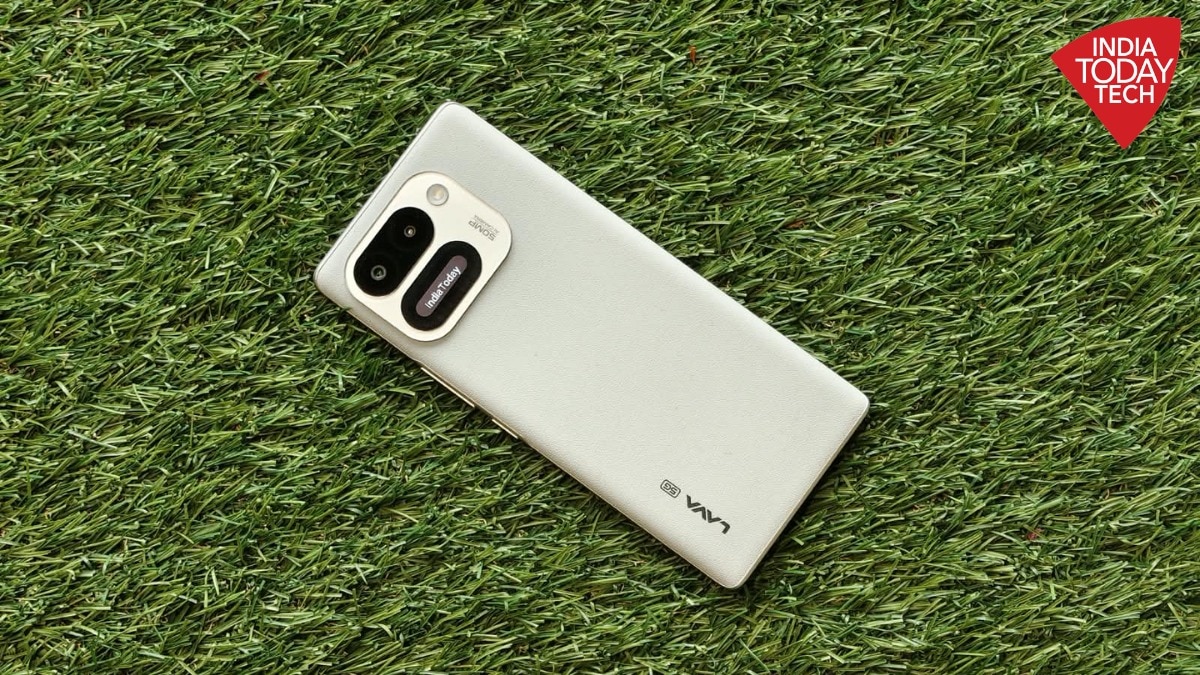
Lava launched the Virat Curve smartphone in India at a price of Rs 23,999. The device features a curved display and a vegan leather back finish in select shades. Weighing 185 grams, the phone feels slim in the hand. It aims to offer a premium experience under the Rs 25,000 segment.
The smartphone market today is not what it used to be just a few months ago. If you want to buy a phone under Rs 25,000, you may struggle to find a decent pick. Then comes Lava - India's homegrown brand - with the Virat Curve. A phone that is priced at Rs 23,999 and feels like a class apart from the competition. If you remember, we saw Lava shake up the market with the Agni 4 last year, and now the Virat Curve is giving us a feeling of deja vu.
The Virat Curve is Lava's latest Virat series phone which includes the V1, V1 5G, and the V1 Pro 5G. But unlike the V1 phones that target the more affordable end of the market, the Virat Curve is going for something different - it promises almost everything you may want including a striking design and even a second screen. But promises can be hard to keep. Does the Lava Virat Curve deliver? India Today Tech spent some time with the Virat Curve and here is what we think about it.
Lava Virat Curve design
The moment you look at the Virat Curve, you will get drawn to the device. When most phones now come with rectangular frames and flat panels, Lava has brought back a curved display. We will get into the display later, but in terms of design, this really makes the Virat Curve stand out.
Similar to the front, the Lava Virat Curve has a curved back panel. Despite having a thickness of 8.5mm, the way the two sides curve inwards, the Virat Curve feels much slimmer in the hand.
For someone who has been using large phones in the past few weeks, holding the Virat Curve feels like a night-and-day difference, thanks to the 185 grams weight. The cherry on top here is the vegan leather finish on the back. This makes you feel like you are holding a phone that belongs to a segment above. Though this finish comes in the Makrana Ivory (the one you see here) and Heritage Indigo shades only. The Ellora Slate gets a polycarbonate backplate. You also get a colour-matched case which at least with the Ivory option comes with a similar vegan leather-like material.
And the story doesn't end here. The camera module gets two pill-shaped elements that may remind you of the Google Pixel 11 Pro Fold. The top half houses the camera setup, while the second one comes with a secondary screen. This screen can show the time, the battery level, or it can light up for calls and notifications. You can even write text or add emojis here.
Overall, the design is one that will grab attention. During my time with the device, I had multiple people ask me about this phone.
On a sidenote, you also get an IP64 rating for the Lava Virat Curve. So the phone can put up with some splashes of water here or there.
Lava Virat Curve display
Coming back to the screen. The Lava Virat Curve uses a 6.67-inch FHD Plus 3D curved AMOLED display. Thanks to the curved design, the device looks quite premium from the front, and the bezels on the top and bottom aren't too thick either. The screen gets a 120Hz refresh rate and a peak brightness of 1,100 nits.
In day-to-day use, the Virat Curve gets 800 nits in the high brightness mode, or HBM. During my time with the device, I never had any real issues while using the phone outdoors, even under the sun. Of course, since it is a curved panel, you may need some time to get used to it if you have not used a phone with such a display before.
For streaming, the Virat Curve pairs the display with stereo speakers. The display shows decent colours, and the sound quality is quite good for the price too. You do get HDR support on YouTube, but not on Netflix. (Full disclosure: the unit we received had some display issues in low light. Lava has confirmed that it will push a software update that fixes this problem).
One thing you should take note of is that there are quite a few new phones at this price that are coming with AMOLED panels. While the Poco M8 Power gets an AMOLED, devices like the OnePlus N6 come with 720p LCD displays.
Lava Virat Curve performance
Under the hood, the Lava Virat Curve packs the MediaTek Dimensity 7100 chipset - a 6nm processor - the same one you'd find on the Infinix Hot 70 Pro. This is paired with LPDDR5 RAM and UFS 2.2 storage. In today's market situation where components prices are increasing almost everyday, the setup on the Virat Curve seems decent on paper.
In the real world, the phone can handle your usual tasks just fine. Be it scrolling Reels or X, or texting on WhatsApp, the Virat Curve manages to handle such tasks seamlessly. You can also do some multitasking. In terms of gaming, you can play Call of Duty Mobile at up to Max frame rate. The experience feels decent, and the device doesn't get too warm either.
Of course, do not expect the Lava Virat Curve to be a monster performer, but that is okay considering the ongoing RAM crisis. Still, the Virat Curve delivers more power than some other phones - such as the Redmi Note 17 that uses the Qualcomm Snapdragon 4 Gen 4, or even the costlier Realme 16T that uses the MediaTek Dimensity 6300 SoC.
In terms of benchmarks, the Lava Virat Curve scores about 870,000 on AnTuTu 12. On Geekbench 7, the device got 871 points in single core and 3,050 points in multi-core.
Lava Virat Curve battery life
Performance is fine, but a device also needs to last long enough for you to actually make use of it. The Lava Virat Curve comes with a 6,000mAh battery. Given the slim design of the device, the battery size feels adequate.
In daily use, the Virat Curve does not give you stellar battery life, like the Poco M8 Power for instance. But it gives you plenty of juice. On most occasions, I usually had about 20 per cent left by the day's end with about 6 to 7 hours of screen-on time - including a lot of social media, texting, and some gaming. For a light user, the Lava Virat Curve should last about a day and a half, if not two whole days.
In terms of charging, the Lava Virat Curve supports 45W wired fast charging. But you only get a 33W charger in the box. It takes just under two hours to charge the device from 0 to 100, which is on the slower side.
Lava Virat Curve cameras
The Virat Curve comes with a 50-megapixel Sony IMX752 main sensor with a 13-megapixel front camera.
For photos, Lava has made some improvements on how they are processed, compared to the Lava Agni 4 we reviewed last year. In good lighting, the shots look decent. For the price, the phone manages the colours fairly well but there is some oversharpness. Coming to portraits, edge detection is fine, but you do see some smoothening of the skin. Though we found that portrait shots were quite usable for the most part. However, under lowlight, the Virat Curve does start to struggle, and you do lose out on details.
It is a similar story for the selfie camera. When done right, the shots come out decent, and edge detection in portraits is not bad either. However, lighting does play a role here.
Click on any image below to see the entire gallery.
In terms of videos, the main sensor gets Electronic Image Stabilisation (EIS) -- no OIS here. The footage is okay for the price and you can use it for occasional snippets. The phone can record up to 2K.
But one thing you may notice is that the camera app does jitter sometimes if you are taking multiple shots. Lava has also brought in its own gallery app, called Frames. Frames comes with a sleek UI and looks quite modern. One thing you will notice is that the app also tells you about the image sizes in each folder -- such as camera or WhatsApp photos.
Lava Virat Curve user experience
Lava has built a reputation for clean software and the case is no different with the Virat Curve. The device ships with Android 16 out of the box, with the company promising 2 years of OS updates and 3 years of security patches. Though rivals today usually offer 4 years of OS updates.
Coming to the software itself. In its current state -- what you will get when you buy the phone -- you get a stock Android experience with no third-party apps. There are some customisation options here and there. But the bigger story is Neo UI. Neo UI is set to bring in a complete UI overhaul with more customisation effects and transparent elements. However, it will only ship to phones by Q4 2026.
This doesn't mean that the Virat Curve doesn't get its own features. Like the Agni 4, you get Vayu AI -- AI assistant with cute pet avatars -- on the homescreen. While Vayu AI is not as advanced as frontier AI chatbots like Claude, it is enough for your usual queries. And it is fun to use too. You also get AI assistants like math and english tutors in the Vayu AI app.
Lava Virat Curve verdict
Now that we have covered everything about the Virat Curve, where does the device stand? At a time when phones around Rs 25,000 are getting difficult to recommend, the Lava Virat Curve is bringing something special -- excitement. The device has an appealing design, be it the curved display, the vegan leather back or even the mini-screen.
On top of that you get an AMOLED display too. The performance is okay and the battery life is not bad either. But it doesn't make the Virat Curve a perfect phone. The cameras, while they do the job, are not the best, and there is some work Lava needs to do when it comes to refining the product overall.
In its current state, the Lava Virat Curve can be an option for those wanting a phone that makes them stand out. But if Lava can manage to fix some niggles, it may just be one of the better phones that we have seen all year long.