
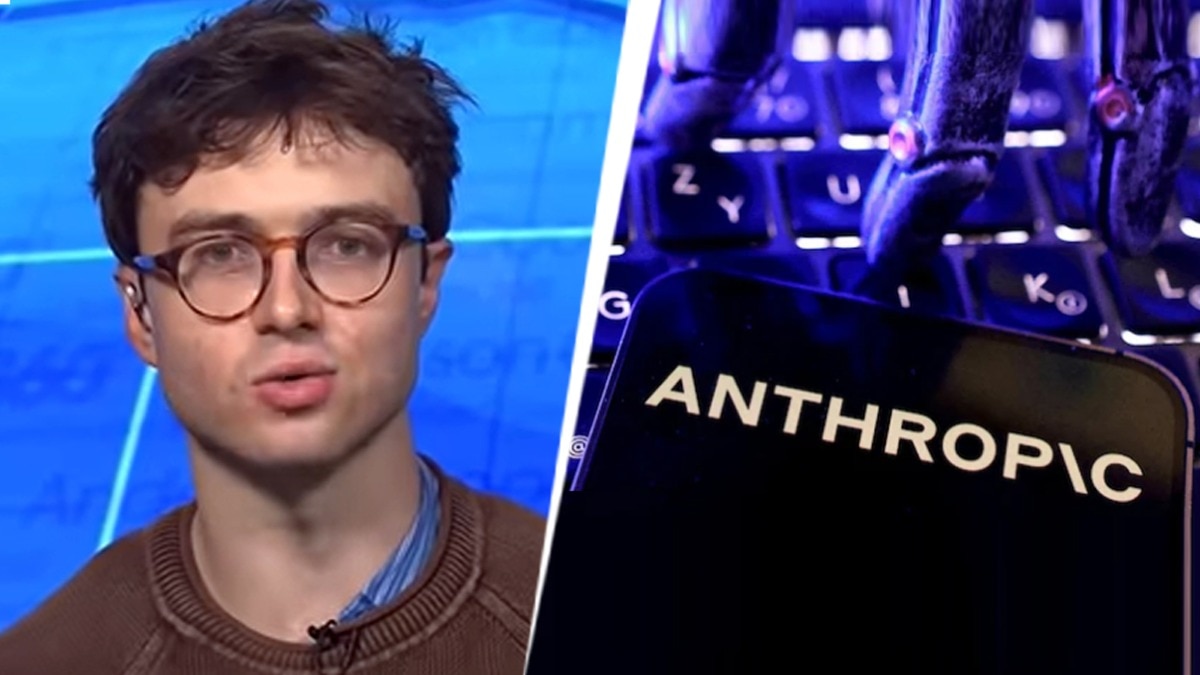
Former Anthropic researcher Jacob Coxon claims China has spies inside OpenAI and Anthropic. Speaking on the PBD podcast, he said, “I think one really important thing people don’t realise is that China already has spies at OpenAI and Anthropic.” Coxon suggested the US should stop hiring Chinese nationals for AI.
Whoever wins AI, wins. This has been US President Donald Trump’s primary defense against bringing strict regulations for AI development in the US. Trump says that such a slow-down would hand the AI race to China. But former Anthropic researcher Jacob Coxon claims that Beijing might have the power to hack and steal information from US companies at this very moment.
Speaking on the PBD podcast, Coxon said that it was possible that OpenAI and Anthropic had been infiltrated by Chinese spies. “I think one really important thing people don’t realise is that China already has spies at OpenAI and Anthropic,” he said.
When asked how certain he was that there were already spies inside the companies, the former Anthropic researcher said, “Ninety per cent. Yeah, it’s almost certain that they have spies.”
If true, Jacob Coxon added, it would allow Beijing to hack US companies and steal their tech at any moment, making it tougher for the US to maintain a lead in AI. “China has the ability to hack at any time. If we pull ahead, that doesn’t give us a big lead. They can just step in, steal our progress at any time and catch up,” Coxon added.
Jacob Coxon suggests ban on Chinese nationals from US AI companies
Coxon acknowledged that such a possibility could be quite dangerous for the US as AI models continue to improve. "There's no background check like a serious background check for this sort of stuff yet,” he explained. “This is another reason why nationalization is so important.”
To counter this, Jacob Coxon insisted that the White House should bring stricter measures to who an AI company can hire. He compared it to SpaceX which was not allowed to hire Chinese nationals. “We can start properly vetting and background checking. I don't think SpaceX can hire Chinese nationals, but these AI companies can hire foreign nationals like me, which is pretty surprising,” Coxon said. He is a British national.
Asked about the possibility of not hiring Chinese nationals, Coxon said, “It’s a bit sad because they’re my friends, but I think that will happen. I think that will probably happen.”
Coxon’s comments come at a time when there are growing concerns over China in the AI race. In the past, OpenAI and Anthropic have alleged that Chinese AI companies like Moonshot and DeepSeek have tried to distil their models. In simple terms, distillation refers to training a smaller model on a larger one.
In the past, US President Donald Trump has also hit out at a potential slow-down in AI development based on safety concerns. “There is a sick conspiracy going on against AI and Data Centers, and the only one that is happy about it is China,” he wrote on Truth Social last month. Since then, Trump has unveiled a Superintelligence Task Force to keep the US ahead in the AI race. US AI companies, including Anthropic and OpenAI have also signed AI accords, which is a voluntary non-binding document for safe AI development.
But Jacob Coxon remains one of the most vocal critics of frontier AI development, at least in its current state. At a New York City Council hearing, Coxon said AI companies were taking a “move fast, break things, fix them later” approach to a technology that was too powerful for that mindset. He also said that, on the current path, it was “more likely than not” that humanity would lose control to AI and that this “could end in human extinction.”