
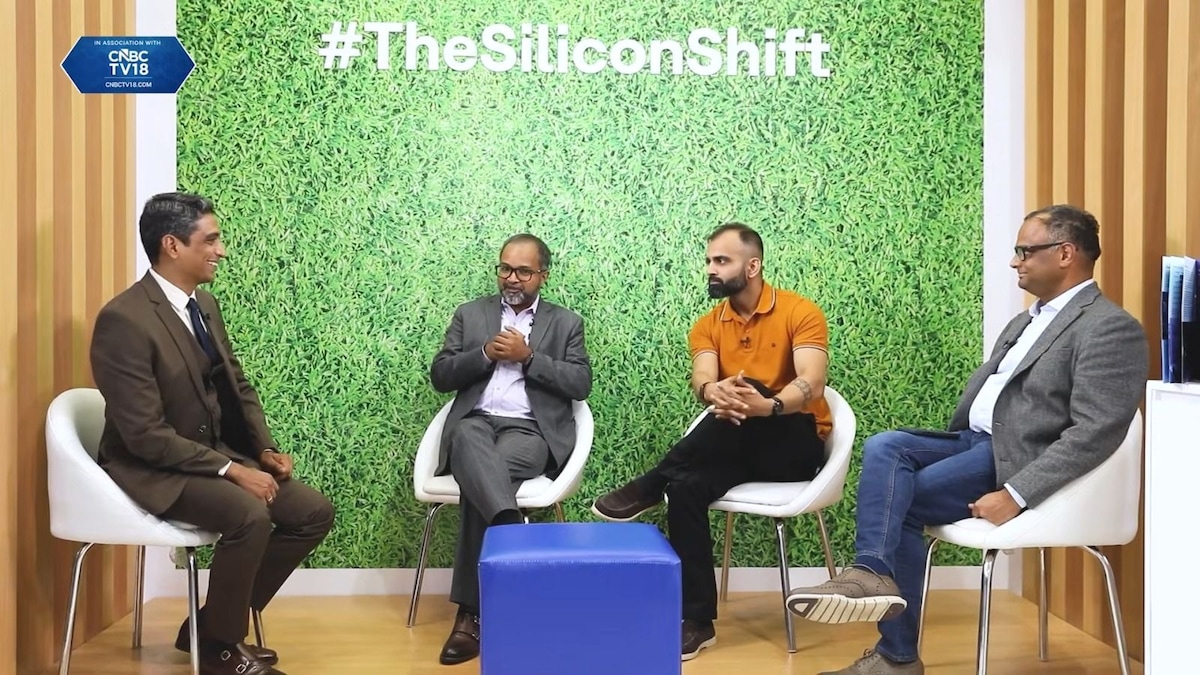
HCLTech hosted Architects of Tomorrow on the sidelines of SEMICON India 2026 to discuss the nation's semiconductor growth. Experts said India must move beyond design into manufacturing and systems. Ameer Saithu noted, "It is a combination of a few industry trends that have all come together, which is bringing us."
HCLTech presents Architects of Tomorrow in association with cnbctv18.com brings together industry, academia and talent leaders to examine the skills and capabilities India will need as its semiconductor ecosystem expands.
Building beyond India's design advantage
India's semiconductor ambitions are entering a phase where talent is becoming as important as capital and infrastructure. With demand being reshaped by AI, supply-chain considerations and the growing importance of custom silicon, the opportunity is expanding beyond chip design into manufacturing, systems, product development and the wider ecosystem that supports them.
At HCLTech presents Architects of Tomorrow in association with cnbctv18.com, recorded on the sidelines of SEMICON India 2026, Ameer Saithu, EVP and Head, Global Semiconductor Business, HCLTech; Sashi Kumar, Managing Director, Indeed India; and Professor Awanish Pandey, Assistant Professor, Optics and Photonic Center, IIT Delhi, examined what it will take to build the talent and capabilities required for the next phase of India's semiconductor journey.
The discussion, moderated by Krishna Kumar, brought together perspectives from industry and academia, with the conversation spanning semiconductor demand, skills, education, AI, manufacturing and the challenge of building a workforce that can participate across the value chain.
For Ameer Saithu, several developments are converging to create the current semiconductor opportunity, from rising demand for high-performance computing to changes in how countries and companies approach supply chains.
Ameer said several developments were converging to create the current semiconductor opportunity, noting, "It is a combination of a few industry trends that have all come together, which is bringing us this perfect storm, a very good perfect storm for us."
He pointed to AI and the growing use of data as drivers of high-performance computing, while geopolitical considerations are prompting companies to seek greater control over the delivery of chips. At the same time, he said companies are recognising that differentiation can begin at the chip level, leading to greater interest in custom silicon.
The next opportunity lies beyond design
India enters this phase with an established strength in semiconductor design. The discussion, however, highlighted the capabilities required to translate that engineering base into products and businesses, particularly as global companies increasingly look to India for more complex work.
Ameer said the next layer of capability would be required as India moves towards creating products and businesses, adding, "There is also another aspect of it, especially when you are talking about getting it into a product kind of thing, which is systems-level thinking and product management kind of thinking."
Ameer said India and companies based in India had historically had limited exposure to this kind of work, leaving gaps in the ecosystem. He sees that changing as global companies show greater interest in getting such work done in India.
The country's understanding of end-user industries could also become an advantage as semiconductors become more closely tied to specific applications. Saithu pointed to India's experience across automotive, medical devices and telecom, while also highlighting partnerships that are bringing manufacturing capabilities into the country.
Ameer also pointed to the role of partnerships in expanding the opportunity, saying, "We are seeing a lot of partnerships being implemented, which is helping Indian talent scale up in multiple parts of the silicon value chain."
Sashi sees the foundations for that expansion coming together through engineering talent, institutions, investment and improving infrastructure. The challenge, he said, is to take these capabilities to the scale required by the opportunity. He said the foundations for that expansion were coming together, adding, "The ingredients are available. It's just about scale now."
A workforce wider than chip designers
For Awanish, the talent challenge starts with recognising the different components required to build a semiconductor ecosystem. Capital can support the build-out, but it needs to be accompanied by both an ecosystem and people with the relevant skills.
Awanish said the semiconductor build-out would depend on more than capital alone, explaining, "So, one is the ecosystem, second is the money, and third is the talent, right? So, money you can pour as much as you want. If the ecosystem and the talent, if they are not there, then those things are not going to turn out as well as you might assume they could be, right?"
He also pointed to a gap between design-oriented opportunities and the practical training required for manufacturing and other semiconductor functions. In his view, a broader talent strategy will have to create pathways for people who may not enter the industry through highly specialised roles.
Awanish argued that the workforce would need to extend well beyond highly specialised chip designers. "But actually, the semiconductor industry is way, way bigger than that. So we need a lot of manpower who can also do, so to speak, the nuts-and-bolts job of the semiconductor industry," he said.
That has implications for the institutions feeding the industry. While leading institutes have been building semiconductor courses and facilities, Awanish argued that the ecosystem will need many more engineering institutes and stronger attention to polytechnics, where students can acquire practical skills in areas such as PCB work and soldering.
AI is reshaping both demand and engineering work
AI is adding another dimension to the semiconductor opportunity. It is increasing the demand for computing infrastructure while also changing the tools available to engineers working on chips.
Ameer said AI was influencing the semiconductor industry at both the market and engineering levels, noting, "AI is having a very unambiguously positive impact on the semiconductor sector. That is on the demand side."
Ameer said AI-enabled tools can also work alongside silicon designers, with HCLTech investing in AI Force and a semiconductor-focused version designed to support chip-design work. He said the technology is becoming increasingly relevant as the number of chip starts rises faster than the available pool of designers.
Awanish described the relationship from the other side as well, with semiconductor advances enabling new AI capabilities. The interaction, he said, is developing simultaneously in both directions.
Awanish described the relationship between the two technologies as mutually reinforcing: "The AI thing that you asked, so it has two things to it, like AI for semiconductors and semiconductors for AI, right?"
He sees this as part of a natural progression for India, where an established design base and a developing chip ecosystem could eventually support the creation of larger systems and new businesses around semiconductor capabilities.
The skills equation is changing
The expansion of the industry is also changing what it means to be industry-ready. Sashi Kumar described a combination of deep domain expertise and broader awareness as increasingly important, particularly as semiconductor work becomes more closely connected with software, products and end applications.
Sashi described the emerging requirement as "T-shaped talent."
He explained that this requires specialists to understand adjacent technologies and applications, alongside the ability to communicate and work across teams and geographies.
Sashi said the skills mix would extend beyond technical expertise, adding, "Ability to communicate, work in teams, work with people from different parts of the world. I think this is what is going to be the mix that will be required for people to be successful."
The hiring opportunity is already creating a parallel question around how young talent connects with the sector. Sashi said industry could play a larger role in creating those pathways as more people enter the job market.
Sashi said industry would also have a role to play in connecting with the next generation of workers: "I think if industry can step up and find innovative ways of engaging with this young talent that is coming up, it will be a great opportunity. It'll be a game changer."
Closer industry-academia links
The conversation also pointed to changes underway within academia. Flexible internships and greater alignment between academic offerings and industry requirements are creating more opportunities for students to gain exposure to the sector.
Ameer pointed to changes within academia, saying, "I also see a lot of good news in customisation of courses and customisation of curriculum by academic institutions."
Ameer said these initiatives would need to be scaled significantly to match the demand emerging across the industry. Pandey, meanwhile, stressed the importance of giving students practical exposure, particularly those coming from institutions that may not have access to advanced semiconductor facilities.
Awanish stressed the importance of practical exposure, saying, "I think that's what I would do in my capacity to enhance the training programs, hands-on training programs."
For Saithu, the next step is to combine that practical exposure with the professional skills required to work effectively in the industry. He pointed to the value of giving students access to real semiconductor environments rather than limiting learning to theory.
Ameer said students would need exposure to practical semiconductor environments, adding, "I think students will need to be exposed to such things, like what he phrased as get your hands dirty, rather than just being theoretical."
The talent challenge will define the next phase
The discussion highlighted that India's semiconductor opportunity is no longer simply about producing more engineers. The next phase will depend on the ability to connect design talent with manufacturing, systems thinking, product capabilities, practical training and the wider skills needed across an expanding ecosystem.
Industry, academia and government each have a role in building that capacity. For India, the opportunity will increasingly be measured not only by the number of semiconductor professionals it can produce, but by how effectively that talent can be translated into products, systems and capabilities across the value chain.