
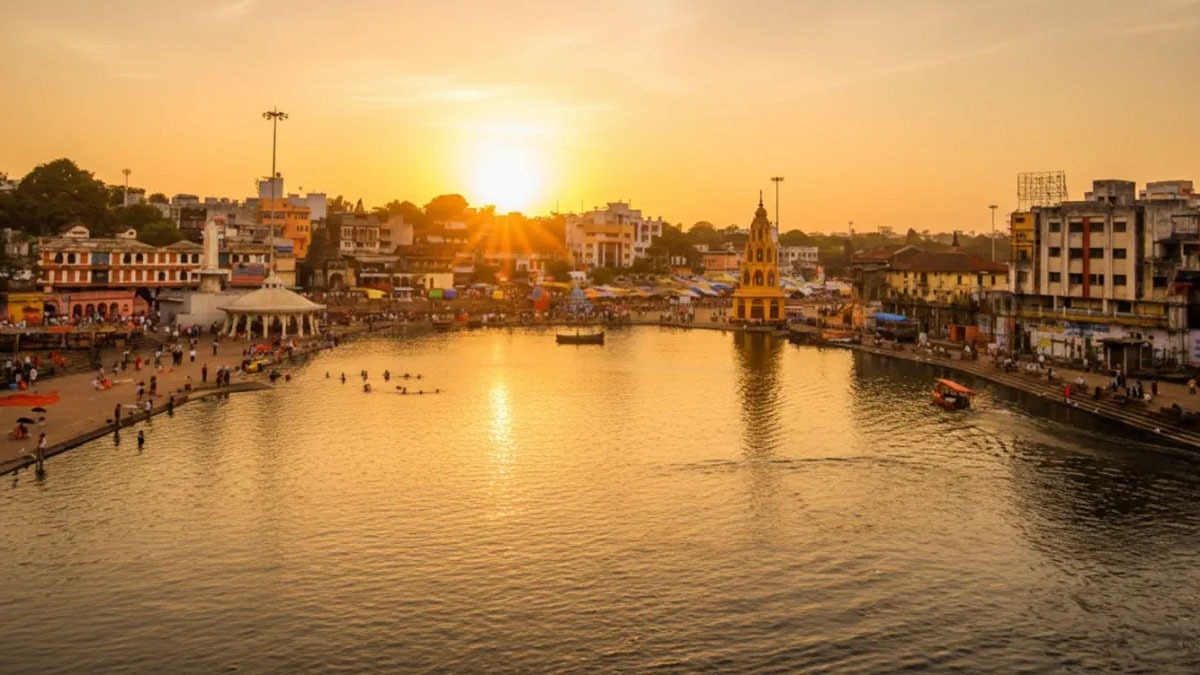
The Solapur Rural police used an AI-based surveillance system to manage crowds during the Ashadi wari. This technology helped track 600 missing people and detain 187 suspicious individuals. Officials now plan to use this successful model for the Kumbh Mela in Nashik and Trimbakeshwar during the year 2027.
The Solapur Rural police, in a first-of-its kind initiative for managing religious gatherings in Maharashtra, successfully deployed an artificial intelligence (AI)-based counting, facial recognition and surveillance system for the Ashadi wari at Pandharpur. The template is now likely to be used for the Kumbh Mela in Nashik and Trimbakeshwar next year.
The CCTV-based system will ensure better crowd management, an additional layer of security and real-time response during emergencies. It helped the Solapur Rural police detain 187 suspicious individuals, of which 16 were arrested, and track down over 600 missing people during the Ashadi wari.
The wari, or pilgrimage on foot to Pandharpur, which is located over 350 km from Mumbai, sees hundreds of thousands of devotees of Lord Vithoba march to the temple town. The wari is held during the month of Ashada (June-July) and Kartika (November). Warkaris travel to Pandharpur with palkhis (palanquins) of Bhakti sect saints such as Nivruttinath, Dnyaneshwar, Namdev, Eknath and Tukaram.
Around 450 CCTVs were operational in Pandharpur town, including those installed on roads and busy throughfares and by the temple trust in its premises. Using these systems and AI, the administration was able to scientifically count the presence of over 3.1 million pilgrims during the Ashadi wari (held from July 24 to 26). In 2025, the police and district administration had deployed AI-based drones for a headcount and survey, and counted the presence of some 2.7 million devotees.
Prashant Dagale, sub-divisional police officer (SDPO), Pandharpur, said the use of AI and facial recognition system had helped identify history-sheeters and habitual offenders by matching them with the repository of the Crime and Criminal Tracking Network and Systems (CCTNS), which had databases and biometrics of offenders. “AI was used for facial recognition The movements of such individuals were marked and preventive action was taken,” Dagale, an IPS officer, explained.
Dagale said that within the two days of Ashadi wari in July, they had identified and detained 187 suspicious individuals. Preventive action, including 16 arrests, was taken. During the wari period, 160 cases of mobile phones going missing and six cases of thefts and pick-pocketing were registered, and efforts are underway to link the arrested accused with these cases and recover the stolen property. Of the 631 devotees who went missing, 624 were reunited with their kin.
A team from Nashik is now examining whether this module can be deployed during the Kumbh Mela at Nashik and Trimbakeshwar, scheduled for August 2027. Kumbh Melas are one of the largest such religious gatherings in the world.
Dagale said that for the first time during the Ashadi wari, they had deployed 5G technology-based walkie talkies, which helped overcome the shortcomings of traditional hand-held radios. Around 500 such sets were acquired by the Solapur district collectorate and the Solapur Rural police for use by police personnel and government officials. This dedicated network had been allocated with a separate bandwidth.
Warkaris and devotees visiting the shrines of Lord Vithoba, who is also referred to as Vitthala and Panduranga, and his consort Rukmini take a dip in the Chandrabhaga river in an act said to lead to spiritual merit. Besides Ashadi and Kartiki waris, Pandharpur also sees significant footfalls on Ekadashi day twice every month.
Vithoba is revered as a form of Lord Krishna, although it is believed that he was a folk god who entered the Hindu or Brahmanical pantheon. Author-researcher R.C. Dhere has pointed to how Vithoba has also been variously claimed by sects and belief systems ranging from the Dhangar pastoralists, Buddhists and Jains. In his seminal ‘Shri Vitthal: Ek Maha Samanvay,’ Dhere controversially claimed that the real idol of Vitthala was at Madha near Pandharpur and not in Pandharpur.
The origins of the wari tradition are vague, and even though some believe that the 13th century Bhakti saint Dnyaneshwar began the tradition, historians point to references that predate this. Most of the existing structure of the temple dates to the Maratha period, and epigraphical evidence shows that the temple had received patronage from the Hoysalas and the Seuna Yadava king Mahadeva.
The warkari sect had saints cutting across caste lines, such as Namdev, Dnyaneshwar, Goroba Kumbhar, Savta Mali, Chokhamela, Eknatha and Tukaram. Author P.G. Sahasrabuddhe has written about how the warkari/Bhakti sect has its origins in the Nath sect.