
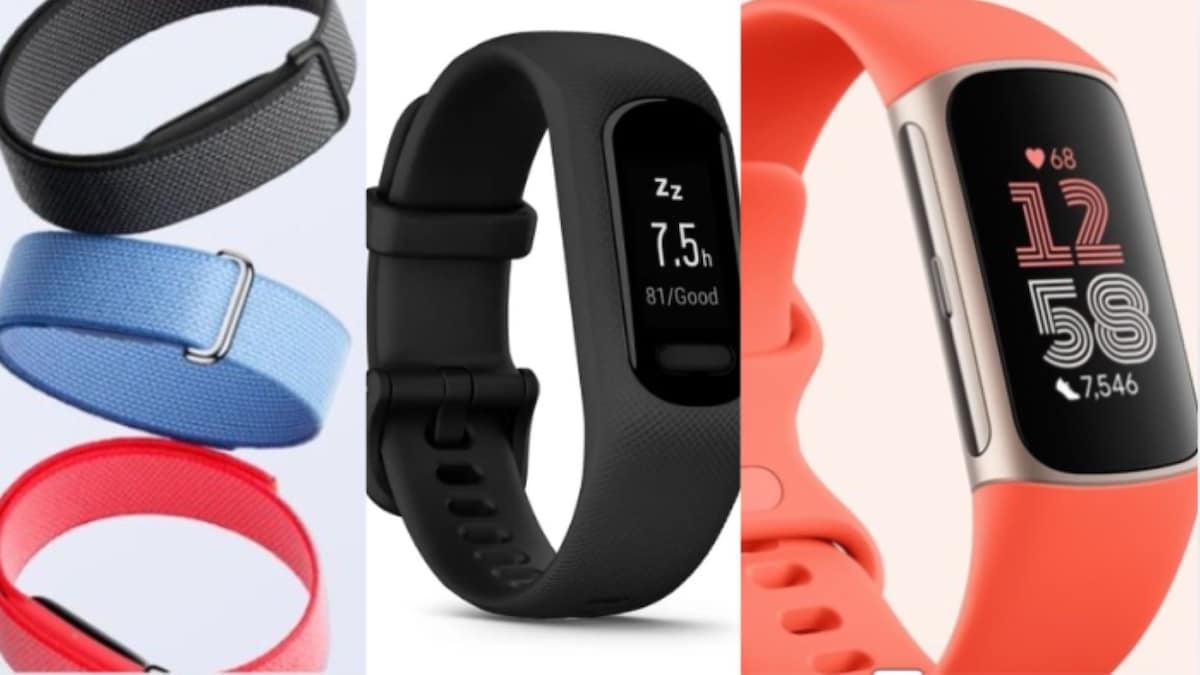
Google launched the Fitbit Air in India at ₹13,999, with sales starting October 2. This screenless tracker focuses on continuous health monitoring, including heart-rate and sleep tracking. It offers seven days of battery life and comes in four colors. Users can view all their activity data through the Google Health app.
Google has brought the Fitbit Air to India, giving buyers another option in the fitness-tracker segment. Unlike conventional fitness bands and smartwatches, the Fitbit Air comes without a screen and is designed primarily for continuous health and activity tracking. The Fitbit Air will be available in India from October 2 at ₹13,999 through the Google Store and retail partners. It comes in Obsidian, Berry, Lavender and Fog colour options and includes a three-month trial of Google Health Premium. The box also includes a Performance Loop band, while other band styles include Active and Elevated options. What Does It Offer | The Fitbit Air is Google's smallest Fitbit tracker yet. It features a small, screenless pebble design that sits discreetly on the wrist and is designed for continuous health and fitness tracking. The tracker supports 24/7 heart-rate monitoring, heart-rhythm monitoring with Afib alerts, SpO2, resting heart rate, heart-rate variability and sleep tracking, including sleep stages and duration. The device works with the Google Health app, where users can view their health and activity information. It can also automatically detect and track common activities and provide a workout recap. Fitbit Air Battery Life | Google claims up to seven days of battery life on the Fitbit Air. The tracker also supports fast charging, with five minutes of charging providing up to a day of power. The lightweight, screenless design is designed for all-night comfort, with sleep tracking helping users monitor sleep stages and duration. Fitbit Air vs Fitbit Charge 6 | The Fitbit Charge 6 is a more conventional fitness tracker, with a display and several features that can be accessed directly from the wrist. It offers up to seven days of battery life, advanced heart-rate tracking and compatibility with certain gym equipment and fitness apps for real-time heart-rate information. It also supports features such as Google Maps, Google Wallet and YouTube Music controls. The Charge 6 is listed at around ₹14,998 on Amazon, putting it close to the Fitbit Air's ₹13,999 launch price. The biggest difference is therefore the approach: Fitbit Air focuses on screen-free health tracking, while Charge 6 combines health tracking with a display and smartwatch-style functions. Fitbit Air vs Samsung Galaxy Fit3 | Samsung's Galaxy Fit3 takes a different approach from Fitbit Air, offering a 1.6-inch AMOLED display and up to 13 days of battery life. It can track more than 100 exercises, including running, rowing, elliptical workouts and swimming. It also offers sleep tracking, blood oxygen monitoring, notifications and controls for compatible Samsung smartphones. The Samsung Galaxy Fit3 is priced at ₹4,999 on Samsung's official website. This makes the Galaxy Fit3 more suited to users who want a screen, notifications and longer battery life at a lower price point. Fitbit Air vs Xiaomi Smart Band 10 | The Xiaomi Smart Band 10 comes with a 1.72-inch AMOLED display, up to 21 days of battery life and more than 150 sports modes. It also offers sleep-management features, heart-rate tracking and an enhanced swimming mode. Its display can reach up to 1,500 nits of HBM brightness, while the band weighs about 15.95 grammes. Compared with the Fitbit Air, Xiaomi's band puts much more emphasis on the display, sports modes and long battery life, while Fitbit focuses on a screen-free experience and Google Health Coach. Fitbit Air vs Garmin vivosmart 5 | The Garmin vivosmart 5 sits closer to Fitbit Air in terms of its focus on health and fitness tracking, but it still has a small display. It offers up to seven days of battery life, continuous heart-rate monitoring, blood oxygen tracking, sleep insights, stress monitoring and Body Battery energy monitoring. It also supports connected GPS, activity profiles and features such as incident detection and assistance when paired with a compatible smartphone. Which Fitbit Air Band Should You Choose? | The Fitbit Air is aimed at people who do not want a screen on their wrist but still want continuous health and sleep tracking. Its main distinction is the screen-free design combined with Google's Health Coach. The Charge 6 is more suitable if you want a Fitbit with a display and additional wrist-based features. The Galaxy Fit3 and Xiaomi Smart Band 10 offer larger displays and longer battery life, while the Garmin vivosmart 5 focuses heavily on health, fitness and Garmin's tracking ecosystem. So, the Fitbit Air is not simply competing on the number of features. Its main pitch is less screen time, continuous tracking and personalised health insights through the phone.