
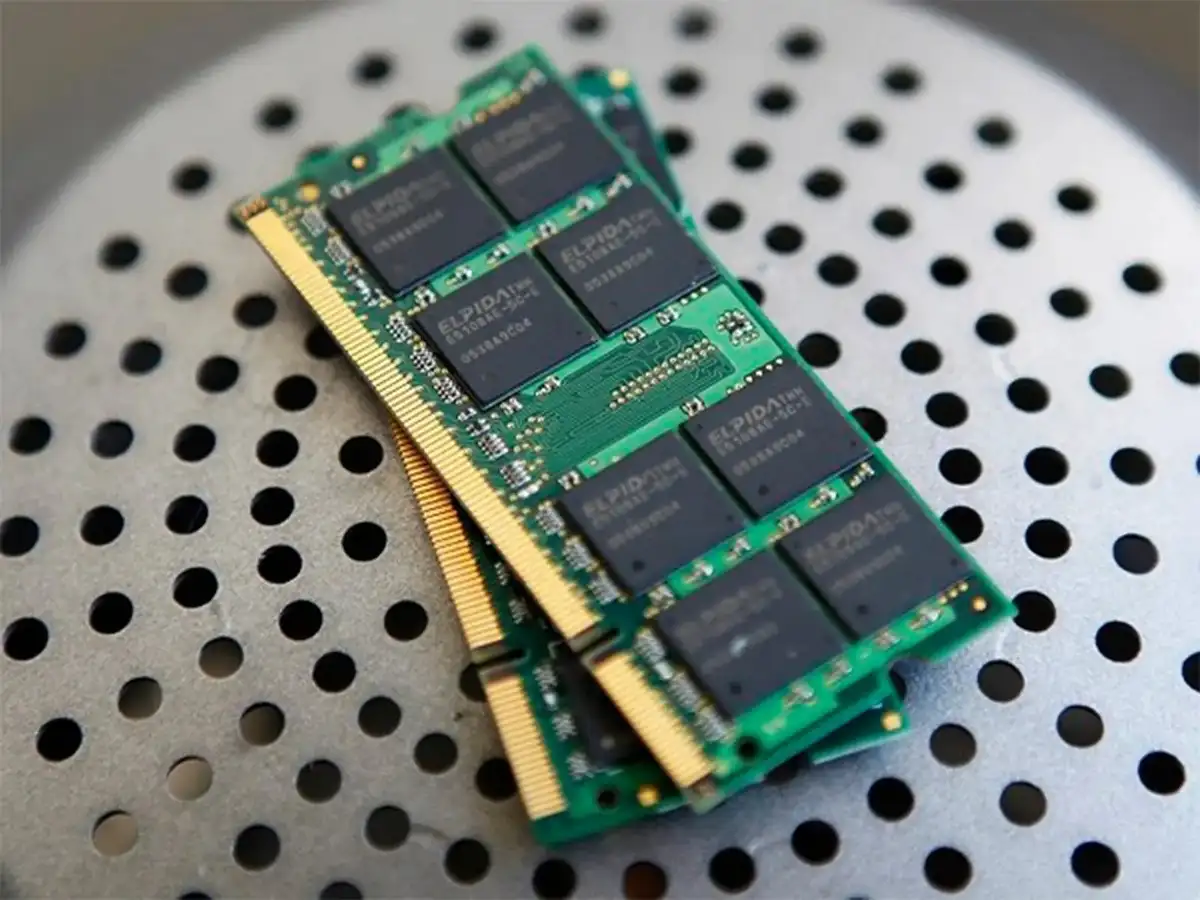
Global memory shortages will likely extend the Korean chip supercycle through 2028. Micron Technology reported that most of its 2027 production is already sold, as buyers rush to secure future supplies. Samsung Electronics and SK hynix also saw supply deficits, as Mehrotra said conditions would turn "much tighter" through 2028.
The projection gained ground after US-based Micron Technology reported that over 75 per cent of its planned production for fiscal 2027 stood fully committed to buyers, with enterprise discussions shifting toward securing 2028 inventories.
The global memory shortage deepens, extending the boom for Korean chipmakers Samsung Electronics and SK hynix as supply constraints look set to persist through 2028, according to a news report by The Korea Herald.
The projection gained ground after US-based Micron Technology reported that over 75 per cent of its planned production for fiscal 2027 stood fully committed to buyers, with enterprise discussions shifting toward securing 2028 inventories.
The development comes alongside record quarterly numbers from the American manufacturer, which logged fiscal fourth-quarter revenue of $54.23 billion. The figure surpassed market projections and expanded nearly fivefold from the $11.32 billion posted during the corresponding period last year.
As per the news report, Mehrotra noted that memory and storage supply-demand conditions would turn "much tighter" across fiscal 2027 and 2028 compared to levels observed in 2026.
Buyer behaviour shifted toward multi-year commitments to protect access to silicon. Micron expanded its long-term roster to 26 strategic customer agreements, up from 16 recorded in June, with specific covenants running through 2031.
Customer financial pledges tied to these arrangements expanded to $32 billion. These covenants are projected to generate over 35 per cent of the company's total revenue through 2030.
The firm stated that these forward volumes provide "added confidence in the durability" of its medium-term financial trajectory.
According to the news report, South Korean industry leaders signalled corresponding tightening dynamics earlier in the year. Samsung Electronics indicated in July that supply deficits would likely endure through 2028. The firm entered agreements with five key data-centre operators and advanced talks with five additional counterparties, aiming to place 60 to 70 per cent of its forward capacity under contract.
SK hynix concluded parallel five-year supply agreements with approximately 10 major clients during the same period.
The supply pressure broadened beyond high-bandwidth memory dedicated to artificial intelligence accelerators. Fabricators redirected advanced dynamic random-access memory wafer capacity toward HBM manufacturing lines, which restricted standard dynamic random-access memory availability across server, personal computing, and mobile segments, driving up aggregate price baselines.
The resulting pricing environment lifted third-quarter earnings projections for South Korean manufacturers. Market consensus compiled by FnGuide projected operating profit for Samsung Electronics at 110.3 trillion won ($81.1 billion), reflecting a 23 per cent increase over the prior quarter. A print at that level represents the company's first operating result above 100 trillion won ($73.4 billion).
SK hynix projections stood at 78.1 trillion won ($57.3 billion), marking a 29 per cent quarterly advance. The combined operating total for both manufacturers reached an estimated 188.3 trillion won ($138.2 billion), an increase of roughly 38 trillion won ($27.89 billion) over second-quarter results.
The report noted that certain financial institutions maintained more conservative outlooks. DS Investment & Securities estimated operating profit at 104 trillion won ($76.34 billion) for Samsung Electronics and 70 trillion won ($51.38 billion) for SK hynix, pointing to domestic currency appreciation and moderating memory price growth.