
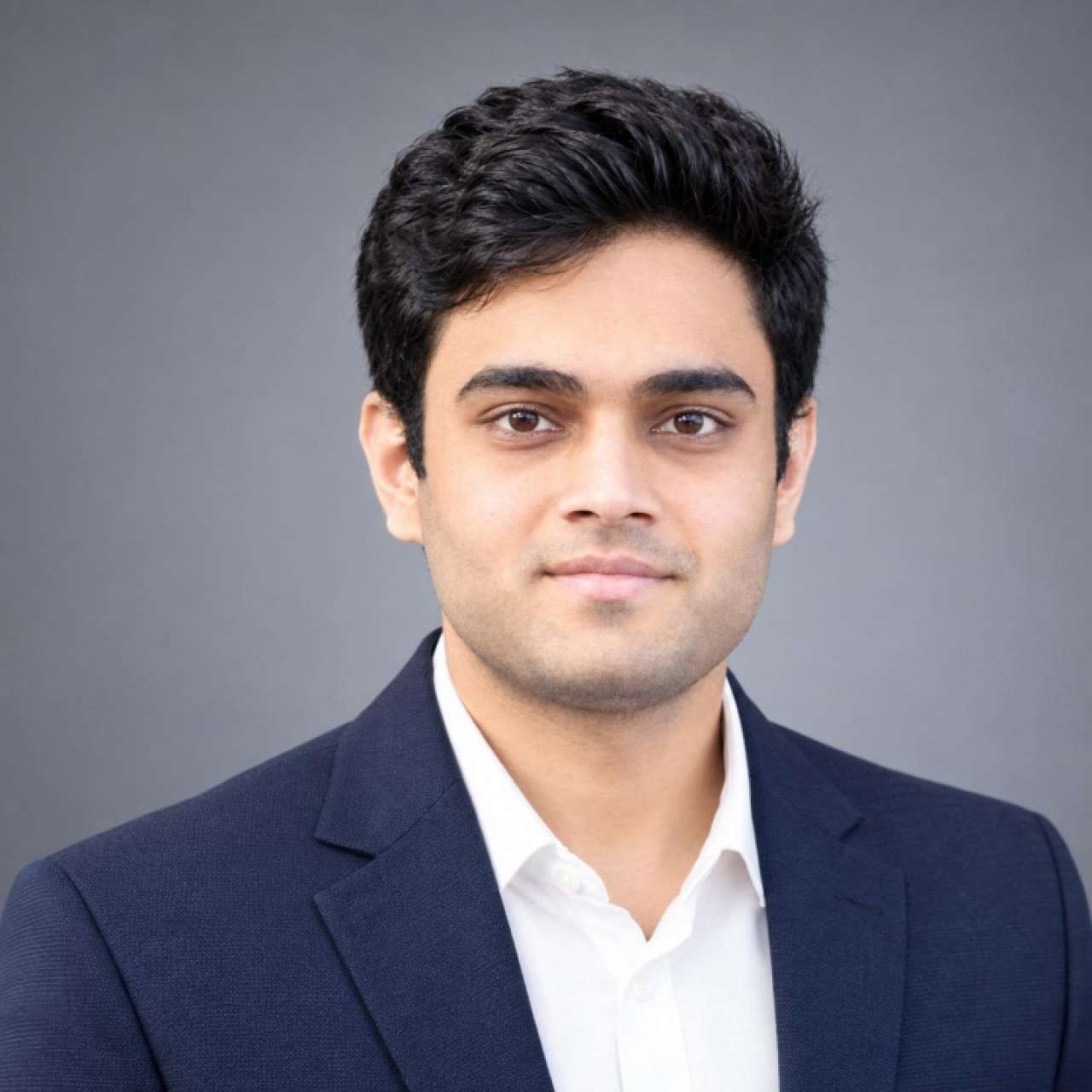
Sushanth A. spent a decade securing industrial systems by focusing on gaps between network and application teams. He used his engineering background to build zero-trust frameworks across global media infrastructure. "The interesting security problems are never where people expect them to be," he said about his unique professional approach.
How a decade of building and defending enterprise infrastructure in some of the most compliance-intensive environments in American industry shaped a distinctly integrated approach to modern application security.
There is a specific kind of infrastructure problem that tends to reveal the limits of conventional security thinking. It shows up when an organization has technically implemented the controls on its checklist, passed its compliance audit, and still finds itself exposed, because the real threat entered through a gap that the checklist never thought to ask about.
Sushanth A. has spent the better part of a decade working in environments where that kind of exposure carries consequences that go beyond a bad quarterly report. In healthcare IT infrastructure, a misconfigured network boundary or an improperly segmented application path is not just a policy violation. It is a potential patient safety event. That framing tends to concentrate the mind.
"The interesting security problems are never where people expect them to be," he said. "They are always in the space between disciplines, between the team that owns the network and the team that owns the application and the team that owns the cloud platform. Nobody is watching that space carefully enough."
His career has been built largely inside that space.
A Profile Built at the Boundary
Sushanth A.'s technical formation started with a Master of Science in Electrical Engineering, with an emphasis in Networking, from California State University, Long Beach. That foundation gave him something that pure IT certification paths rarely produce: an engineering-level understanding of how signals, protocols, and systems behave under real-world conditions, including the conditions that produce failure.
His early work in satellite communications, operating within government-adjacent technical environments where signal integrity and system continuity were non-negotiable requirements, established a professional orientation that has remained consistent throughout his career. He learned to think about infrastructure in terms of what happens when something goes wrong, not just what happens when everything works.
That orientation carried forward into his work at a globally distributed entertainment and media enterprise, where he operated across network infrastructure spanning multiple continents, including deployments in Asia and Europe. The environment was sprawling by any measure, running theme parks, streaming services, and broadcast operations simultaneously across geographically dispersed infrastructure. In that context, he developed and implemented zero-trust access control frameworks using enterprise-grade identity and network policy enforcement platforms, work that predated the mainstream adoption of zero-trust as a standard industry vocabulary by several years.
He also led infrastructure migration programs that transferred large-scale workloads from legacy data center environments to modern cloud platforms, work that sounds routine in summary form but carries substantial technical and operational risk at that scale. The margin for error in a live migration of infrastructure that global operations depend on is effectively zero.
Where the Work Got Specific
His subsequent work inside a major healthcare enterprise infrastructure environment, a tenure that has now extended across approximately six years, represents the period in which his technical specialization achieved its current depth and definition.
Healthcare IT infrastructure is not simply enterprise infrastructure with stricter audits. The compliance obligations under federal data privacy and security frameworks impose constraints that reshape every architectural decision. A network segmentation approach that would be considered best practice in a commercial enterprise context may be operationally untenable in a healthcare environment where clinical workflows depend on application paths that cannot tolerate the latency introduced by certain security controls. The security architecture has to work around the clinical reality, not against it.
His work in this environment has centered on a challenge that has become one of the defining technical problems of the current decade in enterprise infrastructure: securing applications that now live simultaneously on-premises, in public cloud environments, and inside containerized workloads running on platforms like OpenShift and Kubernetes, while keeping all of it compliant with regulatory requirements that were written before any of those architectures existed.
That is not a theoretical problem. It is a day-to-day operational reality for healthcare organizations under pressure to modernize their infrastructure while managing a threat environment that has become significantly more aggressive. Ransomware operators have made healthcare a primary target precisely because the combination of sensitive data and operational availability pressure creates maximum leverage. A system that cannot afford downtime is a system that will pay to restore it.
Sushanth A.'s approach to this problem reflects his background in both traditional networking and cloud-native environments, a combination that remains genuinely uncommon in the practitioner population. His command of the F5 application delivery platform is unusually comprehensive. Most engineers working with F5 infrastructure operate one or two modules of the stack. He has worked with the full suite, including Local Traffic Manager, Global Traffic Manager, Application Security Manager, Advanced Firewall Manager, Access Policy Manager, and SSL Orchestrator, within a healthcare compliance context where every configuration decision carries regulatory weight.
That breadth matters because the application delivery layer is where a significant portion of web-based attacks now occur. Web application firewall architecture, SSL traffic inspection, and access policy enforcement are not independent concerns. They interact in ways that require someone who understands all of them at once to get right.
"You cannot secure what you cannot see," he said. "And in a hybrid environment, the visibility problem is harder than the security problem. If your monitoring architecture has blind spots at the application layer, your security posture is an assumption, not a measurement."
The Container Problem
One of the clearer illustrations of his integrated methodology is his work on securing containerized workloads in the context of cloud-native infrastructure governance.
Kubernetes-based environments, including deployments on OpenShift and Azure Kubernetes Service, introduce security challenges that traditional network perimeter models were not designed to handle. Applications running in containers are ephemeral by design, spinning up and tearing down in ways that make static network rules impractical. Ingress controllers, which govern how external traffic reaches services running inside a Kubernetes cluster, represent a security boundary that many organizations underinvest in because their security teams come from traditional networking backgrounds and their platform teams come from software engineering backgrounds, and neither group owns the other's problem clearly.
Sushanth A. holds certifications in both F5 NGINX and OpenShift, which positions him at exactly that boundary. His work on ingress governance for microservices architectures in the healthcare environment required him to apply networking-level security thinking to a container-native context, designing controls that enforce consistent policy across workloads that are continuously changing without requiring manual rule updates that cannot realistically keep pace with the deployment cadence.
His certification as a VSA Datacenter Master Admin reflects his fluency at the underlying infrastructure layer where these workloads ultimately run, providing a systems-level perspective that cloud-native engineers who arrived through a software development path often do not carry.
The data center consolidation work he led within his healthcare infrastructure tenure is another dimension of this integrated profile. Consolidation projects at enterprise scale are operationally complex and financially consequential, typically delivering material reductions in infrastructure, real estate, and operational expenditure. But in a healthcare context, the consolidation has to happen without introducing availability risk into the clinical systems running on the infrastructure being transformed. That constraint makes the work considerably more demanding than standard enterprise consolidation programs.
A Combination the Field Rarely Produces
That combination is uncommon for structural reasons. Deep networking specialists who understand routing protocols and data center fabric often lack fluency in container-native security models. Cloud-native engineers who understand Kubernetes and CI/CD pipelines often lack the Layer 4 networking depth and compliance orientation that regulated healthcare environments require. Full command of the F5 platform suite, paired with sustained healthcare compliance experience, is a narrower intersection still.
"You don't end up with both by accident," he said. "The compliance side and the platform side get taught separately, staffed separately, and hired for separately. Getting fluent in both at once means spending time in rooms most engineers on either side never sit in."
That combination is what shows up in the work itself: architecture decisions made with the compliance framework and the live traffic pattern in view at the same time, in an industry where getting that wrong has consequences that go well beyond a failed audit.