
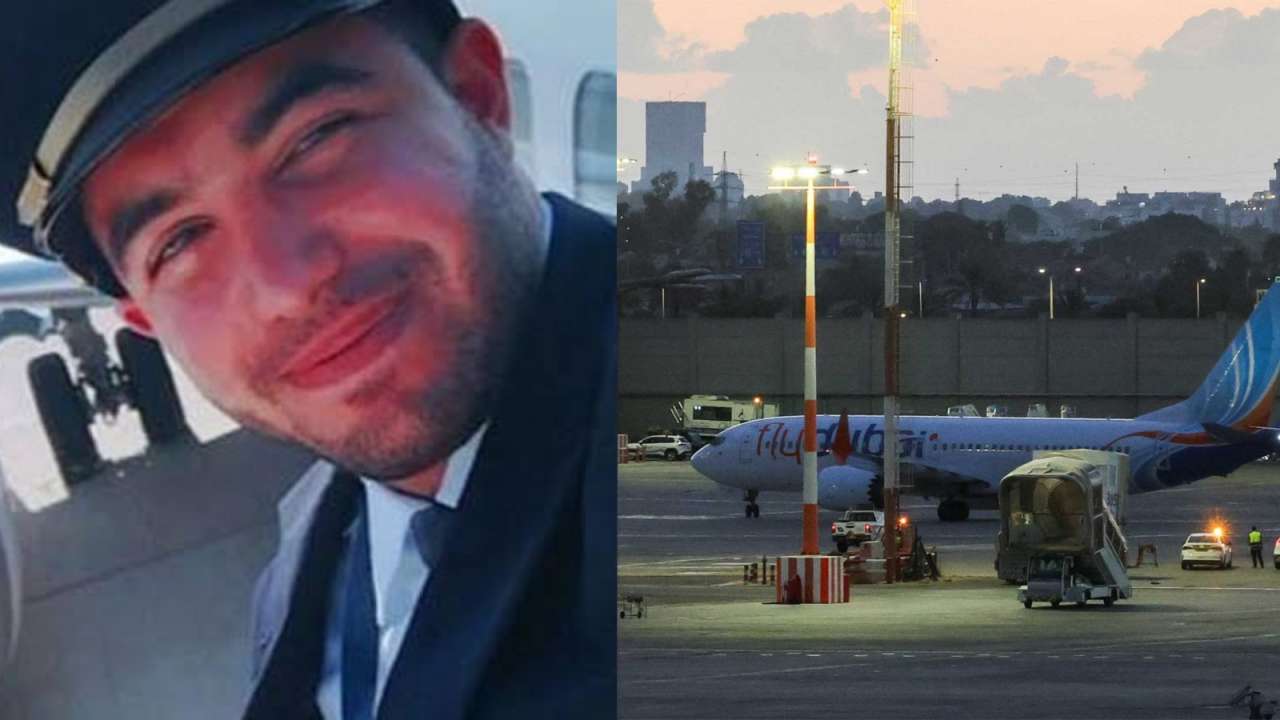
An Omani co-pilot attacked Indian Captain Smit Machchhar on Flydubai flight FZ1073 to crash into a Tel Aviv building. Reports said the pilot feigned prayer before the assault. The plane dropped 16,000 feet after the co-pilot shut off engines. Passengers and off-duty pilots finally restrained him and landed the jet safely.
The Omani co-pilot who attacked Indian Captain Smit Machchhar in the cockpit of Flydubai flight FZ1073 wanted to crash the plane into a building in Tel Aviv, as per reports.
According to Italian newspaper Corriere Della Sera, the co-pilot, identified as Hammam al-Hammami, may have switched off the engines after his attempt to bring down the passenger jet was thwarted.
The newspaper has put together a detailed reconstruction of the cockpit assault, detailing how Al-Hammami allegedly attacked the captain. The reconstruction is based on testimonies from people involved, crew reports submitted to aviation authorities, accounts from airport personnel and air traffic controllers, and data from aviation tracking platforms.
Omani co-pilot planned 9/11-style attack by crashing plane into skyscraper
Citing Israeli intelligence, the report said Al-Hammami's initial plan was to kill Machchhar, take the aircraft to Tel Aviv and ram it into a high-rise. He allegedly feigned prayer before grabbing the crash axe and attacking the captain from behind.
Machchhar initially believed he had been struck by a broken aircraft component but soon realised he was being attacked. Despite suffering severe head injuries, a badly wounded arm and heavy blood loss, he managed to open the cockpit door, allowing passengers and two off-duty pilots to intervene.
According to the report, Al-Hammami then disengaged the autopilot and pushed the control column, putting the aircraft into a steep dive. It dropped around 16,000 feet in 30 seconds and sped up to over 970 kmph, allegedly damaging the tail rudder.
Flydubai Attack: Investigators check if co-pilot cut fuel supply
The probe is looking into whether the co-pilot moved the fuel switches from "Run" to "Cutoff." The report also pointed to emergency cabin lights that were triggered during the incident.
"In one of the videos, filmed between the seats and during the attempts to stop the first officer, the cabin emergency lights are visible. This is to help passengers evacuate the aircraft in an emergency or when the jet is grounded, and people need to disembark. Yet they turn on at high altitude."
"Why?... The emergency lights activate when the Boeing 737 loses its main power source (electricity) and switches to battery power. For this to happen, either the generators were turned off, or both engines were shut down," the report noted.
Passengers managed to restrain Al-Hammami, while off-duty pilots regained control and landed the aircraft safely in Tabuk. Machchhar was hospitalised and the co-pilot was handed over to Saudi authorities. Israel has called it a "terror attack" and is investigating how an Omani pilot was allowed to fly into Tel Aviv despite its security policy.