
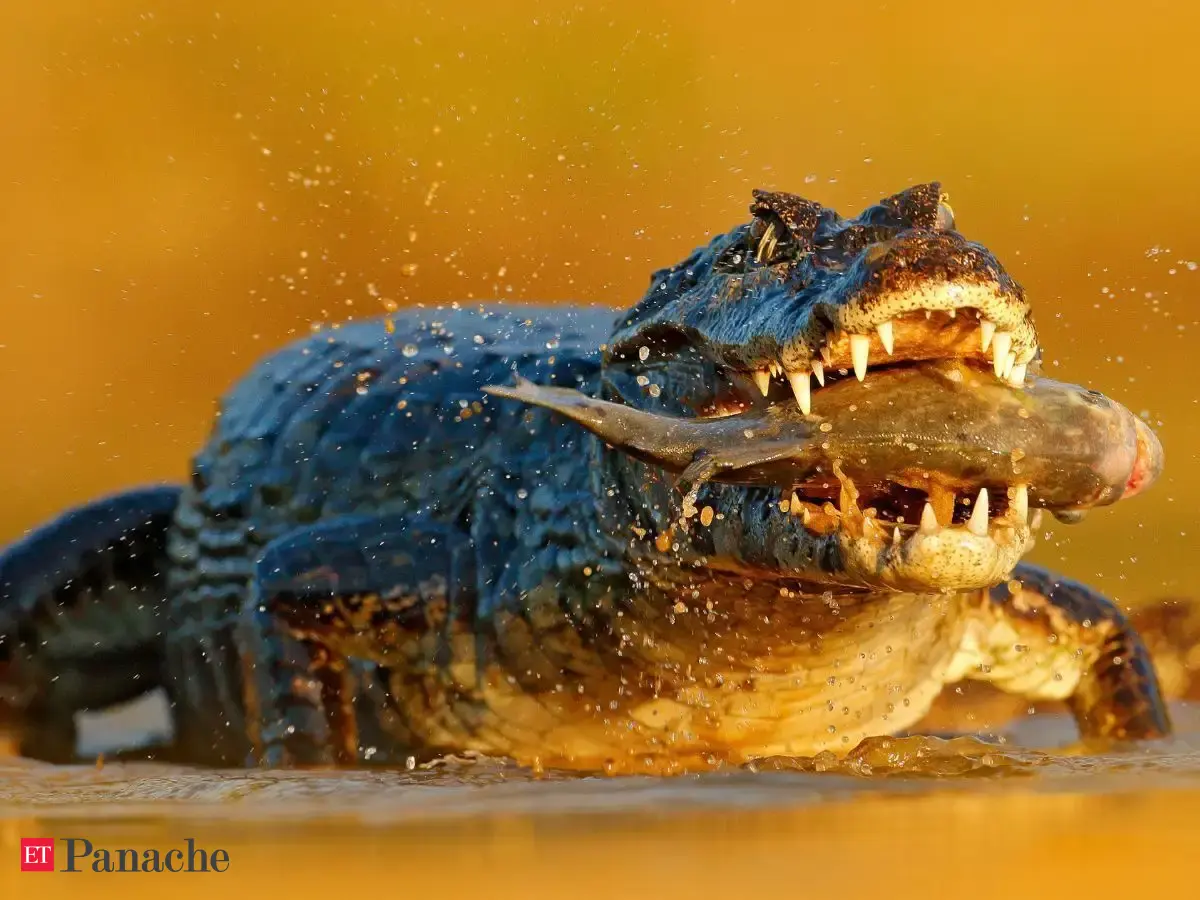
A 30-year-old man in Singapore faces criminal charges after sending an AI-generated crocodile image to a colleague on August 20. The fake photo triggered a search operation at Pandan Reservoir and stopped water activities for two days. Ye Lin now faces prison time for sending false messages and obstructing justice.
Synopsis
A 30-year-old man in Singapore is facing criminal charges after allegedly sending an AI-generated image of a crocodile at Pandan Reservoir to a colleague. The fake image prompted authorities to launch a search operation and temporarily suspend water activities. Police later traced the image to him, with the case also involving allegations that he deleted the image and Gemini app history. He now faces charges that could carry prison terms of up to three and seven years respectively.
An AI-generated image showing a crocodile at a Singapore reservoir turned what may have started as a private message into a police case, after authorities launched a search operation and temporarily stopped water activities in the area. Thirty-year-old Ye Lin has been charged with communicating a false message and obstructing the course of justice over the incident at Pandan Reservoir.
According to Channel NewsAsia (CNA), Lin told a Singapore court through an interpreter that he intended to plead guilty and would not hire a lawyer.
The case goes on to show how an AI-generated image, even when shared with just a colleague rather than publicly posted, can lead to consequences if it triggers a real-world response from authorities.
AI crocodile image leads to search operation
The incident began on August 20, when Lin allegedly sent an AI-generated image of a crocodile at Pandan Reservoir to his colleague, identified in court documents as Min Min Oo.
The image was subsequently reported as a possible crocodile sighting. Singapore's national water agency, the Public Utilities Board (PUB), along with the National Parks Board, carried out search and capture operations around the reservoir.
The Singapore Rowing Association and Singapore Canoe Federation were also informed and water activities were temporarily suspended as a precaution.
According to reports, PUB's work at the reservoir was suspended for two days while authorities dealt with the reported sighting.
PUB discovers the crocodile image was fake
The search ended after PUB established on August 21 that the crocodile image was not genuine. The agency then lodged a police report, and water activities at Pandan Reservoir were subsequently allowed to resume.
It is not clear from the news reports exactly how the image reached authorities after Lin allegedly sent it to his colleague.
However, the police later traced the image back to Lin, according to the reports. Authorities also allege that he deleted the AI-generated images and the log history from the Gemini AI app on his mobile phone the following day.
That action forms the basis of the second charge, obstructing the course of justice.
Two charges could lead to jail time
Lin faces one charge for communicating a false message and another for obstructing the course of justice.
Under Singapore law, communicating a false message can carry a maximum sentence of three years in prison, a fine of up to S$10,000, or both. The charge of obstructing the course of justice carries a maximum prison term of seven years, along with a possible fine.
The maximum sentences for the two charges mean Lin could face up to 10 years in prison if the maximum terms were imposed consecutively, although the reports do not state what sentence he will ultimately receive.
Lin is due to return to court on November 10.
Police warn about consequences of false information
Singapore Police have warned that deliberately communicating false information can lead to legal action, particularly when it creates public concern and requires authorities to deploy resources unnecessarily.
In a statement quoted in the reports, police said: “Apart from causing fear and inconvenience caused to members of the public, such falsehoods also result in public resources being unnecessarily deployed to deal with these incidents.”
(Catch all the Business News, Breaking News, and Latest News Updates on The Economic Times.)
Subscribe to The Economic Times Prime and read the ET ePaper online.
...moreless
(Catch all the Business News, Breaking News, and Latest News Updates on The Economic Times.)
Subscribe to The Economic Times Prime and read the ET ePaper online.