
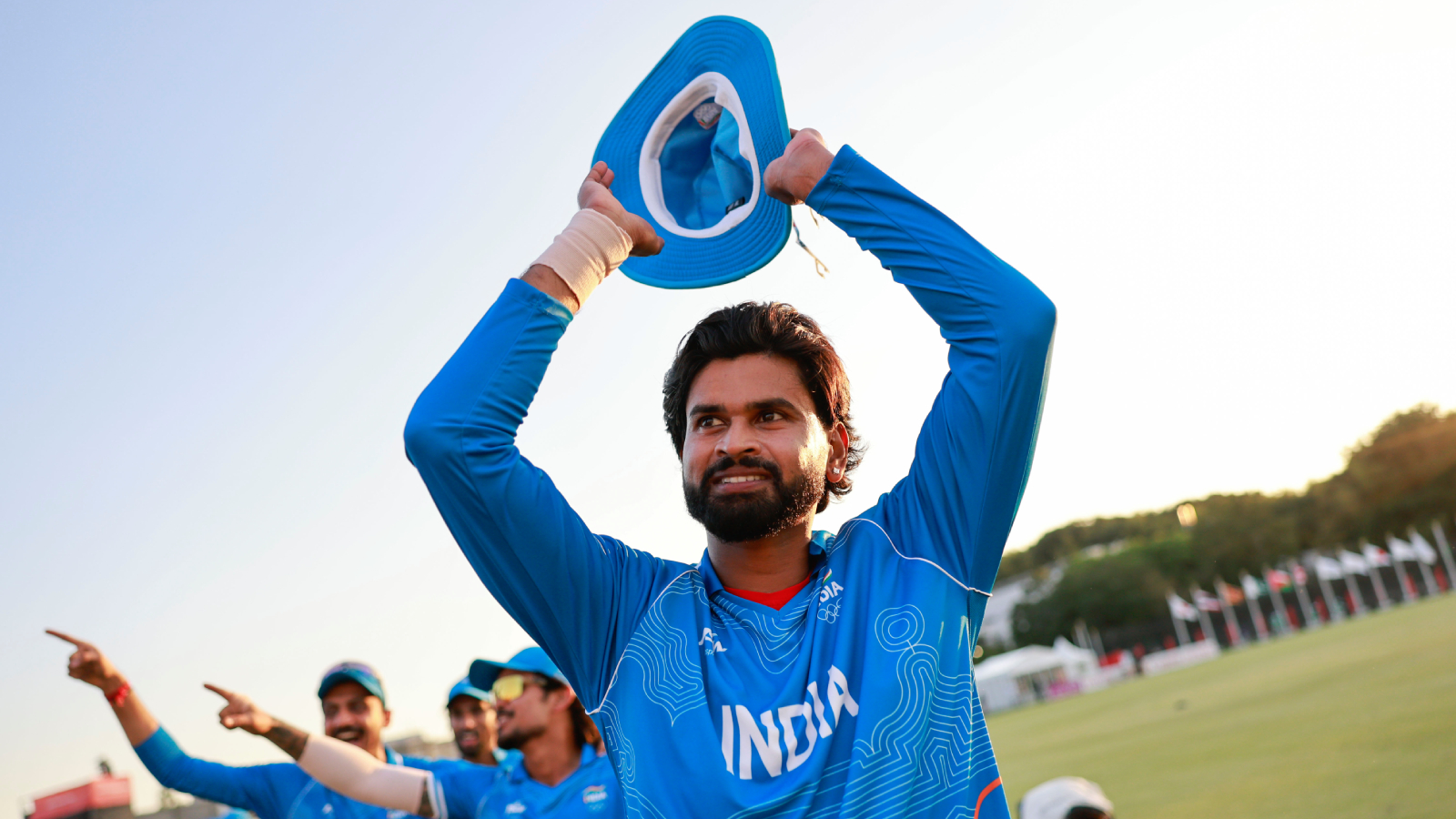
Shreyas Iyer faced a tough start as India’s T20I captain, losing 0-4 to England in Southampton. However, he has since led the team to nine straight wins. Iyer now shows better trust in young bowlers like Mayank Yadav. Prince Yadav said, "The message was simple - keep bowling the right lengths."
By the time Shreyas Iyer turned to Shivam Dube in the fifth and final T20I against England in Southampton, there was little left to salvage. England were 225/1, with Jos Buttler and Harry Brook in control. Dube didn't bowl until the 19th over. He took two wickets, but gave away 22 runs. It was a snapshot of where Iyer was: he had the resources, but was still figuring out how to use them.
England ended with 257/3, and India lost by 56 runs. The defeat completed a 0-4 series loss and was Iyer's sixth defeat in seven matches as India's T20I captain. Southampton felt like the nadir of a difficult start. There was little then to suggest things would turn for the better.
Yet they have.
Over the next nine matches, all of them wins, Iyer may not have become a master tactician. But there seems to be a clearer identity about his captaincy, especially how he uses his bowlers.
The Ireland and England matches hinted at a captain still trying to work out which bowler fitted where. The games since have shown greater role clarity, more trust in young players and, crucially, a willingness to back them after things go wrong.
The change is perhaps best seen in how Iyer handles young pacers when things don't go to plan.
Mayank Yadav, after taking a first-ball wicket in the third T20I, was hit for a six in his next spell. Iyer still brought him back to break the fifth-wicket partnership between Wessly Madhevere and Ryan Burl and then trusted him with the 20th over.
Mayank showed enough in Zimbabwe to suggest that he could become an important cog in the attack. But there is still work to do. His pace is his biggest asset, but the next step is to trust his plans when batsmen attack him, rather than relying on pace to get out of trouble.
Prince Yadav's role seems clear: bowl hard lengths to top-order batsmen and keep going even if the ball disappears. He struck with his first ball in the second T20I against Zimbabwe and then removed Sikandar Raza in the same spell, both wickets coming from that approach. After the first game, Prince said the message from Iyer and the coaches was simple - keep bowling the right lengths and don't worry if a good ball gets hit.
With Hardik Pandya still unavailable, India are developing Nitish Kumar Reddy in the seam bowling all-rounder role. Against Afghanistan in the third T20I, he conceded 15 in his first over. Iyer did not shelve him. He brought him back in the ninth and then again in the 11th and 13th over. Nitish finished with 3/25 in his four overs.
Abhishek Sharma perhaps best captures what Iyer is trying to build. In the first T20I against Afghanistan in Delhi, Iyer gave Abhishek an over despite having regular bowling options and that experimentation continued at the Asian Games, despite the main bowlers having overs left. India have often played with only five frontline bowlers, and Iyer looks keen to develop a sixth bowling resource.
Sanjay Manjrekar, who has watched Iyer over the years for India and in the IPL, believed Iyer looked more settled in the role now after the early stutter.
"One thing, whatever little you can get, you know, the vibe, just being around him - did a couple of tosses with him and just being there - he seems like he's settled into the role."
"Suddenly it seems like he has grown, you know, maturity and everything. So he must have realised after the Ireland experience that you just do your best and the results are beyond your control," he said.
Despite the nine wins, however, Iyer's captaincy is still developing. It is too early to call him a finished product. Bigger tests lie ahead, starting with the West Indies series in Lucknow on Tuesday.
Manjrekar does not see the coming challenge as simply a test of Iyer. "I think the test for this Indian T20 team will be performing in different conditions."
That makes the West Indies series important. India have played just one series at home under his captaincy, with all three matches in Delhi. Against West Indies, across five venues and different conditions, we will see how he adapts his methods and whether the identity he is developing is long-lasting.
The early defeats showed a captain looking for the right combinations and ways to use his bowlers. Since then, he has looked more comfortable giving players responsibility and allowing them to grow into their roles.
There will be missteps, and some risks will not pay off. But that is part of the process. More importantly, Iyer no longer looks to be searching for an identity. He looks to be building one.
India vs West Indies, first T20I, Live on Star Sports Network and JioHotstar, 7 pm.