
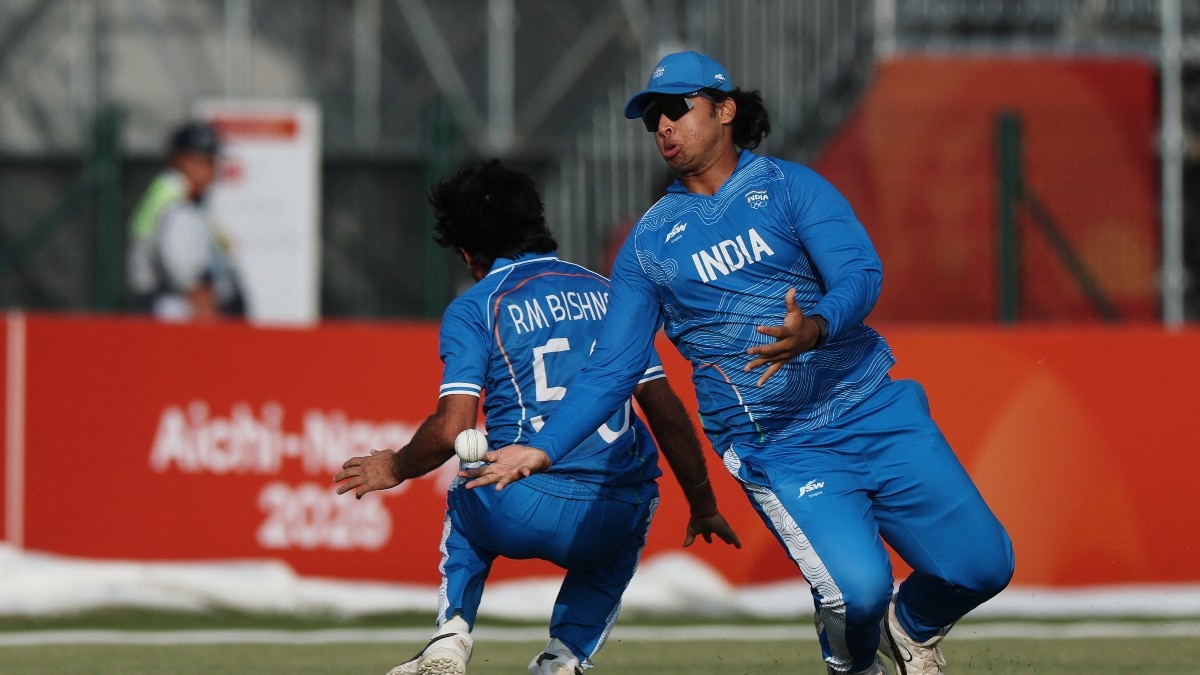
Former fielding coach R Sridhar warned that India’s fielding woes could worsen during the upcoming New Zealand tour. He said, "I think our fielders will have to adapt." Players must adjust to chilly, windy conditions that make catching difficult. Sridhar suggested using hand warmers to stay ready between the deliveries.
India's fielding problems could face another stern examination on their upcoming tour of New Zealand, with former fielding coach R Sridhar warning that the unfamiliar weather conditions could compound an already worrying trend. While India have developed clear identities with the bat and ball, their inconsistency in the field has become a persistent concern, and the challenge of adapting to New Zealand's chilly, windy spring could leave little room for further mistakes.
The contrast in conditions will be significant. India has experienced unusually warm weather in October, with El Nino conditions developing in the equatorial Pacific and influencing global weather patterns.
New Zealand, meanwhile, will be moving through spring, when temperatures can remain low, winds can pick up and conditions can change rapidly. For Indian players accustomed to warmer conditions, adjusting to the cold could prove particularly important when attempting difficult catches or fielding close to the batter.
"I think our fielders will have to adapt. As you know, we've had a very hot October in India this year, thanks to El Nino, the super El Nino. So, there's going to be quite a bit of adaptation required from our fielders, bowlers and batters," Sridhar said in a virtual press conference organised by Sony Sports Network.
WINDY WELLINGTON, CHILLY CHRISTCHURCH
New Zealand's conditions can be particularly demanding for fielders, with Wellington known for its strong winds and Christchurch capable of producing chilly mornings and evenings during spring.
High catches, which require players to judge the ball's trajectory while accounting for wind, could become a major test of concentration and technique. At Hagley Oval in Christchurch, the lush green outfield and cool conditions could also require players to prepare differently between overs.
Sridhar believes the Indian players will have to make practical adjustments to ensure that the cold does not affect their handling of the ball. Keeping their hands warm and maintaining readiness between deliveries could be especially important when the temperature drops.
"Especially when you're playing in cities like Wellington, which can be really, really windy, high catches could always become a challenge. But if you're in Christchurch, at Hagley Oval, it's a lovely, lush green cricket ground, and it can get very chilly."
"All the fielders will have to protect themselves by using hand warmers, keeping their hands in their pockets or warming them up every now and then," Sridhar said.
A PROBLEM BIGGER THAN CONDITIONS
The weather, however, is only one part of the challenge. India's fielding standards have come under scrutiny after repeated dropped catches and missed opportunities in recent months. The concern is that the team have not consistently backed up their batting and bowling performances with the same level of reliability in the field.
The lapses were particularly evident during the 2026 T20 World Cup, when India struggled to establish themselves as a consistently sharp fielding unit. Although the team went on to win the tournament, their success did not entirely mask the problems. For Sridhar, the result should not become a reason to overlook deficiencies that could prove costly in tighter contests.
"But it's not going to be easy, let me tell you that. The form is not great, as you said. The Indian team's fielding form has not been great over the last few matches, or even the last few months. It's not just been a year; the form has been a concern for some time now," Sridhar added.
AXAR PATEL'S MOMENT OF BRILLIANCE
India's semi-final against England offered a reminder of how outstanding fielding can change a match. Axar Patel produced two remarkable efforts, taking a running catch to dismiss Harry Brook before combining with Shivam Dube in a relay catch to send Will Jacks back. Those moments helped India seize control of a high-scoring contest and eventually secure a seven-run victory.
Axar's contribution was particularly striking because it demonstrated the impact that anticipation, athleticism and composure can have under pressure. However, India cannot depend on individual moments of brilliance to compensate for repeated mistakes across the fielding unit. The challenge is to make such efforts part of a consistent team standard rather than isolated highlights.
Sridhar's assessment is that India must address the underlying approach to fielding instead of treating dropped catches as occasional errors. The team's success with bat and ball has often been built on clearly defined methods, but the same collective purpose needs to translate into fielding.
BUILDING A CULTURE IN THE FIELD
India's bowling plans, particularly in ODIs, reflect a recognisable philosophy. Captain Shubman Gill has shown a preference for tall, fast bowlers who hit the deck hard, giving the attack a clear identity. Sridhar believes that similar clarity is needed in the field, where expectations, application and accountability must be established across the group.
"I think fielding has definitely taken a backseat in terms of application and building a certain culture. We can see a clear culture in the way the Indian team bats, and similarly, there's a clear culture in the way the Indian team bowls," Sridhar said.
"Especially in ODIs, Shubman Gill likes tall, fast bowlers who hit the deck hard. But when it comes to fielding, that same clarity seems to be missing."
India's tour begins with the first T20I at Hagley Oval on October 22, followed by the ODI series from November 4 and the Test series beginning on November 19 in Wellington. With the 2027 ODI World Cup approaching, India have an opportunity to make fielding a genuine strength. But if their recent lapses continue, the cold and wind in New Zealand could make an existing weakness even harder to conceal.