
Short news for quality minds. Power your niche.Smartly curated short news for quality minds. Want your own niche feed? Integrate with us today.

TheReader.AI
Home
News
Integrate
Pricing
About Us
Profile
My FeedNationPoliticsBusinessMarketWorldSportsTechnologyEnvironmentScienceEntertainment

Science News

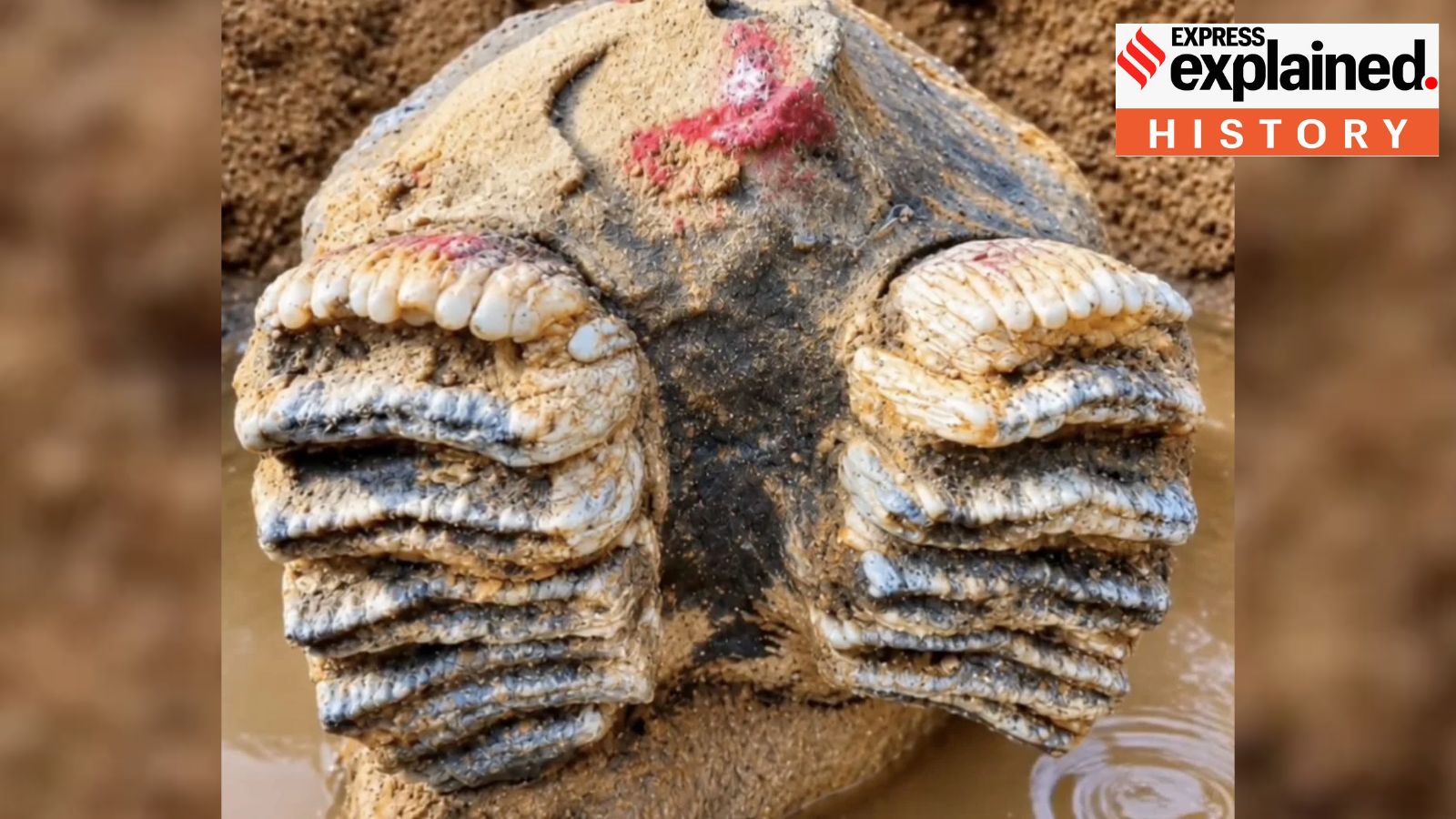
The fossilised jaw of a prehistoric animal has been discovered in MP. Here's why the finding matters

The fossilised jaw of a prehistoric animal has been discovered in MP. Here's why the finding matters

Indian Express

Researchers found a fossilised jaw along the Narmada in Madhya Pradesh’s Raisen district. It likely belongs to the extinct Palaeoloxodon namadicus, a prehistoric elephant that roamed the region four to five lakh years ago. Dr Ravi Upadhyay said, "It is absolutely correct that this is the jaw of an ancient elephant."

Tap to Read More18 Nov 1:30 AM
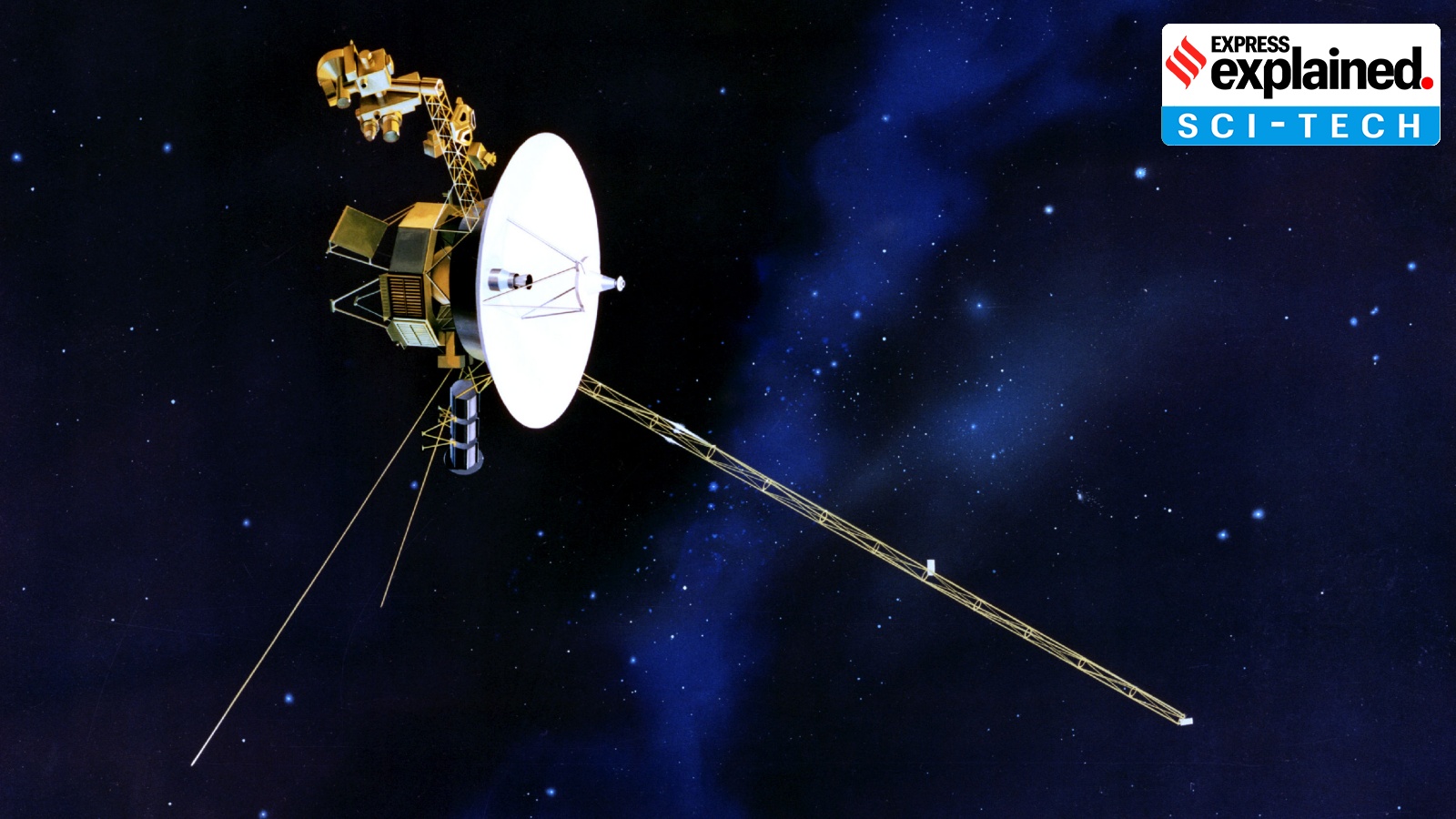
NASA's Voyager 1 reaches one light-day from Earth on November 18: What does it mean?

NASA's Voyager 1 reaches one light-day from Earth on November 18: What does it mean?

The Hindu

NASA's Voyager 1 will reach one light-day from Earth on November 18. This historic milestone means radio signals from the probe now take 24 hours to reach us. Launched in 1977, the spacecraft continues to travel through space, currently moving at roughly 38,000 miles per hour beyond our solar system.

Tap to Read More18 Nov 1:30 AM
After half a century in space, one light-day milestone in sight: What makes Voyager 1's journey a feat of humankind

After half a century in space, one light-day milestone in sight: What makes Voyager 1's journey a feat of humankind

Indian Express

NASA’s Voyager 1 spacecraft is set to become the first human-made object to reach the milestone distance of one light-day from Earth on Wednesday. Launched on September 5, 1977, the craft has travelled for nearly 50 years. It has enriched what humans know about space through its continued journey.

Tap to Read More18 Nov 12:00 AM
New platform improves accuracy of molecular counting in RNA-sequencing

New platform improves accuracy of molecular counting in RNA-sequencing

Physics org

A new open-source platform called UMIche improves accuracy in RNA-sequencing by fixing common counting errors. Published in Nature Communications, it provides a consistent framework for molecular data. Associate professor Adam Cribbs said, "By making UMI deduplication evidence-based rather than a default, UMIche sets a common standard for accurate molecule counting."

Tap to Read More17 Nov 9:50 PM
Extreme cold preserves passion fruit's vitamin C, but not all of its antioxidants

Extreme cold preserves passion fruit's vitamin C, but not all of its antioxidants

Physics org

Researchers from ESPOL and the University of Guayaquil studied how cryogenic freezing affects yellow passion fruit. They found that vitamin C levels stayed stable after using liquid nitrogen at -196 °C. However, the fruit's total antioxidant capacity fell by 23.6 percent, showing that extreme cold does not preserve every nutrient.

Tap to Read More17 Nov 10:20 PM
New daisy genus named after botanist

New daisy genus named after botanist

Physics org

A new South American daisy genus named Pelseria honors University of Canterbury botanist Pieter Pelser. Researchers from Argentina confirmed his 2007 findings using plant physical traits. Pelser said, "It is a great honor to have a species named after you, and an even greater privilege if a genus carries your name."

Tap to Read More17 Nov 10:30 PM
Lasers near physical limits of miniaturization open possibilities for tracking life at the nanoscale

Lasers near physical limits of miniaturization open possibilities for tracking life at the nanoscale

Physics org

Researchers from Rice University and Harvard Medical School developed one of the world’s smallest lasers to track tiny biological structures. "We have already demonstrated how nanolaser particles can serve as unique optical barcodes for tracking individual cells," said Sangyeon Cho. This breakthrough helps scientists observe processes happening inside living cells.

Tap to Read More17 Nov 10:40 PM
Hassan students 'wow' crowds with inventions—from robotic tanks to green energy that could change our future.

Hassan students 'wow' crowds with inventions—from robotic tanks to green energy that could change our future.

The Hindu

Students exhibited working models at The Hindu in School event in Hassan on Tuesday. Projects ranged from piezoelectric tiles generating power to Bluetooth-controlled robotic army tankers. The exhibits covered robotics, artificial intelligence, and agriculture. Manu Kumar, assistant director of the Department of Social Welfare, participated in the prize distribution ceremony.

Tap to Read More17 Nov 2:35 PM
DESI weighs the Milky Way more precisely than ever

DESI weighs the Milky Way more precisely than ever

Physics org

The Dark Energy Spectroscopic Instrument Collaboration measured the Milky Way’s mass at 1.19 trillion times that of the sun. Researchers used data from over 10,000 distant stars to get this precise result. This new study combined multiple modeling approaches to account for gravity and survey gaps, improving upon earlier estimates.

Tap to Read More17 Nov 12:00 PM
DNA offers clues to the Bombay duck's rise in the East China Sea

DNA offers clues to the Bombay duck's rise in the East China Sea

Physics org

DNA research shows why the Bombay duck population surged in the East China Sea. In 2005, this fish made up 83% of the total catch. Scientists found genetic traits that helped it thrive in changing waters. "We consider the Bombay duck as a new kind of invader," said Bin Kang.

Tap to Read More17 Nov 1:00 PM
Stellar pulsations reveal hidden 1.8-solar-mass companion

Stellar pulsations reveal hidden 1.8-solar-mass companion

Physics org

Researchers from the Xinjiang Astronomical Observatory found a 1.8-solar-mass companion orbiting the star TIC 160582982. Using TESS satellite data, they tracked stable pulsations to reveal this hidden object. The study, published in The Astrophysical Journal, suggests the system may contain a neutron star or a black hole, not a star.

Tap to Read More17 Nov 2:20 PM
The color of uniformity: Far-red light effects on plant growth

The color of uniformity: Far-red light effects on plant growth

Physics org

A research group led by professor Toshio Shibuya at Osaka Metropolitan University studied how far-red light affects sunflower seedlings. They found that far-red light helps plants grow more uniformly, though it makes stems longer. Yukari Nishimura said, "It is important to consider the growth of individual plants and the uniformity."

Tap to Read More17 Nov 2:40 PM
Page 1 of 8NextTop End

TheReader.AI

Summarization is not about shortening text; it’s about amplifying meaning.

Explore Our Philosophy →

Explore

Live NewsBlogVideosNews APIPricing

Compare

Compare News AppsBest News App Indiavs Inshortsvs Dailyhuntvs JioNews

Company

About UsContact UsEditorial PolicyLLMs

Legal

Terms & ConditionsPrivacy PolicyRefund Policy
TheReader.AI LogoLets Talk!

Copyright © 2026 TheReader.AI, Your intelligent news reading partner | Powered by Candominds Technologies