
Quantum computing education in India needs stronger industry-academia collaboration to prepare students for future technology. Universities currently struggle to provide the practical research experience and interdisciplinary knowledge required for this field. Experts suggest that connecting theory with real-world applications is vital to help graduates meet the growing industry demand.
As quantum computing technology advances, it becomes clear that the primary task of higher education will not only be teaching new subjects but preparing the learners to use the yet to be known technology.
As quantum technologies increase their significance, universities are pressured to prepare students without any interdisciplinary knowledge, research experience, and practical expertise to meet the demand of the new technological era.
The Indian technology sector is now seeing a phase where artificial intelligence, advanced computing, robotics, and quantum technologies could play a role in how industries address complex problems in the near future. Conventional computing is still driving the majority of digital practices; however, quantum computing is creating a niche field offering practical solutions for complex problems in research, materials, and technology.
Unfortunately, the development of quantum computing capabilities does not merely involve the acquisition of sophisticated technologies. Rather, it requires a combination of specific scientific knowledge, infrastructure, specialists in this field, and cooperation between industry and the scientific community.
This poses a pertinent question for universities: How can they ensure that their graduates are effectively prepared for technologies that are still undergoing development and may still require a significant amount of time to cultivate into commercial use?
The answer to this question would lie mainly in the interdisciplinary nature of education, practical research experience, as well as better integration and cooperation between universities and the technological industry.
Why Quantum Computing Requires a Different Educational Approach
Quantum computers differ from traditional computers, which use bits for processing. Instead of using bits, quantum processors use qubits, which operate on the principles of quantum mechanics. This enables quantum computers to treat some computational problems differently compared to traditional computers. However, even though this technology is still in an experimental stage, academics are investigating its potential in various scientific and industrial areas.
Gaining an understanding of quantum computing is difficult because it requires knowledge not only from computer science, but also from several other fields. Because of the interdisciplinary nature of this subject matter, conventional educational institutions face a challenge, since they tend to teach these subjects separately.
In order for quantum computing education to be successful, it is vital for the curriculum to connect theory with practical applications.
Educational institutions should always reassess their teaching approaches with an aim of enhancing the quality of their education.
Bridging the Gap Between Academic Knowledge and Industry Requirements
A challenge facing new technology education is the gap between theoretical learning in educational institutions and practical requirements for research organisations and companies working in that area.
While students are often able to understand the essential scientific principles, they frequently have little access to specialised computing equipment, methodologies for conducting tests, or questions answered in research projects run by the industry. Industry-academia partnerships can be instrumental in bridging this gap, providing the venue for joint research, technical training, mentoring, and mutual knowledge transfer.
They can also make it easier for universities to gain new insights about the skills required in new technologies. In quantum computing, which suffers from the lack of qualified specialists in the area in question, these partnerships are particularly relevant.
For example, cooperation between academic institutions and industry companies can allow colleges to introduce their students into quantum algorithms, testing environments, hardware difficulties, and potential applications.
However, such partnership can be effective only if the agreements made between the institutions are effectively translated into the educational framework in the form of actual educational and research events.
The Growing Importance of Quantum Technology Ecosystems
Becoming knowledgeable in the field of quantum computing is not only the job of universities or leading tech firms. True progress in this field is a result of partnerships between educational institutions, researchers, startups, established companies, and public authorities.
Such ecosystems facilitate the exchange of know-how, foster experiments, and provide opportunities for researchers to carry out work that would require expertise from multiple areas.
An example of a place where such ecosystems are being created can be found in Gujarat.
For instance, the Greater Karnavati Quantum Computing Technology Park (GKQCTP) is a project launched by Innogress in order to unite players in the quantum and deep technologies.
According to the promoted concept of the initiative, over 30 deep-tech and quantum startups and firms and other universities and research institutions will be included in the ecosystem. Moreover, the initiators claim that they would help create a $20 billion deep-tech ecosystem in India.
It is important to note that these statistics refer to the organizers' claims and intentions rather than verified economic results.
Overall, the significance of ecosystems lies in their ability to unite educational institutions with research organizations and tech companies.
How Universities Are Responding to Emerging Technology Requirements
With the growing interest in quantum computing, several academic institutions in India are working on ways to implement this technology in their teaching and research.
Research centers, partnerships with technology companies, and student involvement in narrow scientific fields are some of the most important ways in which educational institutions are trying to adopt quantum computing into their programs.
Among those schools is Parul University located in Vadodara.
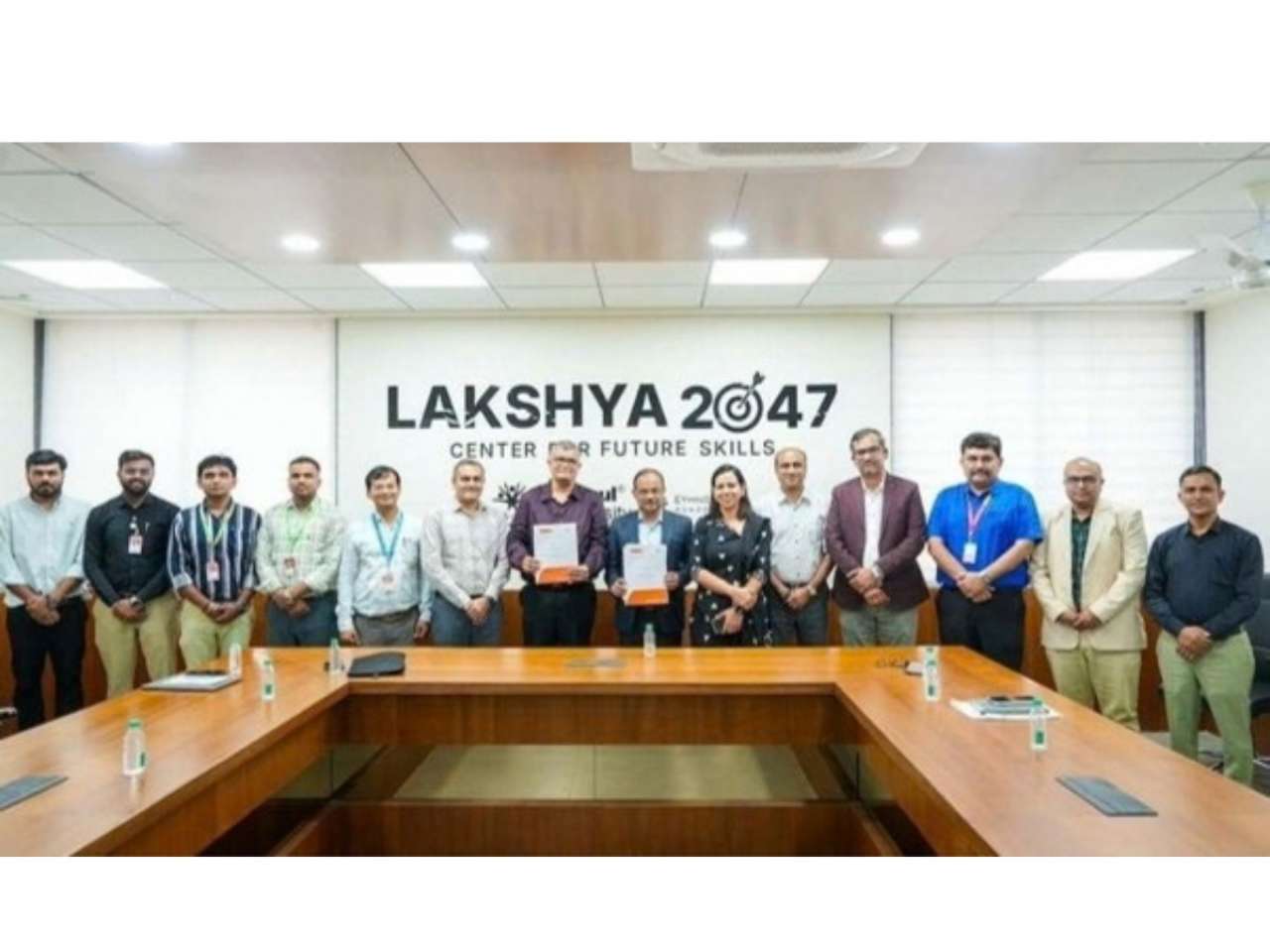
The university signed a memorandum of understanding (MoU) with Innogress to create a Centre of Excellence in Quantum Computing whose emphasis will be on research collaboration between academia and industry and developing technical skills.
The goal of the center is to offer students and researchers the chance to learn more about quantum computing, do research, and cooperate with companies working in the field of high technology. The University will also play a key role in the ecosystem of Greater Karnavati Quantum Computing Technology Park as one of the stakeholders. The initiative works on the foundation of the university's achievements in artificial intelligence, robotics, nanotechnology, and other related fields.
As shown by these developments, educational institutions are striving to combine classical technical spheres with new types of scientific development.
Nonetheless, the effective outcome of these initiatives will depend on the productivity of research, the availability of technical resources, the development of faculty staff, and the opportunities for students to employ the knowledge gained in practice.
Why Interdisciplinary Learning Matters
The advent of quantum computing serves to emphasize the fact that the distinctions lying between traditional disciplines of knowledge are increasingly blurring.
A student engaged in the development of quantum algorithms has to master the subjects of computer science and advanced mathematics, while performing research on quantum hardware makes the scientist involved employ different concepts from physics, electronics, and engineering. Also, the development of possible solutions in chemistry and materials science presupposes the cooperation of computational researchers with specialists in these fields.
Such necessity allows the development of special educational frameworks aimed at involving students into interdisciplinary work instead of convincing them to keep to their own disciplines only.
This effort should be supported through interdisciplinary research projects carried out by universities, specialized workshops organized there, collaborative laboratories, etc.
As a result of this integration, students can obtain all required analytical and research skills needed in the working process with technological innovations.
Preparing Students for an Uncertain Technological Future
It is crucial to distinguish between what quantum computing is capable of now and what it may ultimately be able to do; although interest in quantum computing has risen and played a major role in academic research.
The field of quantum computing still has a long way to go scientifically and technically.
Many uses of quantum computing are still being researched.
Students must learn the basic concepts in order to understand that technologies in general require more than just knowledge of specific technologies and job opportunities.
Students should be taught how to reason scientifically and develop problem-solving skills independently.
Students should also realize that technological development usually involves trial and error.
The Road Ahead for Quantum Computing Education in India
The success in developing the necessary competence in quantum technologies in India will partially depend on the ability of its scientific institutions to adequately respond to the new scientific requirements that emerge.
The development of such competence will be associated with a number of important priorities:
* Developing curriculum: Implementing new quantum computing topics along with solid knowledge of mathematics, physics, and computer science.
* Providing research opportunities: Offering students the chance to work on research and experimental projects under the supervision of experts.
* Knowledge exchange: Facilitating knowledge exchange among universities, technology firms, start-ups, and scientific institutions.
* Development of faculty: Helping teachers learn about new developments in specialized and rapidly changing technologies.
* Improved access to infrastructure: Increasing access to the necessary simulation tools and research facilities.
Innovative initiatives of organizations like Parul University and Innogress demonstrate one possible way of meeting the new requirements through academic and research collaboration.
At the same time, the establishment of a Centre of Excellence or an institutional agreement can serve only as the first step towards that goal.
The educational value of this step will largely depend on the quality of the research, technical competence, and experience gained by the students.
Conclusion
Quantum computing is both a chance and a challenge for higher education in India.
The multidisciplinary aspect of quantum computing means that universities have to reconsider the manner in which science education, training and experience is taught within courses offered in universities.
Working together between universities, research institutes and technology companies can assist in achieving this by linking theory to scientific innovations that are yet to be realized.
As quantum computing technology advances, it becomes clear that the primary task of higher education will not only be teaching new subjects but preparing the learners to use the yet to be known technology.