
Himalayan snow buried 18 people in September, including climbers on Manaslu and staff at Himlung base camp. Experts say warming climates make slopes unstable as glaciers thin. Mingma G said, "No one had believed that Himlung Base Camp could experience something of that scale." The ground beneath them is shifting.
One of us understands the life-giving as well as the life-threatening realities of glaciers/ice, having been a mountaineer and a survivor
By Anurag Maloo and Ronak Sutaria
In just eight days of September, Himalayan snow buried 18 people. On the night of September 19, an avalanche fell on a tent at Camp III on Manaslu, killing Dhruva Jyoti Guha, an Indian-origin climber living in Germany, and his guide, Fursemba Sherpa. On September 27, about four metres of snow buried the base camp of Himlung. Sixteen Nepali guides and kitchen staff were in the tents; none are believed to have survived. "No one had believed that Himlung Base Camp could experience something of that scale," said Mingma G, the guide who led the rescue.
Both avalanches fell on a country still searching its riverbanks for the missing. On August 26,a mass of rock and glacier ice broke away above the Lende Khola, a tributary of the Bhote Koshi near the Tibet border, and sent a flood through Rasuwa and Nuwakot. More than 1,500 people are dead, and over 5,500 are still missing.
The triggers differ: Wet, heavy snow loading the slopes on Manaslu and Himlung, and a face of rock and ice giving way above Rasuwa. The ground beneath them is the same, and it is shifting. Four months before Rasuwa, the International Centre for Integrated Mountain Development warned that snow cover across the Hindu Kush Himalaya had fallen 27.8 per cent below the long-term average, the lowest in more than two decades. Its March assessment found that glacier loss across the region has been accelerating since 2000.
Md Farooq Azam, Senior Cryosphere Intervention Manager at ICIMOD, puts it plainly: "Not every avalanche can be blamed on a warming climate, but the conditions that hold Himalayan slopes together are changing. Higher elevations are warming faster, permafrost is thawing, and glaciers are thinning, which leaves ice and rock on steep faces less stable than they were a generation ago. Most of this happens inside the mountain, where no climber or villager can see it. Instruments can. Continuous monitoring of the highest-risk glaciers and slopes is how we give the people living below them the minutes they need to move."
And the pattern did not begin this autumn. On July 30, an avalanche on Broad Peak in the Karakoram killed Nirmal 'Nims' Purja, who had climbed all 14 eight-thousanders in 189 days, along with nine other experienced climbers.
A 2023 study of avalanches reported across High Mountain Asia from the 1970s to 2022 counted 681 with recorded fatalities, which together killed 3,131 people. Between 2016 and 2019 alone, India's Parliament was told, over 70 army personnel died in avalanches and snow slides in Siachen and the wider HKH. Most avalanches in the region are never recorded. Part of the reason is how little of the region is watched. Of the 63,700 glaciers in the HKH, only 38 have had any ground-based mass-balance monitoring, and just seven meet the standards of the World Glacier Monitoring Service. There is consensus that the actual number of avalanches and snow slides is several orders of magnitude higher than the 681 reported in the recent five decades-plus of analysis.
Efforts have been made since 2017 for automatic detection of avalanches and for setting up a seismic sensor array for monitoring an avalanche start zone. A multi-modal Himalayan Mountain Intelligence System could provide the following key advantages: i) Avalanche "start zone" detection systems; ii) Avalanche pathway monitoring systems; and iii) Avalanche Early Warning Systems, which don't necessarily forecast or predict but can provide life-saving early warning to those who are in the path of these avalanche hazards.
An avalanche tracking and monitoring system would aid the HKH Mountain Intelligence in significant ways, not only for experienced mountaineers or civilian climbers but also for communities residing downstream whose livelihoods depend on being in the vicinity of these glaciers but tend to remain in the path of these hazards too.
Traditionally, satellites such as the Sentinel-1 SAR have been the primary source of avalanche activity over enormous and inaccessible areas. Advanced deep learning approaches to SAR datasets have allowed regional detection of avalanches over large areas. Recent advances in ground monitoring using sensors such as seismic sensor arrays, which can detect ground vibrations from moving avalanches; infrasound signal detectors for picking up low-frequency acoustic waves generated by avalanches; Doppler radars for tracking avalanche movement, velocity and location; and ultrasonic snow-depth monitoring to identify high-risk avalanche zones, combined with traditional automatic weather stations. A multi-modal network of ground monitoring would combine seismic, infrasound, snowpack, meteorological, satellite and AI/deep learning systems to create a powerful HKH Mountain Intelligence System.
One of us understands the life-giving as well as the life-threatening realities of glaciers/ice, having been a mountaineer and a survivor. In April 2023, a fall during the descent from Camp 3 on Annapurna, in its most avalanche-prone zone, left Anurag 70 metres deep in a crevasse at around 6,000 metres for three days and nights, with no food, water, oxygen, or communication. He lived through an avalanche down there. Large-slab avalanches move at 100 km/hr, and powder avalanches exceed 300 km/hr. You cannot outrun one. You make yourself small, create an airway, and protect yourself.'
The cryosphere in High Mountain Asia (HMA) and the Hindu Kush Himalaya (HKH) sustains the livelihoods of millions of people living downstream through its capacity to store water but also poses serious life-threatening risks to mountaineers and army establishments which are permanently stationed in the path of these hazards. The HKH needs an "avalanche-enabled weather station for every dangerous mountain corridor". A Himalayan Cryosphere Observatory Network, which starts with tracking 100 high-risk locations, would be a good start.
Warnings must also cross borders. The rock and ice above Rasuwa broke loose on the Nepali side, which, as ICIMOD has noted, placed it outside the reach of China's early warning system across the border. Rivers, glaciers, and avalanches pay no attention to the line on the map. Observation cannot either.
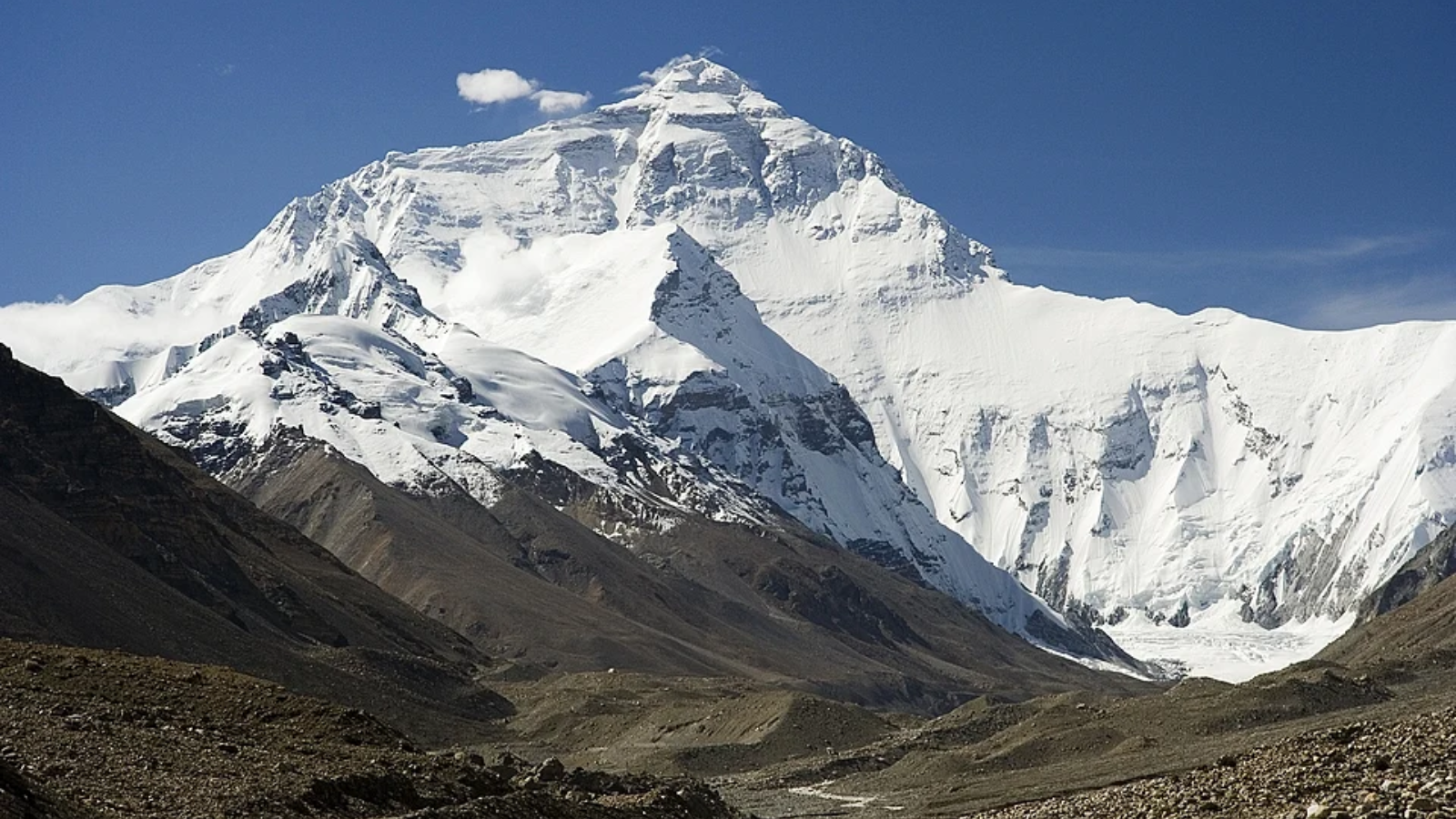
What we don't understand about the mountains that look so still and beautiful in photographs is how much is happening inside that we cannot see. And the terrain itself is changing. Permafrost, the frozen ground that acts as a geological adhesive in high-altitude terrain, is thawing and degrading. Solid rock faces that earlier generations of climbers treated as stable are shedding. Climbing routes are fracturing without warning. Snowpack instability, widening crevasses, wind-loaded cornices, internal temperature gradients that weaken buried layers of snow, and serac blocks the size of buildings balanced on melting pedestals are collapsing. These are things that instruments can detect but human senses cannot. Climate change is rewriting the risk profile of every major Himalayan peak, from Annapurna to Broad Peak.
India's Defence Geoinformatics Research Establishment (DGRE) is developing a Doppler radar that can raise real-time alerts as an avalanche forms. But its mandate is primarily military, and its forecasts serve the armed forces and the Border Roads Organisation first. The HKH needs an avalanche-enabled weather station for every dangerous mountain corridor, beginning with a Himalayan Cryosphere Observatory Network across 100 high-risk locations, shared across borders and open to civilians.
you may like
Nims chose to climb, knowing the dangers. Soldiers at Siachen do not get that choice. Neither did the kitchen staff at Himlung base camp nor the hydropower workers on the Bhote Koshi on 26 August. Nor do the millions downstream who depend on Himalayan water.
We cannot make the Himalayas safe. But we can make it better observed. And in a changing climate, observation is the first line of defence.
Maloo is the founder and CEO of The Voice of Glaciers Foundation (TVGF) and Orophile Ventures. In April 2023, he survived 72 hours trapped in a glacial crevasse at 6,000 metres on Annapurna. Sutaria is the founder and CEO of Respirer Living Sciences