
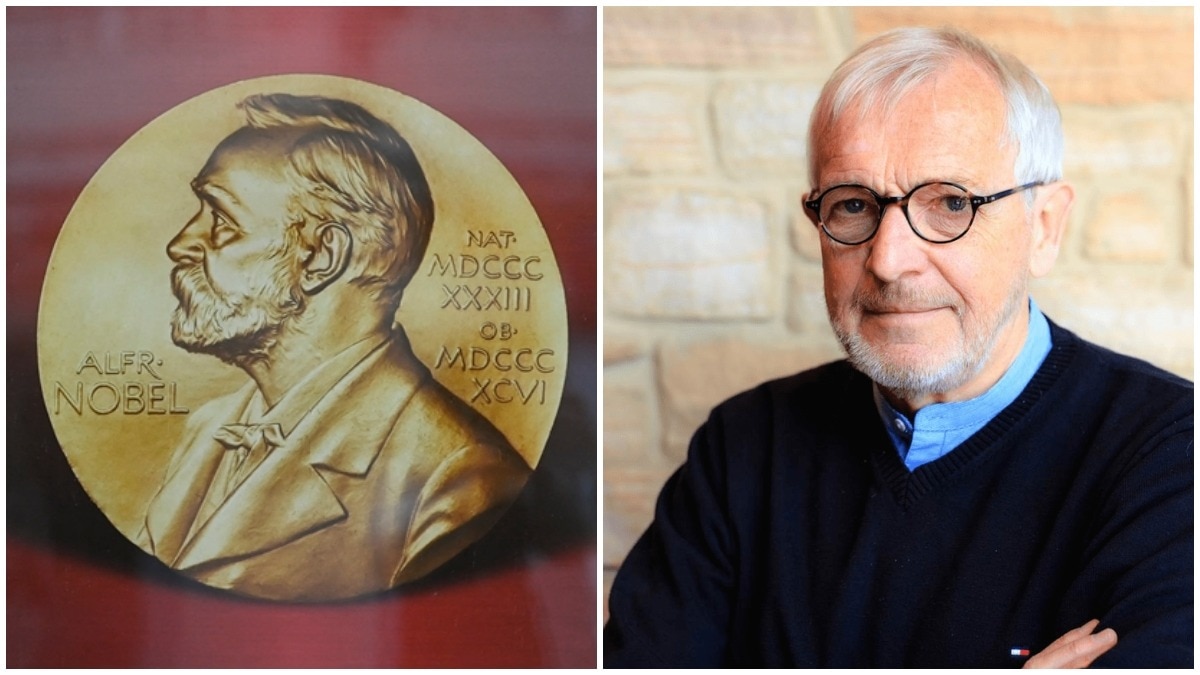
Francis Halzen won the 2026 Nobel Prize in Physics for his work on high-energy neutrinos. He said, “very few thought it would work, including myself.” Halzen used Antarctic ice to build the IceCube Neutrino Observatory. This project started in 1992 and changed how scientists study the universe from deep space.
When Francis Halzen began pursuing the idea of using the Antarctic ice to detect elusive neutrinos, even he was not convinced the experiment would succeed.
“I have to emphasise how lucky I was because when we staffed this project everybody realised this was maybe a good idea, but very few thought it would work, including myself,” Halzen said after being awarded the 2026 Nobel Prize in Physics for his pioneering work on high-energy neutrinos from space.
Halzen, a physicist at the University of Wisconsin–Madison, described the development of the IceCube Neutrino Observatory as an adventure in which success was far from guaranteed.
The idea dates back to the 1980s, when Halzen realised that the enormous volume of Antarctic ice could serve as a natural detector for neutrinos, tiny, electrically neutral particles that can travel across the universe largely unaffected by matter and magnetic fields.
Neutrinos are produced in some of the most energetic environments in the cosmos, including exploding stars and the regions around powerful black holes. But because they interact so weakly with matter, detecting them on Earth is extraordinarily difficult.
Halzen proposed turning the Antarctic ice itself into a giant telescope. Thousands of light sensors could be embedded deep beneath the South Pole, waiting for the faint flashes produced when a neutrino interacts with an atom in the ice.
In 1992, a small group of researchers and engineers began making the first attempts to deploy light sensors into the Antarctic glacier.
It would take years of engineering, construction and international collaboration before the full-scale observatory became a reality.
The breakthrough finally came nearly two decades later.
IceCube detected extremely high-energy neutrinos whose properties pointed to origins far beyond our Solar System. For the first time, scientists had a new way of studying the universe, not through light or electromagnetic radiation, but through particles capable of travelling directly from some of the most violent places in the cosmos.
The discovery opened the era of neutrino astronomy, allowing scientists to investigate cosmic accelerators that had remained hidden from conventional telescopes.
Halzen said the achievement was not his alone, crediting the talent and persistence of the hundreds of scientists, engineers and technicians who helped turn an uncertain idea into one of the world's most powerful observatories.
What began as an experiment that “very few thought” would work ultimately transformed how humanity observes the universe.