
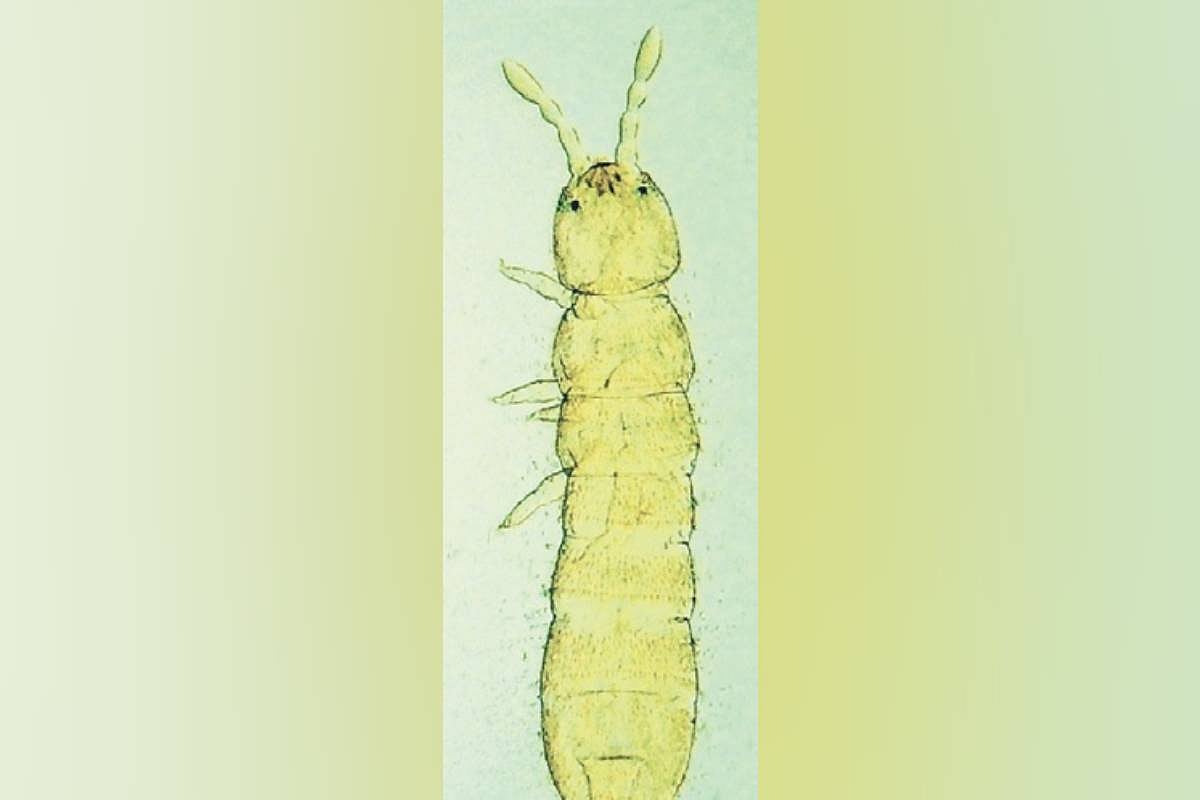
Scientists discovered two new species of springtails in the Nilgiri Hills. A team led by Dr R Sanil identified Folsomia ciega and Folsomia unioculata after collecting soil samples between April and June 2022. These tiny creatures show unique eye features. The findings got published in the taxonomic journal Zootaxa recently.
NILGIRIS: Scientists have discovered two new species of tiny soil-dwelling creatures called springtails in the Nilgiri Hills of the Western Ghats, taking the number of known species of the genus Folsomia in India to 13.
A team led by Dr R Sanil, Principal of Government Arts College, Coonoor, identified the species as Folsomia ciega and Folsomia unioculata. The researchers combined microscopic examination with DNA barcoding to confirm the discoveries. The findings were published in the taxonomic journal Zootaxa.
The study was conducted by Jose Anjooriya as part of her PhD at the Molecular Biodiversity Lab of Government Arts College, Ooty. She is currently working as a project scientist at the Institute of Maternal and Child Health, Medical College, Kozhikode. The team also included researchers from Spain, the Zoological Survey of India and the Department of Zoology, Providence College, Coonoor.
The researchers collected soil samples from Udhagamandalam, Coonoor, Kundha, Gudalur and Pandalur between April and June 2022. Samples were taken from leaf litter and soil.
Microscopic examination revealed the two species, both belonging to the genus Folsomia. Folsomia ciega, named after the Spanish word for ‘blind’, lacks eyes entirely. It is a small, pale and elongated springtail measuring about 1 mm and is distinguished by the arrangement of bristles, and a two-pronged tail structure called a mucro.
Folsomia unioculata, meaning ‘one-eyed’ in Latin, has a single eye, on each side of its head. It grows up to 1.3 mm and differs from related species that either have multiple eyes or are completely blind.