
Bengaluru marks the 70th anniversary of the global space era this month. On October 4, 1957, the Soviet Union launched Sputnik 1, starting the Space Race. India has deep roots in space research, with scientists like Sir CV Raman working on principles that helped the nation reach for the stars.
Although Bengaluru has been the official HQ of India's space program since the early 1970s, very few Bangaloreans are aware that this month marks the 70th anniversary of a watershed global space event, commemorated annually since 1999 as Day 1 of World Space Week. Which makes this as good a time as any to look back at the history of space exploration in India.
On October 4, 1957, the Soviet Union launched the world's first artificial satellite, Sputnik 1, into low earth orbit, bringing to life an idea that had hitherto inhabited only the realms of sci-fi fantasy - human space exploration. The launch caught everyone by surprise. Although both the United States and the USSR had begun rocket research programs based on the German V2 missiles (deployed to terrible effect to bomb London during World War II) in the late 1940s, it was the USSR that had surged ahead, successfully launching the R-7 Semyorka, the world's first ICBM (or Intercontinental Ballistic Missile, a rocket capable of carrying nuclear warheads through outer space and delivering them over 5,500 km away) on August 21, 1957. (Today, India is one of only eight countries in the world known to have operational ICBMs.) In October that year, even as the US was demanding that the UN carry out a rocket inspection program, the Soviets used the same R-7 to launch Sputnik 1.
Just four months later, on January 31, 1958, the US launched its first satellite, Explorer 1. The Space Race had begun.
It would be a decade before another landmark space-related event came to pass. On October 10, 1967, with the Space Race heating up, the Outer Space Treaty, a multilateral agreement banning the use of nuclear weapons in space, limiting the use of celestial bodies for peaceful purposes, and declaring that space "shall be the province of all mankind", came into force. The two dates - October 4 and October 10 - bookend World Space Week.
In India, modern space research began as far back as the 1920s, with physicist SK Mitra's experiments in the ionosphere. In the 1930s, astrophysicist Meghnad Saha and Nobel Laureate Sir CV Raman, who became the director of the Indian Institute of Science in Bangalore in 1933, worked out several scientific principles with applications in space science. Come the 1940s, two dazzling Indian scientists, Homi J Bhabha, who set up the Tata Institute of Fundamental Research in Bombay in 1945, and the young Vikram Sarabhai, who set up the Physical Research Laboratory in Ahmedabad in 1947, advanced Indian space research by leaps and bounds. Their early experiments involved high altitude testing, but also, and counter-intuitively, experiments deep underground, and closer home, in the defunct gold mines of Kolar!
In 1954, the Department of Atomic Energy was established. Prime Minister Nehru held the portfolio and Bhabha was the department's first secretary. One of its mandates was to fund space research. The 1957 launch of Sputnik galvanised Indian scientists to begin dreaming of space exploration themselves. Accordingly, in 1962, Nehru set up the Indian National Committee for Space Research (INCOSPAR), with Sarabhai as its inaugural Chairman. In 1963, upper atmospheric research began for the first time at the Thumba Equatorial Rocket Launching Station (TERLS), whose first director was Karnataka-born aerospace engineer Holenarsipura Govindrao Srinivasa Murthy (HGS Murthy was also the one who recruited APJ Abdul Kalam into TERLS).
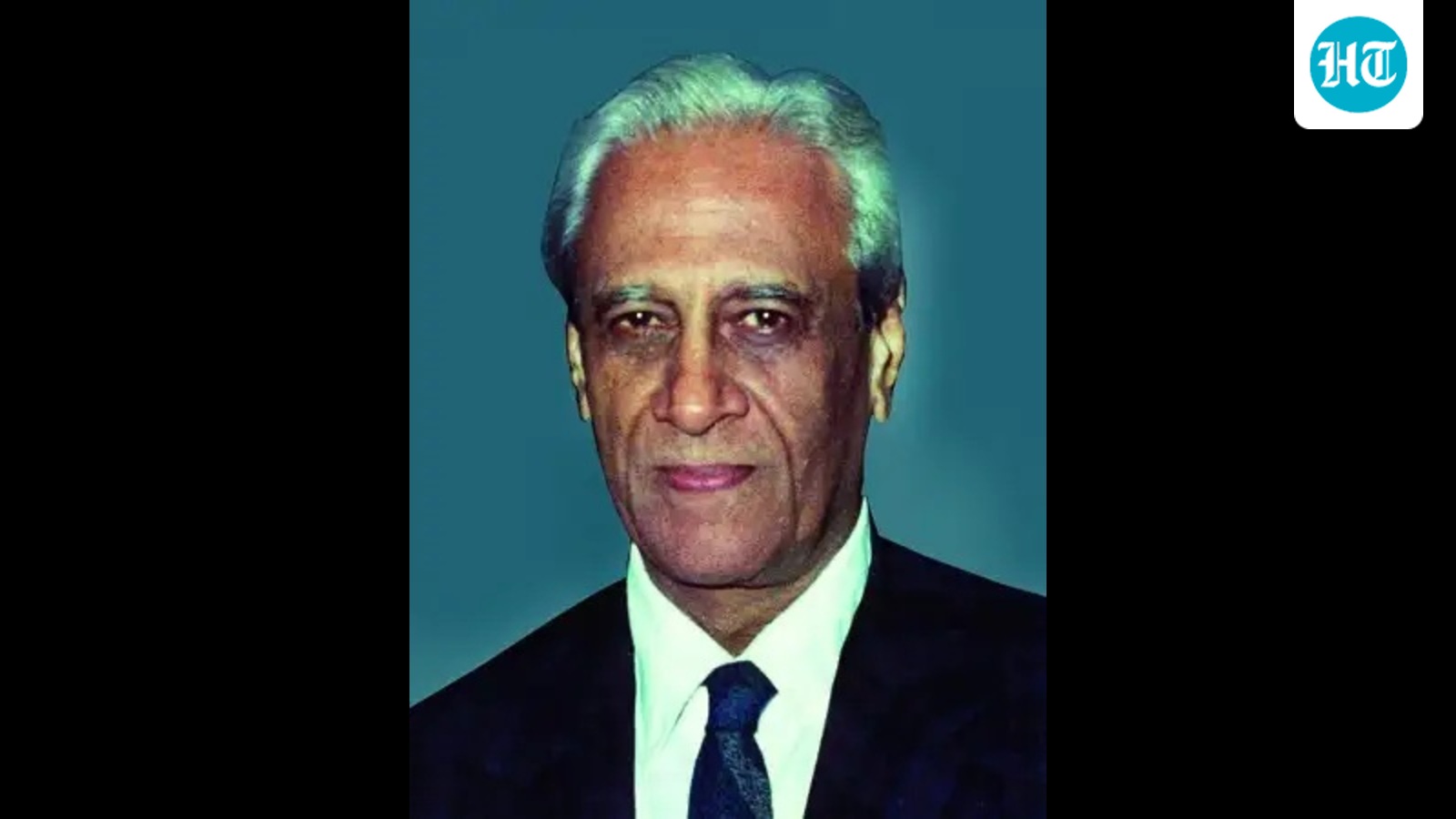
On August 15, 1969, INCOSPAR was renamed ISRO (Indian Space Research Organisation). Sarabhai served as its founding director until his tragic death in 1971, at age 52. Losing no time, PM Indira Gandhi invited Satish Dhawan, the then director of IISc, to take over as chairman. Dhawan agreed on two conditions - that he would continue to serve as director of IISc, and continue to live in Bengaluru. So indispensable was Dhawan to the ISRO project that the Prime Minister acquiesced.
Since then, ISRO has called Bengaluru home. In the next couple of months, the first mission of India's maiden human space flight program is scheduled to take off with the launch of Gaganayaan-1, carrying the half humanoid robot, Vyommitra. That will be followed, if all goes well, by a manned mission, in end-2027, with three human astronauts who are already in training. Watch this space.
(Roopa Pai is a writer who has carried on a longtime love affair with her hometown Bengaluru)