
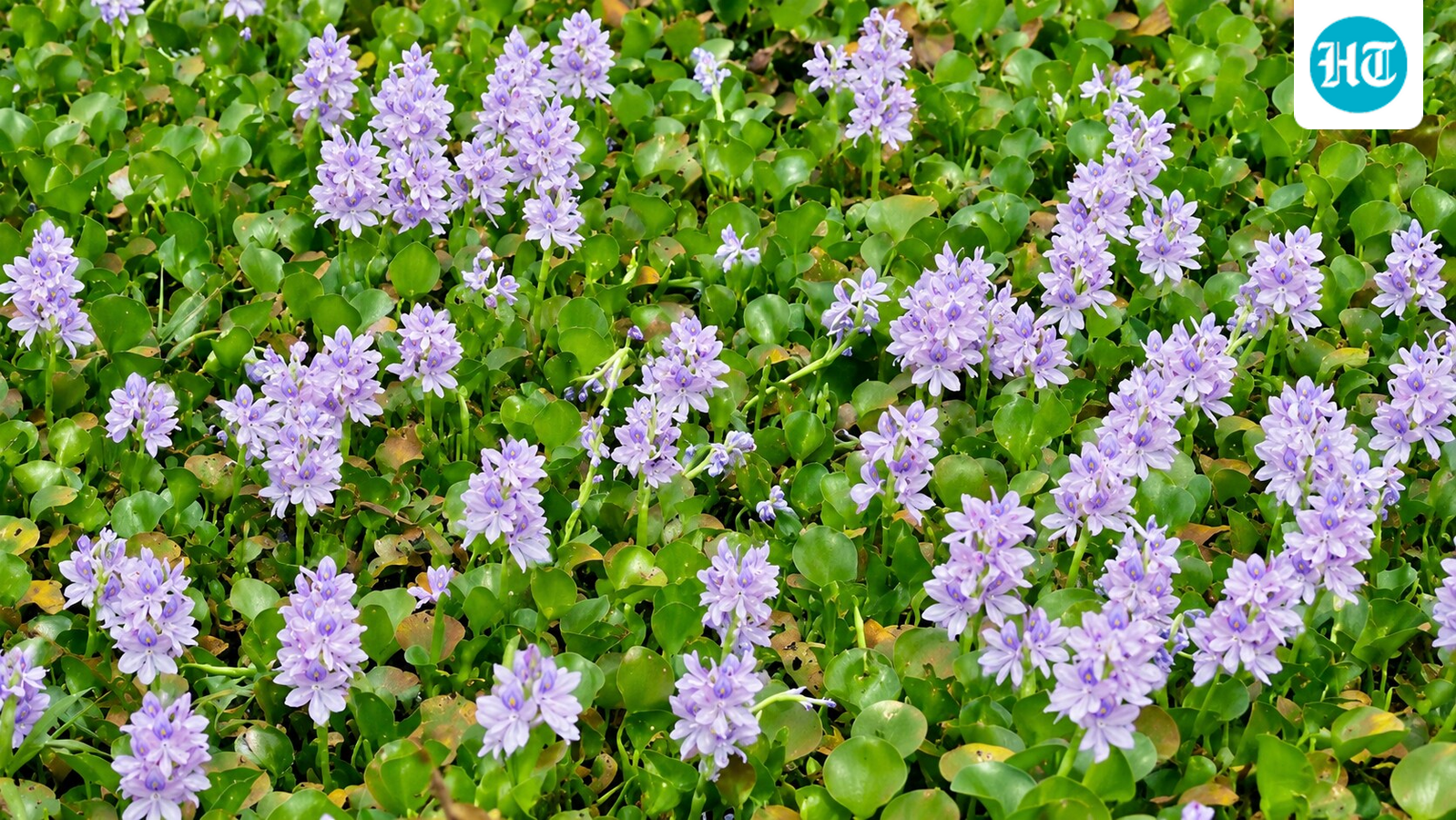
Water hyacinth, a South American ornamental, invaded 53 countries and covered 90% of Lake Victoria’s shore. First spotted in 1989, the plant cost the region about $150M a year. It choked fisheries and clogged pipes, as thick mats blocked sunlight and oxygen, causing many fish to die in the water.
There's a lake in East Africa that's so big it feels like a sea. Now imagine a thick green carpet spreading across its edges. That really happened on Lake Victoria. According to a U.S. State Department case study on water hyacinth, this plant has infested 53 countries across five continents. The same case study says it covered some 90 percent of Lake Victoria's shoreline. It all began with a plant that people grew because it was pretty.
NASA's Earth Observatory describes how such invasions usually start. Someone plants a water hyacinth in a garden pond because they like its lavender flowers. Then the plant begins to double its area every 6 to 18 days. The real trouble begins when the gardener throws it away. The plant is native to the South American tropics, according to NASA. It was brought to Africa around 1879, and about 110 years later it found its way to Lake Victoria. The State Department case study said it was first spotted on the lake in 1989. The plant threatens fisheries, hydroelectric production, agriculture, human health, and the economy.
Lake Victoria is the largest lake in Africa and is shared by Tanzania, Kenya, and Uganda. It is the world's second-largest freshwater lake by surface area. The case study describes it as a major example of the damage water hyacinth can cause. Thick mats compete with native plants, fish, and frogs for oxygen, and the case study says that this often results in suffocation and large die-offs. It also says small fishing boats were nearly impossible to steer across the lake. NASA also points out that sunlight does not pass through the mats, so native plants below are missing the light they need. The plant can also clog irrigation canals and the pipes that bring water to cities and villages on the shore. By 1998, NASA estimated the plant had grown to cover some 20,000 hectares of the lake. That's about 77 square miles.
NASA also points out that sunlight does not pass through the mats, and so native plants below are missing the light they need. NASA also says the plant can clog irrigation canals and the pipes that bring water to cities and villages on the shore. By 1998, NASA estimated the plant had grown to cover some 20,000 hectares of the lake. That's about 77 square miles.
The case study found that the economic cost of the invasion is estimated at $150 million each year. That's one estimate, not a precise bill. The damage can be severe for people who depend on the lake, but the story does not end there. NASA says removal efforts, a weevil that eats the plant, and other factors have cut it down to manageable levels. But satellite images in December 2006 showed the plant was back in business. Heavy rains in late 2006 flooded the rivers that feed Kenya's Winam Gulf. Floodwaters brought farm run-off and nutrient-rich sediment into the water, and NASA says this contributed to a new outbreak.
Plants can travel far from home, and most are harmless. But some can cause big trouble in the wrong spot. Water hyacinth shows how a small choice, like dumping a plant aside, can become a large problem. So, avoid disposing of unwanted pond or aquarium plants in a river or lake. Before buying exotic plants, it is a good idea to check local rules. This case study is from an archived State Department site and NASA's account dates to 2007, so the numbers are a snapshot in time. Nature has a balance of its own, and sometimes we can upset that without even meaning to.