
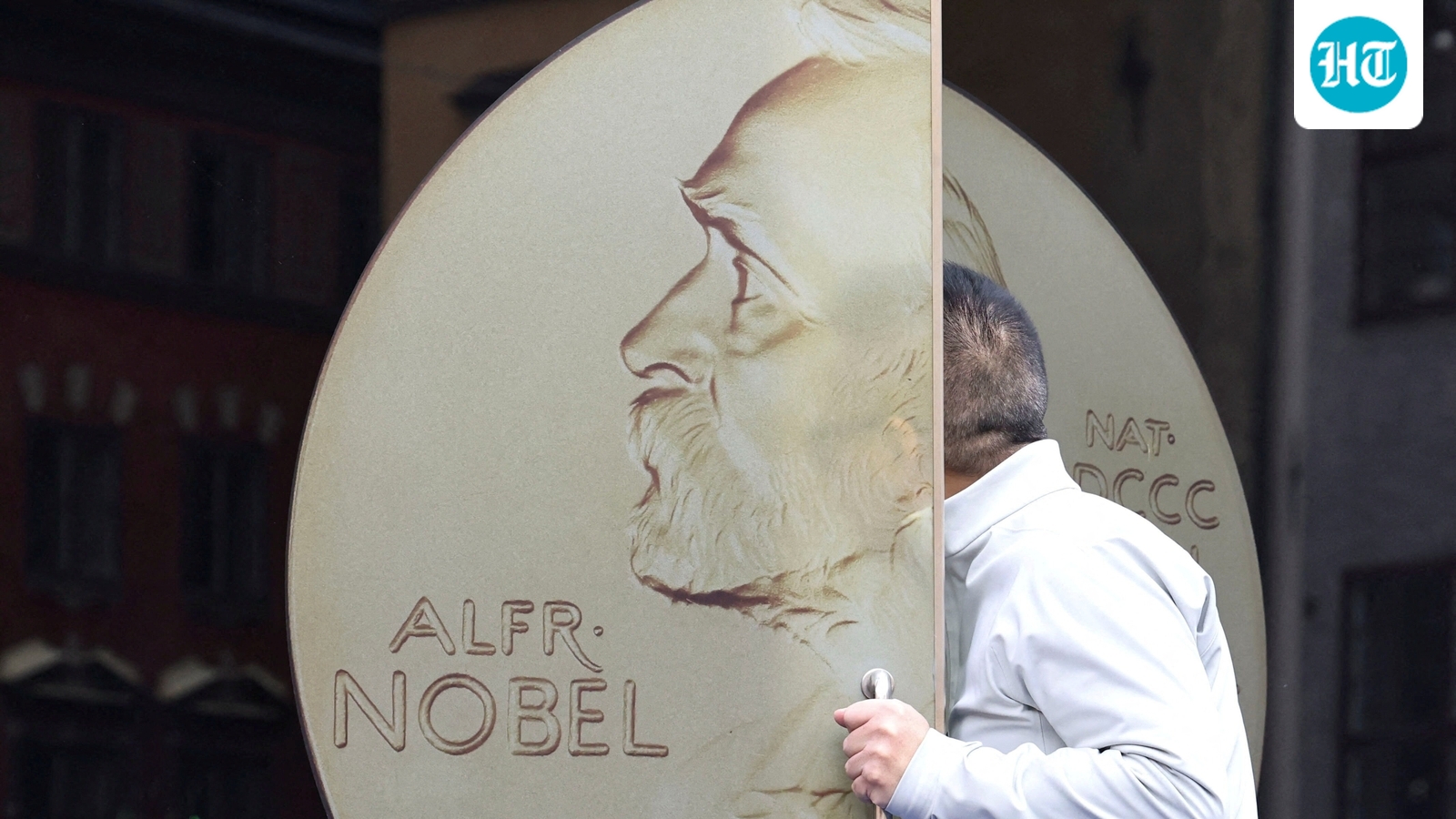
Former research associate Suneel Kateriya made a significant early contribution to the 2026 Medicine prize research. Kateriya identified two novel genes while working as a PhD student under Peter Hegemann. These genes helped develop optogenetics, a technique that uses light to control nerve cells and shows promise for restoring sight.
The work that wins a scientist a Nobel Prize is never achieved in one inspired moment of genius, nor single-handedly. It usually takes years upon years of research, involving leading scientists, collaborations ranging from local to international, and a number of research associates, who are often PhD students. In the end, the prize for a particular field in any year is given to three recipients at most. And invariably, they are the principal investigators of the research that has been deemed Nobel-worthy.
The contribution of research associates has an immediate context as well as a chequered history. The immediate case involves the 2026 Medicine prize: former research associate Suneel Kateriya made a significant early contribution to the overall body of work. Kateriya, now a professor in the optobiotechnology laboratory at Jawaharlal Nehru University, is a co-author on two seminal papers (Science 2002, PNAS 2003) cited by the Nobel Committee. He was then a PhD student in the laboratory of biophysicist Peter Hegemann at the University of Regensburg.
Hegemann shares the Nobel with fellow German biophysicist Georg Nagel (lead author on both papers) and American neuroscientist Karl Deisseroth.
The award recognises the milestones posted by the three on the road leading to the science of optogenetics. This is an emerging technique that uses flashes of light to turn nerve cells on and off and has promising therapeutic potential, having been shown to partially restore sight in a patient blinded by illness. To understand Kateriya's contribution, it is best viewed within the context of the overall journey.
There is a single-celled alga called Chlamydomonas that responds to light at a remarkable speed. Japanese researchers mapped its DNA, which Hegemann used to test his hypothesis that a single protein was responsible for capturing light and also acting as an ion channel (which allows charged particles to pass through the cell membrane). From the available DNA, Hegemann's student, Kateriya, identified two novel genes whose molecular structures looked promising. Optimistic that these genes would yield the protein he was looking for, Hegemann sent them to Nagel, who confirmed the result. Injected into frog eggs, the genes mass-produced two new proteins, now known as channelrhodopsin-1 and channelrhodopsin-2, and Nagel showed that they were indeed ion channels. In subsequent years, Deisseroth injected channelrhodopsin-2 into mouse cells, first in a petri dish and then in living mice, eliciting various responses when the cells were exposed to light. Tests in the medical field came later.
Kateriya is happy to have contributed. "It was quite satisfying to see the results of our work," he told HT. "It is not just about the Nobel Prize but also the fact that our work is playing a role in society," he told HT. He referred to clinical trials testing optogenetics on people with retinitis pigmentosa, a disease that destroys the eye's rods and cones, and how it partially restored vision in one participant. "Although the trial was not carried out by our research group, our work has opened new avenues, not only in medical science but also in biological research."
Historically, there have been at least two controversial precedents involving a Nobel Prize in science and a key research candidate. The first relates to the discovery of insulin in the 1920s, which won Canadian doctor Fred Banting and Scottish biochemist John Macleod the 1923 Nobel Prize in Medicine.
When the Nobel was announced, Banting was furious, saying it should have been given to him and Best, not to MacLeod. Banting shared his prize money with Best. MacLeod shared his prize money with Collip, according to the Canadian Journal of Health History.
The names of Banting and MacLeod had been proposed by Danish physiologist August Krogh, himself a Nobel winner. An article on the Nobel website quotes from his nomination: "... one may conclude that the credit for the idea behind the work which led to the discovery, undoubtedly goes to Banting, who is a young and apparently very talented man. However, he would definitely not have been able to carry out the investigations, which from the start and during all stages, have been supervised by Professor Macleod."
Years later, the 1972 official history of the Nobel Prize (quoted by a paper in Clinical Chemistry) acknowledged: "Although it would have been right to include Best among the prize-winners, this was not formally possible, since no one had nominated him -- a circumstance which probably gave the Committee a wrong impression of the importance of Best's share in the discovery."
The other controversy involved the 1977 Nobel Prize in Physics for the discovery of pulsars, which are rapidly rotating neutron stars whose poles emit electromagnetic radiation. The award went to Antony Hewish and Sir Martin Ryle, but the actual physical discovery, in 1967, was made by PhD student Jocelyn Bell Burnell while analysing chart recordings from a radio telescope at Cambridge University's Mullard Radio Astronomy Observatory.
Bell Burnell's omission outraged other astronomers, including Sir Fred Hoyle, who in March 1975 held a press conference in Montreal in which he accused Hewish of claiming credit for work carried out by his assistant.
Bell Burnell, on the other hand, insisted that she did not deserve the prize. "I believe it would demean Nobel Prizes if they were awarded to research students, except in very exceptional cases, and I do not believe this is one of them," she said in a famous speech at the New York Academy of Sciences in 1977.
It is fair to assume that nominations for the science Nobels usually come from within the scientific community. The fact that August Krogh did not nominate Charles Best is significant in that context: it points to how the community itself tends to value the contributions of principal investigators over those of their junior associates.
A 2014 paper in PNAS examined how the scientific community informally allocates credit among co-authors. Chinese computer scientist Hua-Wei Shen and American physicist Albert-László Barabási developed an algorithm that reconstructs this collective credit assignment from citation patterns. "Established scientists receive more credit than their junior collaborators from coauthored publications," they note.
They validated the method on Nobel-winning papers by showing that the algorithm could correctly identify the authors whom the community (and later the Nobel Committee) credited with the discovery, independent of their positions in the author list. In other words, when the algorithm was run on the original multi-author papers, it successfully recovered the names of the eventual laureates from the surrounding citation patterns.
Whoever nominated this year's Medicine laureates might have thought like this: Hegemann had the vision to pursue his hypothesis about a key protein. Nagel had the expertise to induce the genes he received to produce the protein Hegemann was looking for, and to demonstrate that it acted as a channel for charged particles. Deisseroth utilised the protein's properties in a way that would help medical science.
Kateriya's contribution has always been acknowledged. In 2013, Hegemann and Nagel wrote in EMBO Molecular Medicine: "In 2001, Suneel Kateriya in the Hegemann group identified novel DNA sequences that encoded for large microbial-type rhodopsins in a cDNA data bank from Chlamydomonas."