
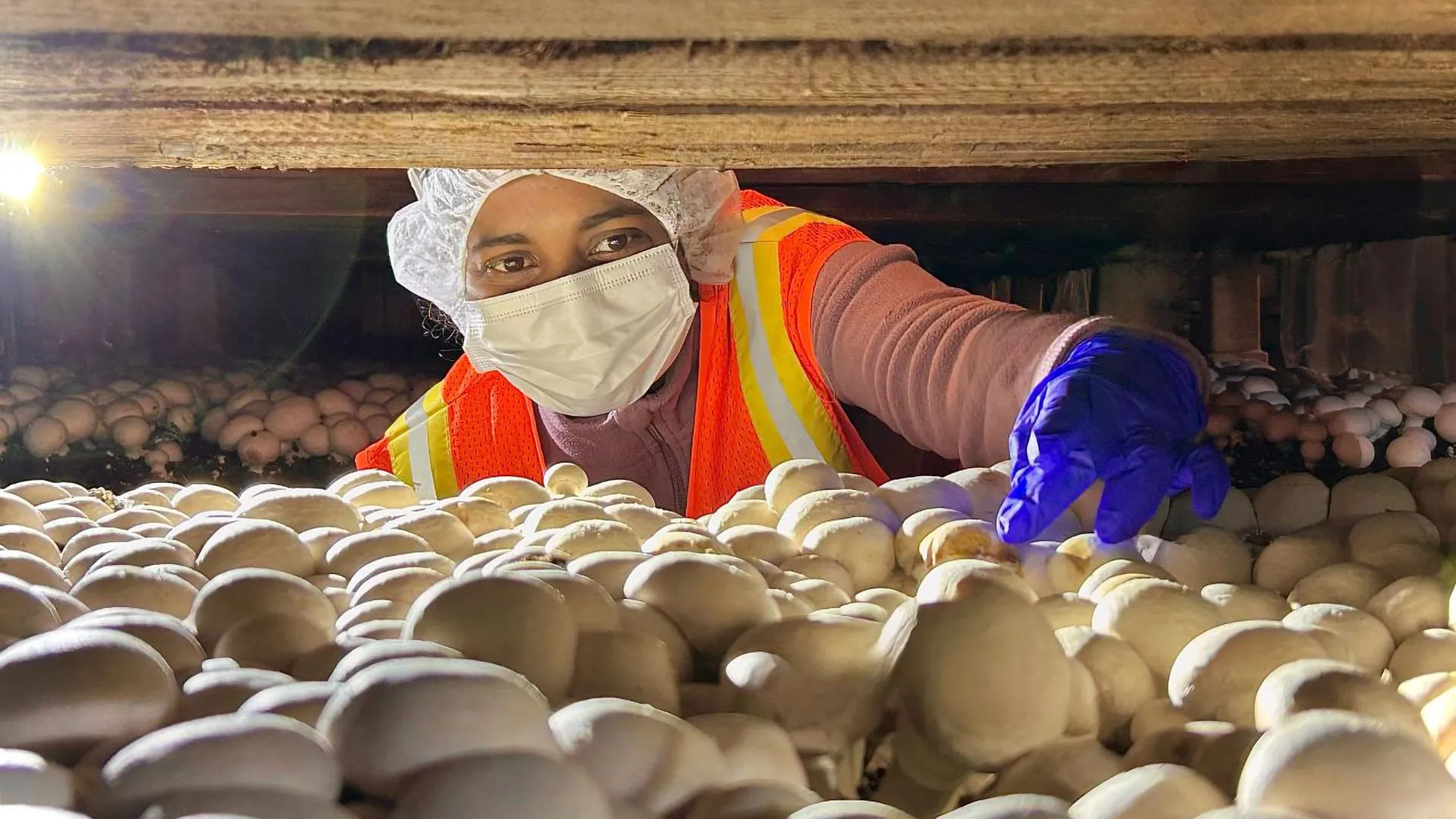
University of Florida researchers discovered why a 100-year-old mushroom disease persists. While scientists once blamed a single pathogen, DNA analysis showed over 17 different bacterial species cause the damage. Samuel Martins said, "For years, the industry has struggled with treatments that provide inconsistent results against bacterial blotch." This complicates farm control.
The discovery comes from a University of Florida study investigating bacterial blotch, a persistent disease that damages white button mushrooms and causes significant financial losses for growers.
White button mushrooms are a valuable specialty crop and a familiar ingredient in everything from salads and appetizers to everyday meals. Rich in nutrients and valued for their versatility, they are often promoted as an example of the "food is medicine" concept, which emphasizes the role of nutritious foods in supporting good health. Their nutritional benefits make them an important part of many healthy diets.
Despite their popularity, these mushrooms face a longstanding problem that can make entire portions of a harvest difficult or impossible to sell.
A Century-Old Mushroom Disease With Hidden Culprits
Bacterial blotch causes brown or yellow discoloration on mushroom surfaces, damaging their appearance and reducing their commercial value. The disease can also lower crop yields and shorten shelf life, making it a costly challenge for mushroom farms across the United States.
For many years, scientists primarily associated bacterial blotch with a single disease-causing bacterial pathogen. However, researchers at the University of Florida Institute of Food and Agricultural Sciences (UF/IFAS) have now found that the disease involves a much more complex collection of pathogenic bacteria.
These microorganisms can thrive in the carefully controlled, humid indoor environments used for commercial mushroom cultivation. Because several bacterial species may contribute to the same disease, methods designed to target a single pathogen may not be sufficient.
"For years, the industry has struggled with treatments that provide inconsistent results against bacterial blotch," said Samuel Martins, co-author and assistant professor in the UF/IFAS Department of Plant Pathology. "As part of a separate $7 million U.S. Department of Agriculture grant involving Penn State, University of Delaware and UF/IFAS, we are developing advanced diagnostics and sustainable solutions to strengthen mushroom farms nationwide."
DNA Analysis Reveals More Than 17 Bacterial Species
To investigate what was causing the disease, the research team collected affected mushrooms from several production facilities across the southern United States.
The scientists combined DNA sequencing, chemical profiling and conventional laboratory testing to identify the bacteria associated with the damaged mushrooms. DNA sequencing allowed them to examine the genetic identities of microorganisms present in the samples, while the additional tests helped characterize the bacteria and their disease-causing potential.
The results revealed a far more diverse group of pathogens than expected.
"We found more than 17 different species of pathogenic bacteria associated with the disease," said Sameerika Mudiyanselage, the study's lead author and a doctoral student of Martins and Romina Gazis at UF/IFAS Tropical Research and Education Center. "While two well-known bacterial pathogens dominated the known disease profile, we also detected a surprisingly high level of another group of bacteria that has not previously been linked to the mushroom disease."
The discovery suggests that scientists have been overlooking important contributors to bacterial blotch. Although two established pathogens remained prominent, the presence of additional bacterial groups indicates that the disease cannot be fully understood by studying those organisms alone.
This complexity may help explain why bacterial blotch has persisted for generations despite efforts to manage it. When several different microorganisms are associated with a disease, identifying the responsible bacteria, predicting outbreaks, and developing consistently effective treatments become more challenging.
The findings also suggest that growers may need more comprehensive detection methods capable of identifying a broader range of bacterial threats.
"We hope that expanding our research will lead to the development of better diagnostics and more effective treatments to address the full group of disease-causing bacteria in white button mushrooms," she said.
Natural Treatments Could Help Protect Mushroom Farms
The University of Florida researchers are now building on their findings with a follow-up study focused on more sustainable ways to manage bacterial blotch.
One promising approach involves testing plant-based essential oils, beneficial microorganisms, and other biological products as possible alternatives to conventional chemical treatments.
Essential oils contain naturally occurring compounds produced by plants, some of which have antimicrobial properties. Beneficial microbes may also help suppress harmful bacteria or make it more difficult for disease-causing organisms to thrive.
These approaches could eventually offer mushroom growers additional tools for controlling bacterial blotch while reducing their reliance on conventional chemical treatments. However, further research is needed to determine how well the potential alternatives work under real growing conditions.
"Ultimately, our goal is to provide growers with practical, science-based solutions that help strengthen mushroom farming systems," said Martins. "By understanding the complexity of bacterial blotch and the role of microbial communities, we can develop better eco-friendly management practices that reduce losses while improving sustainability."
The research changes the understanding of a disease that has affected white button mushroom production for more than a century. Rather than being the work of a single bacterial pathogen, bacterial blotch involves a diverse group of potentially harmful microorganisms, including previously overlooked species.
By uncovering this hidden complexity, scientists hope to improve disease detection, develop more reliable treatments, and reduce the crop losses that have long burdened mushroom producers. The findings could ultimately help make mushroom farming more resilient, productive and environmentally sustainable.