
Palaeontologists found 14 shark teeth in Egypt’s Western Desert dating back to the Late Cretaceous. These fossils, from five different species, show that the Sahara was once a warm tropical sea 70 million years ago. The team from Cairo University found these remains inside phosphate-rich rocks at the Abu-Tartur Plateau.
Shark teeth from at least five species have been found in Egypt's western desert of the Sahara. Fourteen of them were discovered and shed light on the marine environment of the region during the Late Creataceous, 70 million years ago.
Palaeontologists have found 14 shark teeth in an Egyptian desert that was once covered by a warm tropical sea. The teeth come from five shark species that lived 70 million years ago. Remains of two other shark species were previously found at the same sites, showing that the region once had an aquatic ecosystem. The study was published in Cretaceous Research.
The fossils were found in the Abu-Tartur Plateau, in Egypt's Western Desert and date back to the Campanian stage of the Late Cretaceous, roughly 84 to 72 million years ago. The Duwi Formation here has preserved traces of the sea inside phosphate-rich rocks that were also found to be hiding these shark teeth.
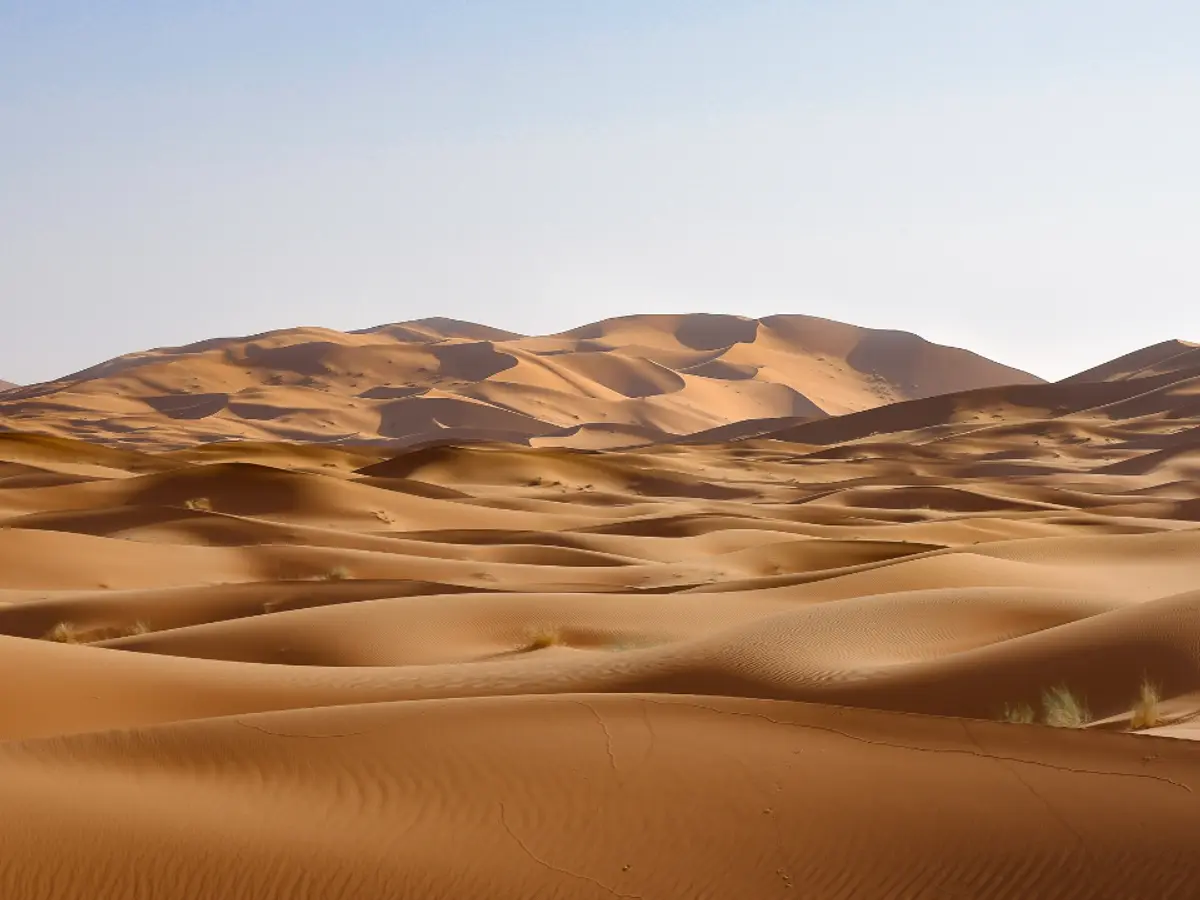
During the Late Cretaceous, global sea levels were higher, and Earth was warmer. Continents were covered with shallow seas, including deserts. Water reached deep inside the Sahara, with sharks and other marine creatures swimming here 84 million years ago. Today, the Sahara is the largest desert in the world.
The teeth were found by a team of palaeontologists led by Tarek Yassin from Cairo University. They identified that the 14 teeth came from at least five species, all from the genus Lamniformes. Today, great whites, makos and goblin sharks belong to this category of sharks.
The teeth are of different shapes. There are some that are narrow and pointed, which the sharks likely used to hold slippery prey. The broader teeth were suited for slicing.
Analysing shark teeth is also how scientists learn about ancient marine environments. Like most creatures, different sharks came from different regions. By learning which sharks lived in which parts of the continents, they can estimate what that region would have looked like millions of years ago.
In this case, the Scapanorhynchus species that was found in the desert is believed to have lived in deeper water. Cretalamna and Serratolamna are associated with more open-shelf settings, while Squalicorax possibly came from shallower water.
Discovering such diverse species in one region shows that the marine environment here was quite diverse. In the past, scientists have found fish, sea turtles and other marine reptiles in the Duwi Formation. This means that a sea capable of supporting diverse life forms was present here during the Late Cretaceous.
Even though Abu-Tartur is dubbed "shark graveyard", it doesn't mean that all these sharks died here at the same time. Remains of marine animals from different times and environments gradually gathered here on the phosphate beds. It is possible that all these animals lived hundreds or thousands of years apart.