
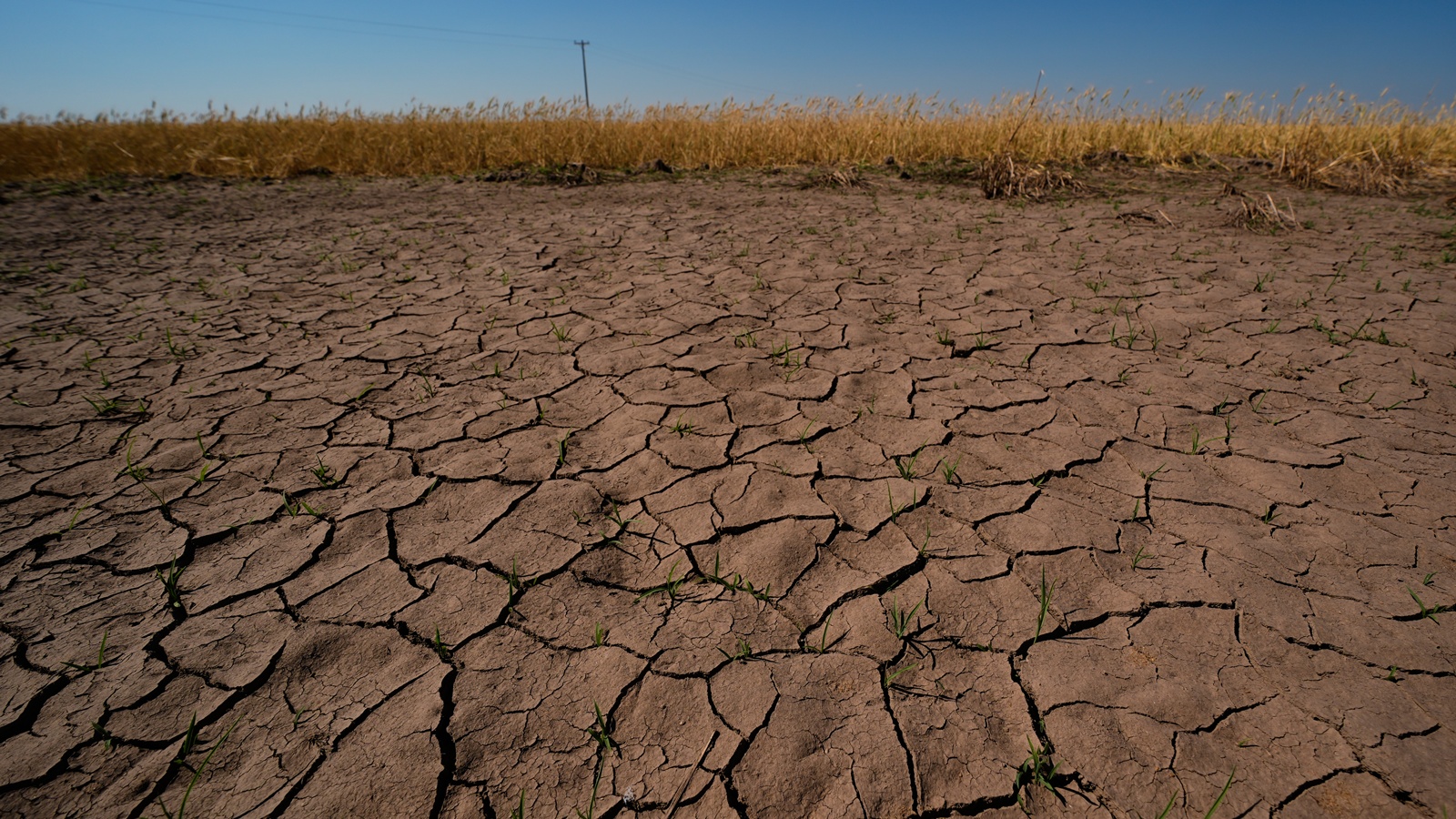
The World Meteorological Organisation and NOAA forecast a strong El Niño lasting into spring 2027. Experts say t 97 per cent probability of this event. This "supersized" El Niño could disrupt Indian monsoon winds, potentially causing severe droughts. India must plan carefully as extreme weather events already damage crops.
Very rarely, it is okay to be alarmist. This is one of those times. Even usually cautious scientists seem to agree. For the first time, the World Meteorological Organisation (WMO), the National Oceanic and Atmospheric Administration (NOAA), and other reputed global scientific research institutions have expressed a high degree of confidence in their 2026 El Niño forecast. They offer a 97 per cent probability that it will continue into spring 2027. The NOAA puts 80 per cent-plus odds on it becoming a strong to very strong event, with sea surface temperature anomalies exceeding 2°C, a threshold rarely crossed in the key Pacific monitoring region. The UN warns that this "supersized" El Niño has the potential to deliver massive blows to economies globally. Based on 1,000-year coral-core climate records, media report this could be the worst event in a millennium.
Why should we in India care about what's happening in the Pacific Ocean? The Pacific El Niño and our Indian monsoon are inextricably tied together. The heat in the ocean drives moisture-laden winds. When the Pacific becomes unusually warm, it will disrupt the very wind systems that pull rains towards India. Often, alongside a strong El Niño, we have experienced some of our worst droughts, such as in 1972, 2002 and 2009.
This "Super El Niño" is coming on top of a long-term trend of global warming, which we have seen can exacerbate extreme weather. In India, disasters are no longer exceptional events. In 2023, for example, 86 per cent of days witnessed an extreme weather event, with more than 2.2 million hectares of cropland damaged. About 85 per cent of districts are exposed to floods, droughts, or cyclones.
This year's El Niño might be like a new blow to an open wound.
We might have to plan for the worst. Yet, we don't know how it will affect terrestrial systems inside the country -- our grasslands, forests, or riverine systems -- or impact the phenology, the growth and fruiting of plants. We do not understand how it will affect agriculturists and pastoralists, nor can we predict the exact impact on our marine systems. Pacific Ocean temperatures have already risen 2.6°C above the threshold typically used to define El Niño (0.5°C), with projections suggesting anomalies could reach up to 4°C. At such temperatures, we can expect several coral reefs to bleach and die out. Even without a Super El Niño, Nature Conservation Foundation (NCF) researchers recorded a 50 per cent decline in the coral reefs around Lakshadweep between 1998 and 2025. Thanks to conservation efforts, some had begun to bounce back. With El Niño becoming more frequent and intense, the next setback might be harder to overcome.
INCOIS, India's ocean monitoring agency, predicts severe heat stress on both the Arabian Sea and the Bay of Bengal, peaking around March 2027. The livelihoods of millions of fisherpeople will be directly hit, with staples like sardine and mackerel likely to see reduced catch.
We are already feeling the pain. The southwest monsoon has closed well below its long-period average, with some regions recording September shortfalls of half the normal, hurting rice, pulses, cotton and maize. Reservoirs are thin heading into the rabi season. The main climatic punch is expected only from November onward. To avert some of the worst, we need to be better prepared. For starters, we will have to understand more. On September 16, 188 conservationists and researchers issued a "call to ecologists" to do so. Let's not react after the fact this time, they plead. Let's be proactive and prepare to gather rigorous data in real time. Let's break our silos and make a multi-sectoral effort.
How can government agencies come together with scientists across public and private institutions to understand specific vulnerabilities? How can we monitor coral reef bleaching, large rainforest tree mortality, fire risks, urban heat island effects, and shifts in phenology and also in animal behaviour?
We need on-site measurement that matters to people, not just data from large-scale remote sensing.
you may like
Sadly, despite decades of anecdotal experience, we still do not have systematic data on how El Niño events actually play out across our natural ecosystems, and especially on communities and the livelihoods that are dependent on them. In Lakshadweep, the 1998 El Niño destroyed 80 to 90 per cent of live coral on most reefs studied. We know this only because a handful of researchers, like marine biologist Rohan Arthur, happened to be in the water with measuring tapes that year. Everything we later learned -- that reefs with healthy fish populations recovered better, that local currents mattered more than assumed -- exists only because someone was watching at the right time, in the right place.
This time, we have a whole new opportunity. It is an ecological and social crisis to which the political regime, too, will have to respond. The government already understands the urgency. It must now quickly facilitate access and funding support to develop the scientific evidence that will help us build our resilience. Philanthropic capital needs to understand this research effort as a moral imperative. Shall we start a Super El Niño Abhiyan, where scientific evidence, administrative readiness, and societal empathy come together to create an invincible shield of actionable knowledge for our people?
Nilekani is chairperson, Rohini Nilekani Philanthropies and the author of Samaaj, Sarkaar, Bazaar -- A Citizen First Approach