
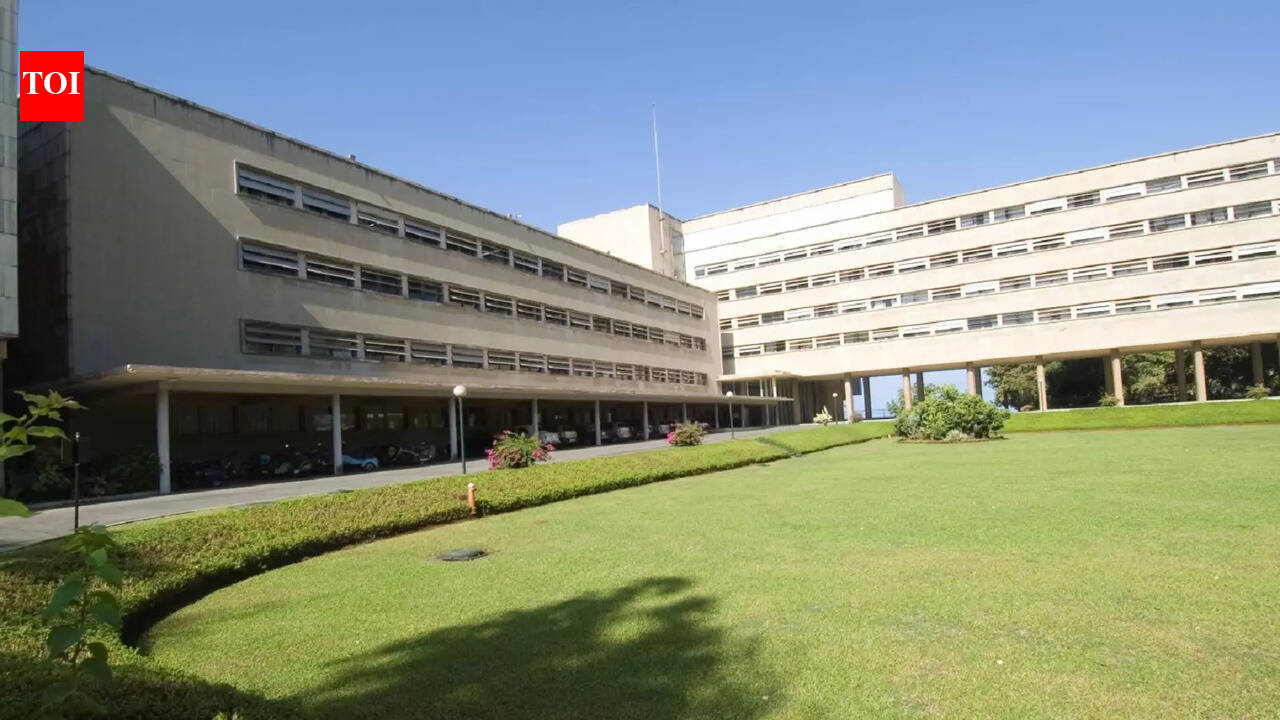
Sarvesh Gupta secured All India Rank 1 in Physics in IIT JAM 2026 but chose TIFR Mumbai for his Integrated PhD. He said he chose what he called a "beautiful institute" over IITs or IISc. This decision sparked a viral debate online about choosing research over traditional engineering paths.
A rank that could open several doors does not always decide which door a student wants to enter. That is at the heart of a viral discussion around Sarvesh Gupta, who secured All India Rank 1 in Physics in IIT JAM 2026 and has chosen to pursue an Integrated PhD in theoretical physics at the Tata Institute of Fundamental Research (TIFR), Mumbai.In a video shared by the account @wayofphysics, the student says that with his AIR 1 rank, he could have gone to IIT Bombay, IIT Madras or IISc, but chose what he called a "beautiful institute". The post has since triggered a wide debate online.Some comments appear to have assumed that the student was talking about JEE Advanced. He was not.Gupta secured AIR 1 in Physics in IIT JAM 2026, the Joint Admission Test for Masters. The official JAM results list him at the top of the Physics rankings.JAM is a postgraduate entrance examination. For 2026, the exam was used for admission to postgraduate programmes across 23 IITs, with around 3,000 seats in 105 programmes.TIFR is not simply another college competing with IITs on the same terms. It is a research institute under the Department of Atomic Energy and runs graduate programmes focused heavily on advanced science and research.Its Physics programme includes areas such as theoretical physics, high-energy physics, astronomy and astrophysics, condensed matter physics, and nuclear and atomic physics. TIFR's Physics graduate programmes include Integrated PhD and PhD routes.That makes the choice easier to understand when the goal is fundamental physics rather than engineering-oriented education.The comments quickly turned into an IIT-versus-TIFR argument.Some users questioned why anyone would turn away from IIT Bombay or IISc. Others pointed out that TIFR has a long-standing reputation in fundamental science and research. Several commenters simply reacted with "TIFR" or applauded the decision.There was also confusion about the route itself, with people repeatedly asking which examination produced the AIR 1 rank. That confusion became almost as big a part of the conversation as the original decision.The viral post touches a familiar Indian habit: treating an entrance rank as if it automatically determines the next destination.But a rank only tells where someone stood in an examination. It does not reveal what kind of work that person wants to spend the next several years doing.For a student interested deeply in physics research, an institute built around fundamental science can make sense even when other prestigious options are available. TIFR itself describes its graduate school as being for students with a strong interest in discovery and research.Disclaimer: This article is based on publicly available information, the student's social-media video and comments visible on the post. Social-media comments represent individual opinions and have not been independently verified.