
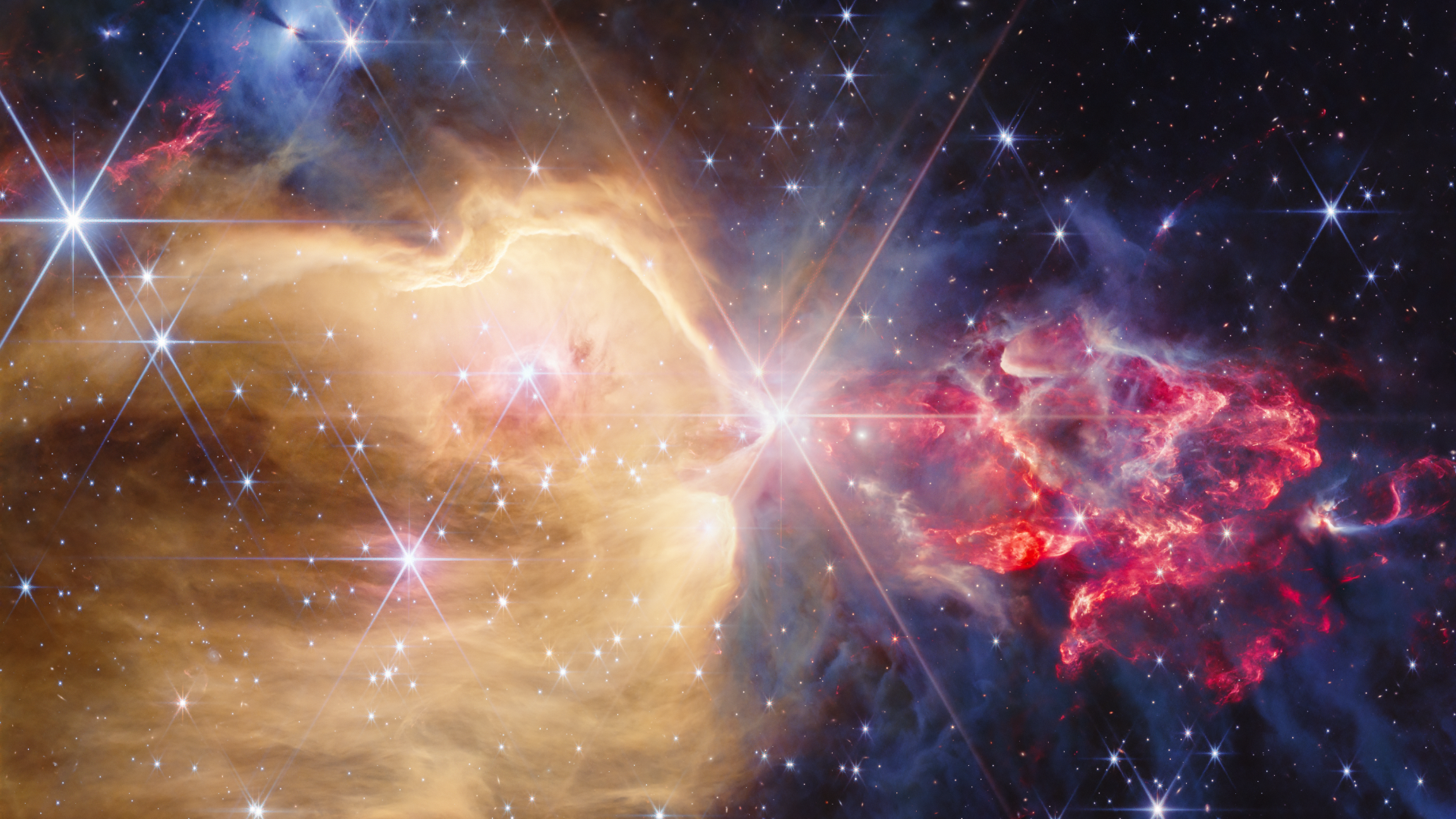
The James Webb Space Telescope captured a new photo of the Flower Bud Nebula on October 7, 2026. This region, 3,300 light-years away, acts as a "cauldron of cosmic creation" where over 100 young stars form. Using infrared cameras, the telescope peered through thick dust to show these stars in detail.
A colossal mashup of stars, protostars, gas and dust swirl brightly in this new photo captured by the James Webb Space Telescope.
What is it?
JWST captured the inner workings of the nebula NGC 7129 in this spectacular new image. The detail in this snapshot really highlights the chaos happening within the nebula, nicknamed the Flower Bud Nebula.
3,300 light-years away, the nebula is home to a variety of stars at different stages of development. But this stellar nursery is also thought to be home to over 100 stars under a million years old, which is quite young and early in their lives.
Stars begin to form from the gas and dust in molecular clouds in nebulas such as this, a region NASA refers to as a "cauldron of cosmic creation" in the statement accompanying the new image. Because their earliest years are spent shrouded in clouds of dust, these nascent stars can be hard to spot. But with JWST's ability to see into the near and mid-infrared, scientists were finally able to look through the dust to get a clear look at the stars forming inside.
Specifically, this image was captured by JWST's NIRCam (Near-InfraRed Camera) instrument, which peers into the near-infrared, a wavelength range that encompasses the light from faint stars and galaxies.
Why is it incredible?
This isn't the first time that we've looked at the Flower Bud Nebula. And by looking at the nebula in different wavelengths with different observatories, we've learned quite a bit about it.
However, with these new observations from JWST, scientists have unprecedented detailed views of the stars and protostars still forming amidst the gas and dust.
With sharper views in the near-infrared, scientists might be able to learn more about these still-forming stars, the incredible, powerful jets of superheated material they can expel and how these objects interact with their surroundings.