
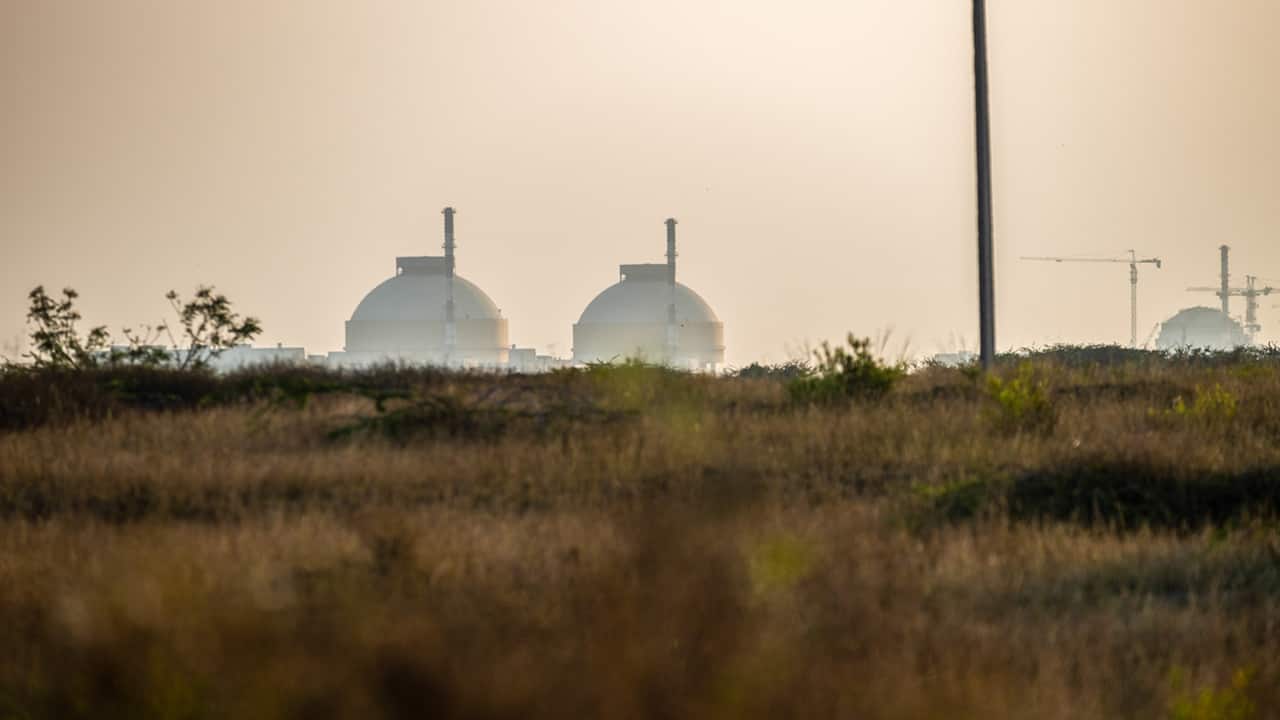
India replaced two nuclear acts with the SHANTI Act in December 2025 to end monopoly power. By April 2026, the 500-MW fast breeder reactor got criticality. However, officials said, "it would be premature to specify a timeline for entering the 3rd stage," which likely stays delayed until after the 2050s.
Two significant and historical developments have added necessary momentum to India's long-running tryst with nuclear energy. In December 2025, the Atomic Energy Act of 1962 and the Civil Liability for Nuclear Damage Act of 2010 were repealed and replaced by a single act of parliament. Called the Sustainable Harnessing and Advancement of Nuclear Energy for Transforming India (SHANTI) Act, this legislation ended the monopoly of nuclear establishment players like the Nuclear Power Corporation of India Limited (NPCIL) in operating nuclear power plants in the country. Only a few months later, in April 2026, India's second-stage 500-MW prototype fast breeder reactor (PFBR) attained criticality. This happened seven decades after Bhabha first outlined his three-stage nuclear dream in the mid-1950s. But is this momentum sufficient to help India scale nuclear power from the current abysmal 9 GW to the 100 GW aimed by 2047? Would this momentum lead to a faster realisation of the three-stage dream? Parliamentary committee's finding is troublesome An analysis of the 404th and 415th reports by the Department-related Parliamentary Standing Committee on Science and Technology, Environment, Forests and Climate Change covering the NPCIL and the Bhabha Atomic Research Centre (BARC) in December 2025 and August 2026, respectively, reveals delays in key projects and the possibility that Bhabha's three-stage dream will go unrealised even after a century since it was first envisioned. Third-stage to go beyond 2050s With about 20 operational pressurised heavy water reactors (PHWRs), India has long mastered the first stage of Bhabha's dream, which involves reactors running on natural uranium as fuel. With the PFBR at Kalpakkam attaining criticality in April 2026, India has also entered the second stage that has reactors using plutonium and depleted uranium obtained from the first stage. But the wait for the third stage which finally exploits thorium continues. When the parliamentary committee probed the nuclear establishment about how long this wait will continue, the establishment stated that "it would be premature to specify a timeline for entering the 3rd stage of program at commercial scale, but most likely to happen in the latter half of the century." This means that the third stage operationalisation by the nuclear establishment is likely to go beyond the 2050s, more than a century after Bhabha first shared the dream of limitless nuclear power with the country. Tilting towards molten salt reactor As for what would be the reactor for the third stage, the nuclear establishment has indicated that it is favouring the molten salt reactor design: "For thorium utilisation Molten Salt Reactor (MSRs) is envisaged as a one of the suitable technologies. Development of technologies required for molten salt reactor are underway. The R&D activities such as, development and qualification of special materials suitable for high temperature and corrosive environment, molten fluoride salt chemistry, reactor physics studies, component development, fuel cycle etc. are being pursued at BARC." But an analysis of the reports does not indicate if any reactor design has been settled. It may potentially take many more years before the establishment commits to a design. The report also reveals that two key projects essential for the 2047 aim of scaling nuclear power to 100 GW are facing huge delays with no early resolution in sight. Announced more than one-and-a-half-decades ago, the Jaitapur and Kovvada projects (planned to contribute a whopping 17 GW out of the 100 GW) both involve foreign players (France and the US respectively). Scaling up nuclear, faster Given the current status of the nuclear power programme and the future indicated by the nuclear establishment in the parliamentary committee reports, what can India do to rapidly scale nuclear power and expedite thorium exploitation? In a May 2025 opinion piece for Moneycontrol emphatically titled "India needs a new nuclear dream," I had listed five focus areas. Two of these have been addressed to some extent by the historic SHANTI Act of December 2025 (on liability and private sector role as operator). But three areas remain unaddressed and require re-statement in light of the SHANTI Act and the recently released draft SHANTI Rules and Regulations. First, double-down on PHWRs that India already has mastered, whether it is large, small, modular or in fleet mode. Ending NPCIL's monopoly means that this doubling-down can be done in concert with the private sector. Second, while India is examining molten salt reactors favourably, it should also experiment with accelerator driven system and high-temperature gas-cooled reactor design to prioritise thorium exploitation. Like with PHWRs, the nuclear establishment should work in concert with the private sector for thorium exploitation and extend assistance to nuclear startups that help the country get there faster. Further, taking into account Anil Kakodkar's (former chairperson of the Atomic Energy Commission) arguments in a recent Indian Express interview, the nuclear establishment could consider a new fuel mix of thorium and high-assay low-enriched uranium that can potentially be used in existing PHWRs and expedite thorium utilisation. Third and finally, whether public or private, nuclear reactors will produce radioactive waste and India should figure out long-term safe storage for such waste. (Lokendra Sharma is a staff research analyst with the Takshashila Institution's High-Tech Geopolitics Programme.) Views are personal and do not represent the stand of this publication.