
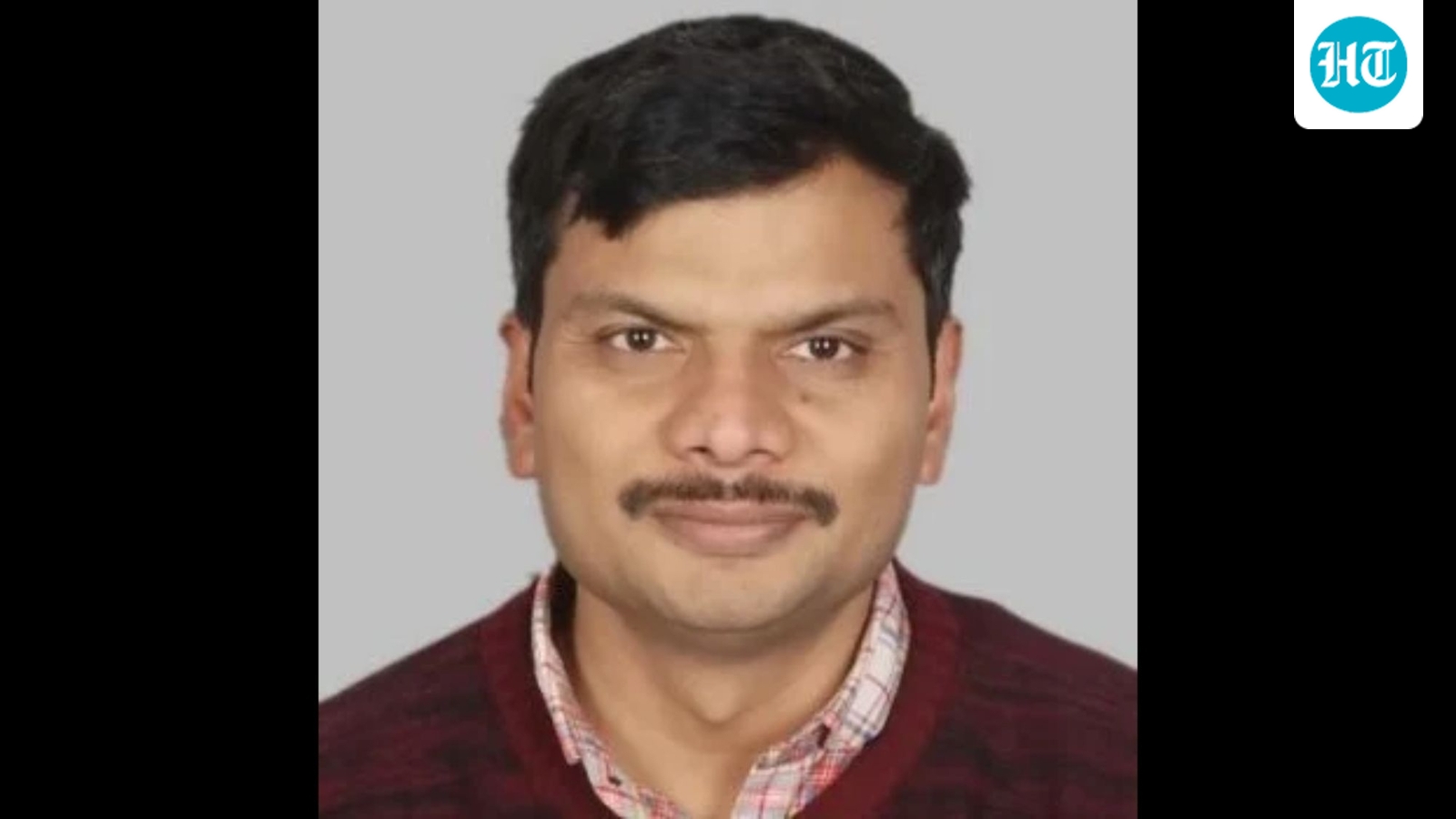
Prof Kateriya helped pave the way for the Nobel-winning discovery of optogenetics. His research identified key DNA sequences in alga during 2002 and 2003. He said, “We were basically the first people to show that certain proteins can bring so much bioelectrical activity.” This work helped scientists control brain cells.
The Nobel was awarded jointly to Karl Deisseroth of the US and German scientists Peter Hegemann and Georg Nagel for their discoveries concerning light-gated ion channels and optogenetics. Their work has transformed neuroscience by allowing researchers to switch selected neurons on and off using pulses of light.
But behind this Nobel-winning story lies an Indian connection.
During his doctoral research, Prof Kateriya identified two previously unknown DNA sequences in the alga. The genes encoded light-sensitive proteins that would later become known as channelrhodopsins. These proteins eventually became a key component of optogenetics. The findings were published in scientific papers in 2002 and 2003, with Prof Kateriya listed as an author on both studies.
In an interview with NDTV, Prof Kateriya recalled that the research began with a basic question: how does the tiny green alga sense light and use it to navigate? “We were basically the first people to show that certain proteins can bring so much bioelectrical activity and this is important for biological function,” he told the outlet.
The research was subsequently developed through collaborations involving Georg Nagel, who demonstrated that the proteins acted like microscopic gates. When exposed to blue light, the channels opened and allowed charged particles to flow into cells, producing an electrical signal.
Years later, Karl Deisseroth used these light-sensitive proteins in neurons and demonstrated that flashes of blue light could precisely activate brain cells. This helped establish optogenetics, which has since become a powerful tool in neuroscience. The technique allows scientists to control specific neurons with remarkable precision and study processes linked to memory, behaviour, emotions, addiction, sleep and neurological disorders.
For Prof Kateriya, the Nobel recognition is also a personal moment because of his association with Peter Hegemann. “Peter Hegemann is an awesome mentor and a very good teacher. He used to teach me for hours and hours. I was lucky to have Peter Hegemann as a mentor. He is the one who made me love science,” he told NDTV.
(Also Read: Karl Deisseroth once wanted to be a writer. He went on to win the Nobel Prize in Medicine)
About Suneel Kateriya
Prof Kateriya was Born in Kannauj, Uttar Pradesh. He studied in India before pursuing research in Germany and later at Columbia University. He is now leading his own laboratory at JNU, where he continues to work on optogenetics, light-sensitive proteins and optobiotechnology.