
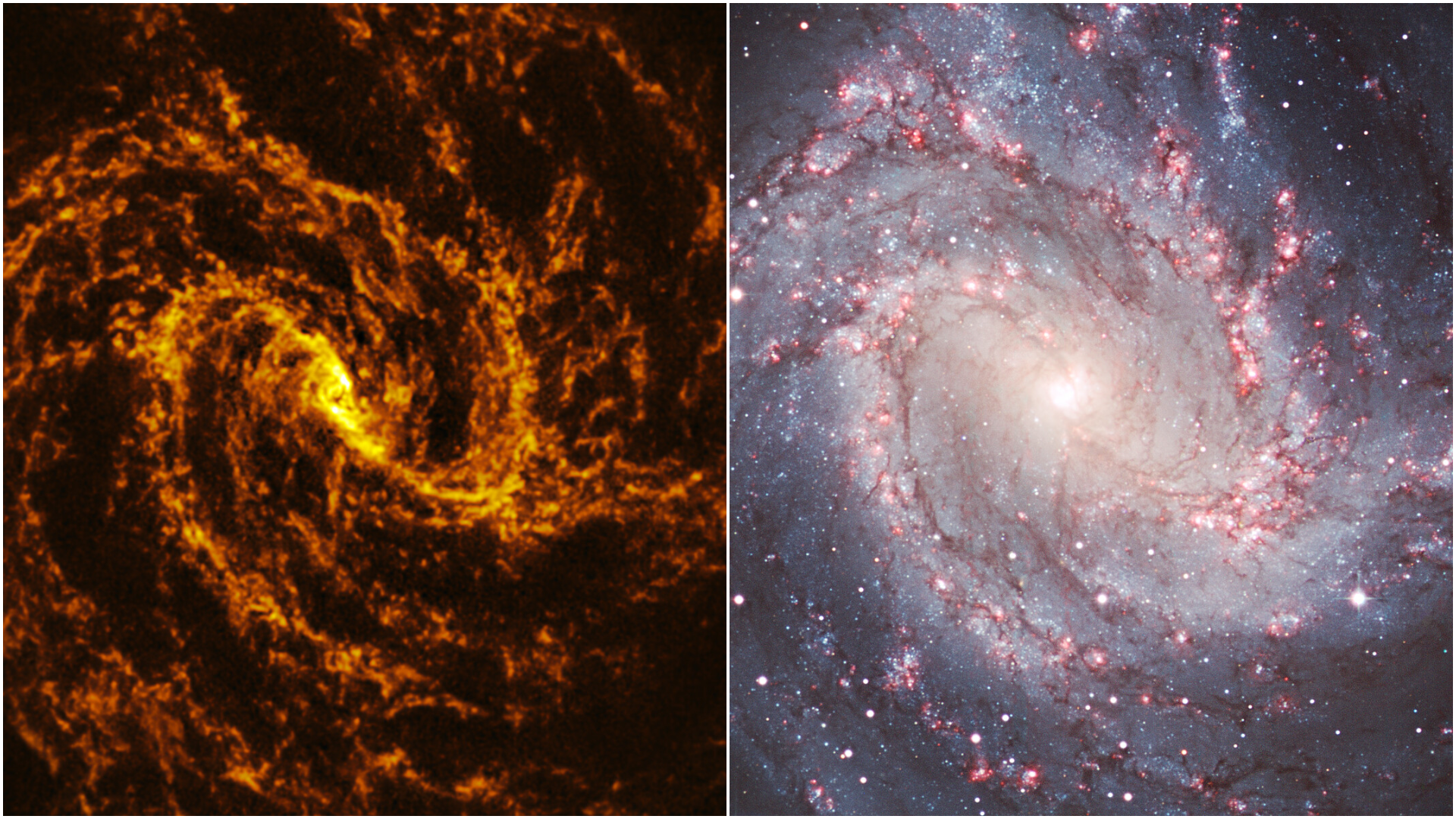
A new photo of the day for Oct. 6 2026 shows the spiral galaxy M83 in two different lights. ALMA captured the galaxy in submillimeter wavelengths, while the La Silla Observatory used visible light. These two views helped scientists see the gas and dust that make up the galaxy’s signature swirl.
What might look like a "photo negative" of this swirling galaxy is actually the same view in another wavelength.
What is it?
As you can see in this dual image, two different observatories looked at the same galaxy and ended up with totally opposite results.
M83, or Messier 83, is a spiral galaxy found 15 million light-years away. A popular target for observation, the galaxy has a picture perfect swirl. But depending on how you look, it can completely transform.
In the galactic view on the left, we can see the galaxy as it looks in submillimeter wavelengths, which is found between far-infrared and microwave wavelengths. This orange and black view, which evokes Halloween vibes, was captured by ALMA (the Atacama Large Millimeter/submillimeter Array) in Chile.
To the left of this spooky view, we can see M83 in visible light. This sparkling purple, pink, blue and gray look comes from observations with the Wide Field Imager at the European Space Observatory's La Silla Observatory, also in Chile.
Why is it incredible?
The universe is not always as it seems. While we might learn remarkable truths about a galaxy by looking at it in visible light, an infrared or submillimeter view could reveal details we never would have seen otherwise.
By exploring the universe with different observatories, different wavelengths and different points of view, we can glean more information than we ever could otherwise. This diversity is essential to our growing understanding of the cosmos.
This is why, when new space telescopes like NASA's Nancy Grace Roman Space Telescope launch, they aren't intended to replace other, older telescopes, but rather add to a collective and varied power.
With these two views of M83, we can see the incredible structures of gas and dust that make up the galaxy's signature spiral in visible light, but we can also see the cold molecular gas only visible in submillimeter wavelengths.