
Global bird populations are falling fast, with 60% of evaluated species in India showing severe long-term declines. Habitat loss and human activity caused this crisis. Experts said the collapse of scavengers like vultures triggered public health hazards. We must protect natural habitats instead of relying on technology to fix nature.
The worldwide decline of bird populations signals a deeper breakdown of the ecosystems on which human life depends. As habitats disappear and technology increasingly attempts to replace nature's functions, the question is no longer simply how to save birds, but whether we understand what we stand to lose with them
Human existence has long been tied to the vibrant rhythm of avian life, but that natural orchestra is rapidly falling silent. Global biodiversity assessments show that nearly half of all bird species worldwide are experiencing active population decreases, with more than 12 percent facing imminent extinction. Worldwide and across the Indian subcontinent, collapsing bird populations are signalling an ecological crisis.
In India, citizen science data across 942 species reveals that 60% of evaluated species show severe long-term declines, leading to 178 species categorized as High Conservation Priority. Out of the three hundred and thirty-eight species evaluated for long-term trends over the past three decades, sixty percent show severe population declines. On an annual basis, roughly forty percent of evaluated species are shrinking year-over-year. While generalist species (e.g., Rock Pigeons, Asian Koels) adapt to human landscapes, specialized groups are collapsing rapidly. Grassland-dependent birds, migratory shorebirds, and waterfowl have dropped by over 50% alongside significant losses among insectivores and raptors.
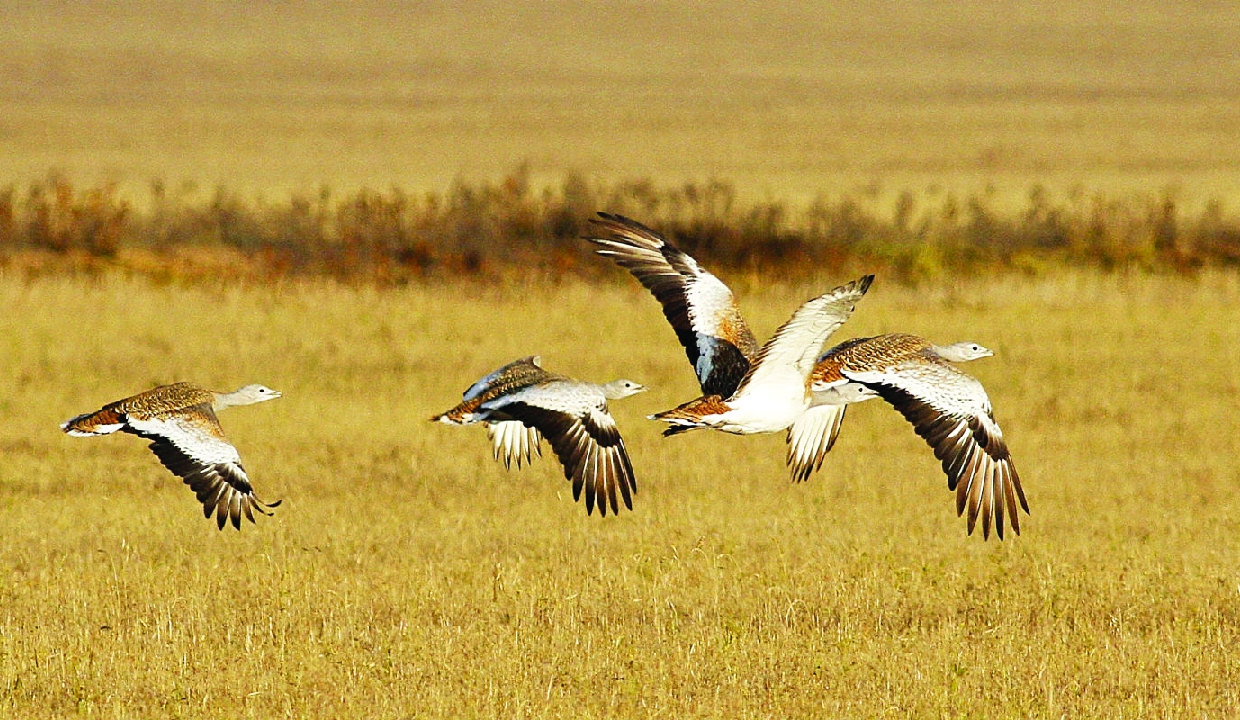
Among these losses, the collapse of Indian scavengers, including Gyps vultures and white-rumped vultures, by ninety-eight to ninety-nine percent happened in the 1990s, allegedly due to poisoning from veterinary diclofenac. The sudden removal of these birds left millions of rotting livestock remains specially across rural landscapes, triggered severe public health hazards, and increased rabies transmission risks due to expansion of feral dog populations. The high-voltage power transmission lines traversing open landscapes have, with time, caused fatal collisions and electrocutions especially among heavy, low-flying species like the critically endangered Great Indian Bustard, whose habitats in various parts of India have already degraded rapidly due to heavy biotic interference.
Avian depopulation's primary drivers, in addition to habitat fragmentation and chemical contamination, are overwhelmingly anthropogenic, interconnected, and cumulative. Relentless expansion of concrete infrastructure; agricultural conversion; disruption of wetlands; human encroachment and deforestation triggered loss of nesting, foraging, and sheltering sites; and forest fires are the prominent ones. Concurrently, the heavy application of synthetic pesticides decimates non-target insect populations, transforming otherwise green-looking farmlands into biological vacuums devoid of essential food sources. Rapid urbanization degrades habitats through acoustic masking, where high levels of continuous traffic noise impact the birds by shrinking the active space they rely on to defend territories, attract mates, and signal danger. Nighttime artificial illumination disorients nocturnal migrants.
Avian population declines impact humans directly because birds, silently but continuously, perform irreplaceable ecological, sanitary, and social functions that benefit humanity. Vultures serve as nature's ultimate sanitation system. They are also capable of neutralising lethal pathogens like anthrax, cholera, and rabies from decaying biomass. Insectivorous birds and raptors naturalise pest populations by devouring millions of insects and rodents daily and stabilising agricultural yields without reliance on toxic chemicals. Frugivorous birds like hornbills and bulbuls ingest native fruits, process seeds through digestive tracts that enhance germination, and deposit them over immense distances, supporting the regeneration of biomes. For indigenous communities worldwide, birds are deeply interwoven with cultural identity. As per ethno-ornithology, traditional ecological knowledge is often found as referring to avian behaviours.
Technology does serve as a powerful partner in modern avian conservation, enabling scientists and conservationists to protect vulnerable species and preserve their natural habitats globally. In India, Technology boosts global bird conservation by mapping Amur Falcon migrations to stop poaching, locating cropland nests with thermal drones, and detecting hidden species like the Forest Owlet via AI bioacoustics to protect critical habitats. Internationally, advanced monitoring tools have proved to be vital in rescuing near-extinct species and reducing urban mortality. In North America, weather radar systems and predictive machine learning models forecast peak migration nights to trigger "Lights Out" initiatives, preventing millions of migratory bird collisions with illuminated skyscrapers. Simultaneously, GPS tracking and smart nest technologies in the United States and New Zealand enable real-time medical interventions for lead-poisoned California Condors and safeguard the eggs of flightless Kakapos, demonstrating how technology can support and revive living avian populations.
Faced with the challenges associated with avian population declines, however, instead of taking nature-based actions in the field to revive the avian population, humans are trying to engineer a dangerous philosophical shift now. Modern engineering is attempting to deploy technological substitutes, ranging from micro-drones for orchard pollination, seed-bombing aircraft for forest regeneration, and mechanized carcass incinerators to address scavenging and sanitation.
Replacing living networks with technological surrogates, however, fails across many operational dimensions. Micro-drones lack the flight endurance, battery efficiency, and navigational capability to manoeuvre through complex forest canopies or manage delicate floral anatomy. Aerial seed bombing drops unconditioned seeds without the digestive processing or natural nutrient-rich manure provided by frugivores. Chemical pesticides destroy topsoil food webs, leaving persistent toxic residues and inducing pest resistance, in clear contrast to the self-regulating biological predator-prey chains and the balanced food web. Use of technological solutions also exacts a heavy environmental toll through resource-intensive manufacturing and habitat pollution. Producing micro-batteries and equipment requires destructive rare-earth mining, processing, and high energy consumption. The rapid degradation of the short-lived devices floods natural ecosystems with toxic electronic waste and microplastics. AI data centres require huge natural resource. Wild birds, by contrast, are self-fuelling, self-repairing biological entities that do multi-layered work and run entirely on berries, insects, and sunlight while continuously enriching our environment.
A comprehensive, long-term strategy is a prerequisite for the reversal of avian declines and restoration of ecosystem stability. Conservation policy must shift away from 'technological substitution' and focus on habitat restoration and community-centric protection. Infrastructure planning must mandate safety measures, including bird diverters and the selective undergrounding of power transmission lines in high-risk zones. Regulatory agencies must enforce strict bans on medicines and pesticides dangerous to scavengers while simultaneously incentivizing bio-safe organic farming. Urban planning must promote native vegetation, preserve mature trees, safeguard city wetlands, and enforce noise and light abatement zones. While forest management must focus on biodiversity conservation, continuous forest corridors, natural wetlands, sacred groves, and grasslands must be legally recognised and protected from fragmentation, industrial encroachment, destructive conversion, and forest fires.
Technology may be used as a vital tool to protect, support, and monitor natural systems, but it can never serve as a substitute for the living evolutionary complexity of nature, including avian life. The vital biological networks trapped in a dangerous philosophical deception today are undergoing a quiet, catastrophic collapse. Replacement of millions of years of evolutionary engineering with artificial patchworks is not technological progress; it is a recipe for systemic ecological collapse. It not only risks our world under the guise of development but also helps create an undesirable situation in which the younger generations will have to accept an impoverished natural world as the new normal. Can't we let them inherit a better world?
Faced with the challenges associated with the Avian population declines, however, instead of taking nature-based actions in the field to revive the avian population, humans are trying to engineer a dangerous philosophical shift now. Modern engineering is attempting to deploy technological substitutes