
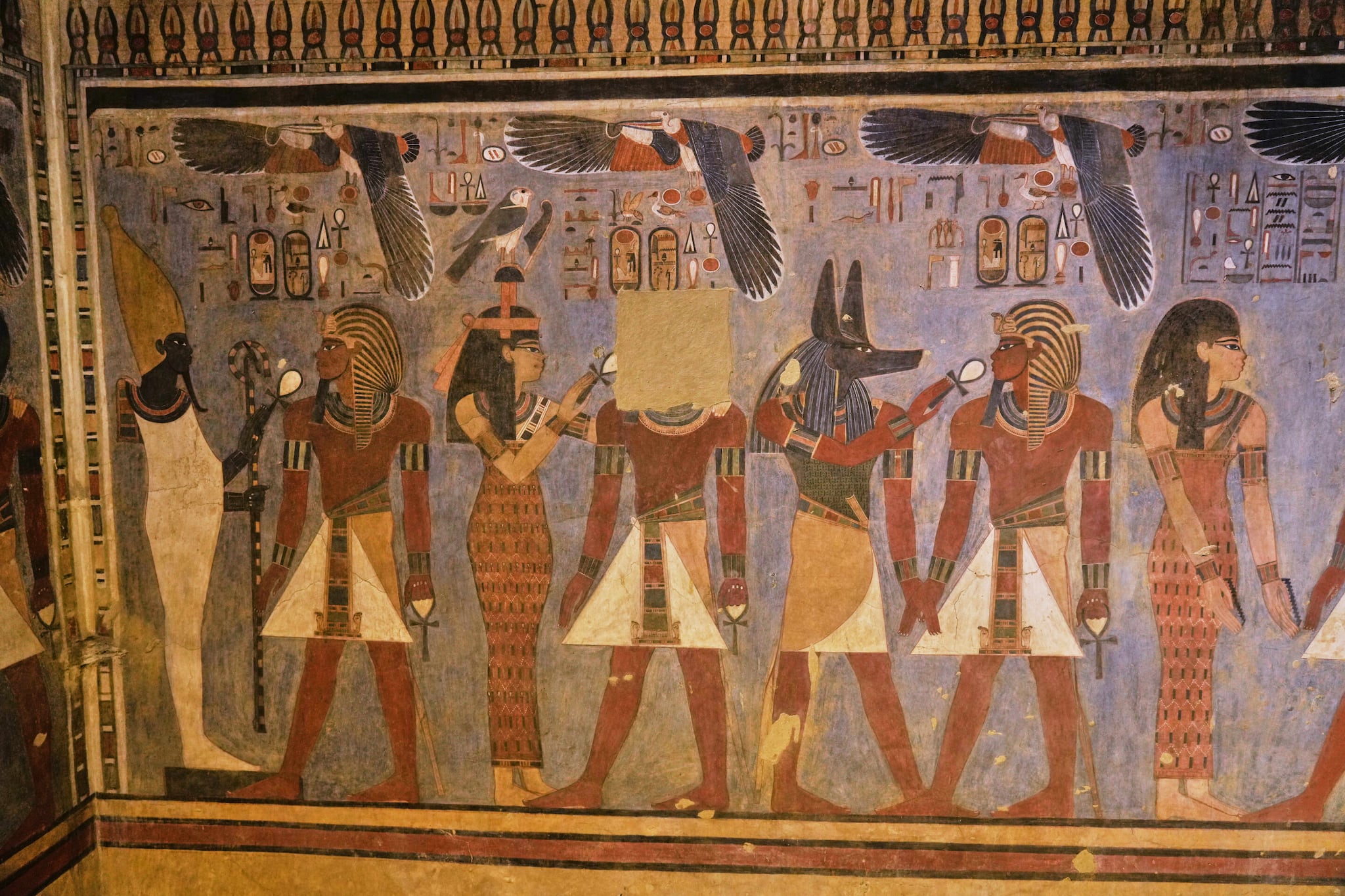
Egypt reopened the 3,400-year-old tomb of Pharaoh Amenhotep III in October 2025 after 20 years of restoration. Located in Luxor’s Valley of the Kings, the site features ancient wall paintings and inscriptions. Specialists worked to preserve the burial chambers, which now allow tourists to see this significant piece of history.
The tomb in Luxor's Valley of the Kings features ancient wall paintings, inscriptions from the Book of the Dead and burial chambers associated with the pharaoh and his queens. Egypt has reopened the 3,400-year-old tomb of Pharaoh Amenhotep III to visitors following more than two decades of restoration work, giving tourists access to one of the most significant royal burial sites in the Valley of the Kings. Located on the west bank of the Nile in Luxor, the tomb was reopened in October 2025 after conservation work that began in 2001. Its restoration involved Egyptian, Japanese and international specialists, with support from UNESCO, who worked to preserve its fragile paintings and architectural features. The reopening forms part of Egypt's efforts to preserve its ancient heritage and attract visitors to its archaeological sites, alongside the opening of the Grand Egyptian Museum near the Giza pyramids. Who was Pharaoh Amenhotep III? Amenhotep III was one of the most prominent rulers of ancient Egypt's 18th Dynasty. He ascended the throne as a teenager and ruled for nearly 38 years, from around 1390 BC to 1350 BC, during a period of considerable wealth, political stability and monumental construction. Also known as Amenhotep the Magnificent, the pharaoh left behind an extensive architectural legacy. Among the best-known monuments associated with his reign are the Colossi of Memnon near Luxor, two enormous stone statues that once stood guard at the entrance to his mortuary temple. His reign is regarded as an important period in ancient Egyptian art and architecture, with temples, palaces and statues reflecting the power and prosperity of the kingdom. What lies inside the ancient tomb? The tomb is notable for its scale and surviving artwork. Visitors descend a sloping passage approximately 36 metres long and 14 metres deep before reaching a network of connected chambers. The complex includes the main burial chamber of Amenhotep III and two additional chambers associated with his queens, Tiye and Sitamun. Although much of the tomb's original contents disappeared long ago, several features remain. Its walls contain paintings depicting the pharaoh alongside ancient Egyptian gods, as well as hieroglyphic inscriptions connected with the Book of the Dead. The ancient Egyptian funerary texts were intended to guide the deceased through the afterlife. Their presence offers a glimpse into the religious beliefs and burial traditions associated with royal life in ancient Egypt. The tomb is not as extensively decorated as some other burial sites in the Valley of the Kings. Nevertheless, the surviving paintings and inscriptions make it an important site for understanding ancient Egyptian funerary art. Why was the tomb closed for more than 20 years? The tomb underwent a lengthy conservation programme beginning in 2001. Restoration work was carried out in three phases and continued until 2024, before the site reopened to visitors in October 2025. The project brought together hundreds of specialists, including researchers, archaeologists, restorers and technicians. Their work focused on cleaning and stabilising the fragile wall paintings, preserving the surviving decoration and improving conditions for visitors. Conservation was particularly important because exposure to changing environmental conditions and human activity can damage ancient painted surfaces. The restoration also helped preserve depictions of Amenhotep III and Queen Tiye, which form part of the tomb's surviving artistic heritage.