
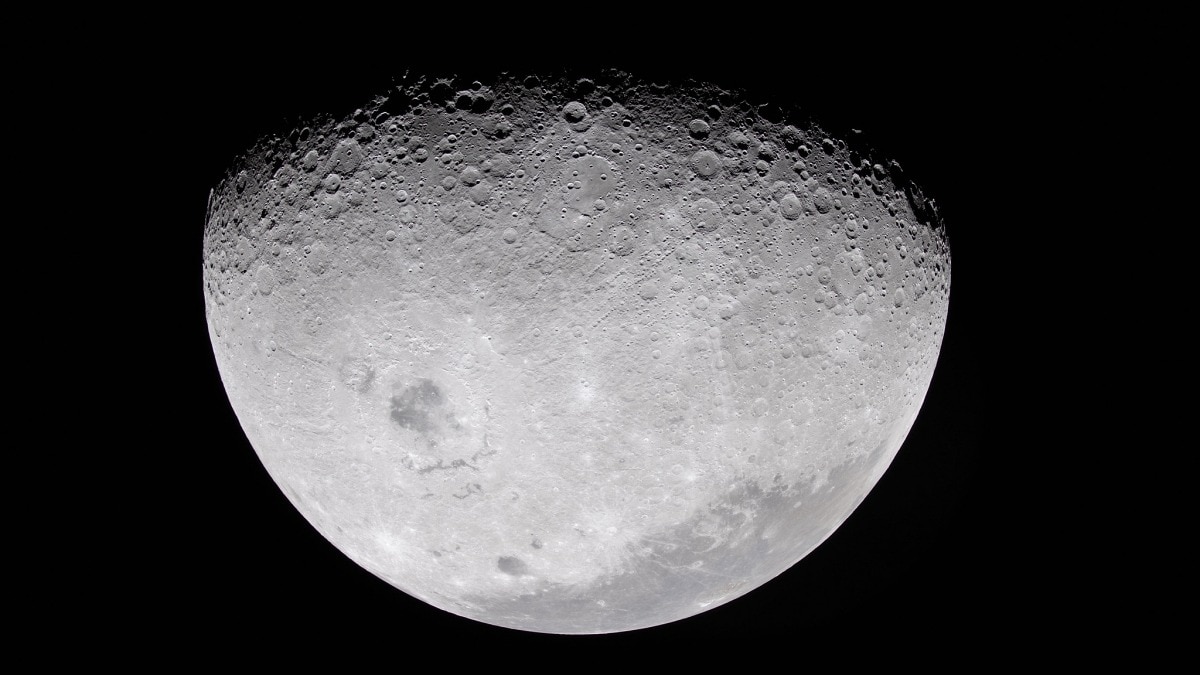
Artemis II astronauts saw isolated islands of light on the Moon while flying near the lunar terminator. NASA said these were just high peaks catching sunlight while lower areas fell into shadow. Astronaut Victor Glover said he saw “islands” of terrain completely surrounded by darkness, revealing the Moon’s rugged surface.
The Moon appeared to transform into a landscape of isolated islands of light surrounded by darkness when Artemis II astronauts looked along the boundary between lunar day and night, according to NASA’s preliminary lunar science report.
The phenomenon was observed along the lunar terminator, the moving boundary separating the Sunlit and dark sides of the Moon.
From the Orion spacecraft, astronauts found that the low-angle sunlight dramatically exaggerated the Moon’s mountains, crater rims and valleys, making the terrain appear far more rugged than it does under normal illumination.
The report describes observations around the Hertzsprung basin and Vavilov crater, with astronauts noting that elevated terrain could remain illuminated even when the surrounding landscape had already disappeared into darkness.
Astronaut Victor Glover described seeing “islands” of terrain completely surrounded by darkness.
Some peaks appeared to catch sunlight even when they were well beyond the apparent terminator, revealing variations in elevation across the lunar surface.
NASA's science team says these features are not mysterious lights on the Moon. They are essentially high points of lunar terrain still receiving sunlight while lower areas have fallen into shadow.
The effect makes the terminator an especially valuable region for studying lunar topography. At low solar angles, long shadows stretch across the surface, making mountains, ridges, valleys, crater walls and other subtle geological features much easier to distinguish.
Glover noted that even with the naked eye, the astronauts could see that the Moon had significant elevation changes, rather than simply variations in colour and brightness.
Mission commander astronaut Reid Wiseman observed that the terminator made the far side appear “impossibly rugged” because shadows exposed hills and valleys that are difficult to see when the Sun is higher in the lunar sky.
The observations also provide a reminder of why lighting conditions matter enormously when scientists study the Moon. A landscape that appears relatively smooth under high-angle sunlight can suddenly reveal dramatic relief when viewed near the terminator.
NASA's report illustrates the observations with a dedicated map of these “Terminator Islands of Light”, identifying features around Stebbins, Carnot and Fowler craters.
The report says the illuminated patches correspond to locations where topography rises above the surrounding shadows.
For future lunar exploration, such observations could help scientists determine which lighting geometries and camera configurations are best for revealing the Moon's terrain.
In other words, the Moon didn't suddenly light up, its mountains simply caught the Sun before the valleys did.