
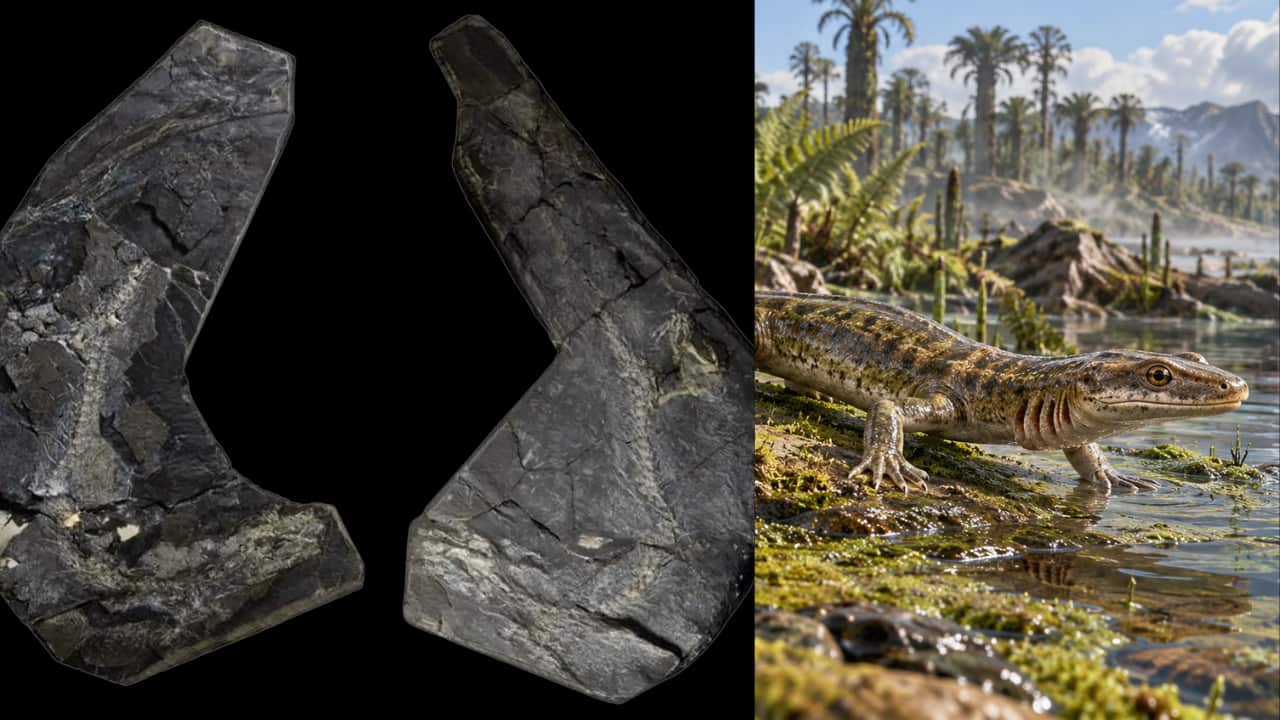
സ്കോട്ട്ലൻഡിൽ കണ്ടെത്തിയ 345 ദശലക്ഷം വർഷം പഴക്കമുള്ള 'ലിസി' എന്ന ഫോസിൽ ഉരഗവർഗമല്ലെന്ന് പുതിയ പഠനം. എക്സ്-റേ സ്കാനിംഗിലൂടെ ഇതിന് ചെകിളകളും മത്സ്യസമാനമായ പല്ലുകളുമുണ്ടെന്ന് തെളിഞ്ഞു. കരയിലെ ജീവികളുടെ പരിണാമത്തെക്കുറിച്ചുള്ള ശാസ്ത്രീയ ധാരണകളെ തിരുത്തിയെഴുതുന്നതാണ് ഈ കണ്ടെത്തൽ. മുപ്പത് വർഷത്തിലേറെയായി ശാസ്ത്രജ്ഞർ ഇതിനെ തെറ്റായാണ് തിരിച്ചറിഞ്ഞിരുന്നത്.
A 345-million-year-old fossil from Scotland has challenged decades of scientific understanding after researchers discovered that it was not an early reptile. Nicknamed Lizzie, the ancient animal had a lizard-like appearance that misled scientists for more than 30 years. However, advanced X-ray scans have revealed a different story. The fossil had internal gills, a primitive skull and a fish-like mouth containing thousands of tiny teeth. The findings suggest that Lizzie was an aquatic or amphibious animal rather than an early reptile. The discovery could reshape how scientists understand the evolution of land-dwelling vertebrates. Meet Lizzie, the ancient fossil discovered in Scotland Scientifically known as Westlothiana lizziae, Lizzie was discovered in 1984 at East Kirkton Quarry in West Lothian, Scotland. Its four limbs, claw-like digits and lizard-like body initially led scientists to classify it as one of the earliest known amniotes. This group includes reptiles, birds and mammals. The fossil was described in 1990 and became an important specimen in studies of early vertebrate evolution. Why did scientists misidentify the fossil? For decades, Lizzie's classification remained a subject of scientific interest. Its external features resembled those of early reptiles and other land-adapted animals. However, the fossil was crushed and its internal anatomy remained hidden. Scientists could not clearly examine several important structures. This made it difficult to establish its exact evolutionary position. How X-ray scans exposed its hidden features? Researchers used advanced X-ray imaging at the European Synchrotron Radiation Facility in Grenoble, France. The scans revealed Lizzie's internal gill skeleton, primitive skull and thousands of tiny teeth. These features provided crucial clues about its anatomy and evolutionary history. The technology allowed scientists to examine the fossil without damaging it. What was Lizzie really? The new findings suggest that Lizzie was a stem tetrapod. These are early four-limbed vertebrates that lived before the major diversification of modern amphibians and amniotes. Its internal gills and fish-like mouth indicate that it retained primitive aquatic characteristics. It was likely adapted to living in or around water rather than being fully terrestrial. Could this discovery change reptile evolution? Lizzie's reclassification raises questions about the origins of reptiles and other land-dwelling vertebrates. Scientists have used ancient footprints with claw marks as evidence of early amniote evolution. However, Lizzie suggests that claw-like digits were also present in more primitive animals. This means some ancient footprints may need to be reassessed. Scientists are studying "Lizzie" with new tech The discovery highlights how modern technology can change scientific interpretations of ancient fossils. Lizzie's hidden anatomy has challenged a classification that stood for decades. Rather than rewriting the entire history of reptile evolution, the findings open new questions about when key features evolved and how early vertebrates adapted to life on land.