
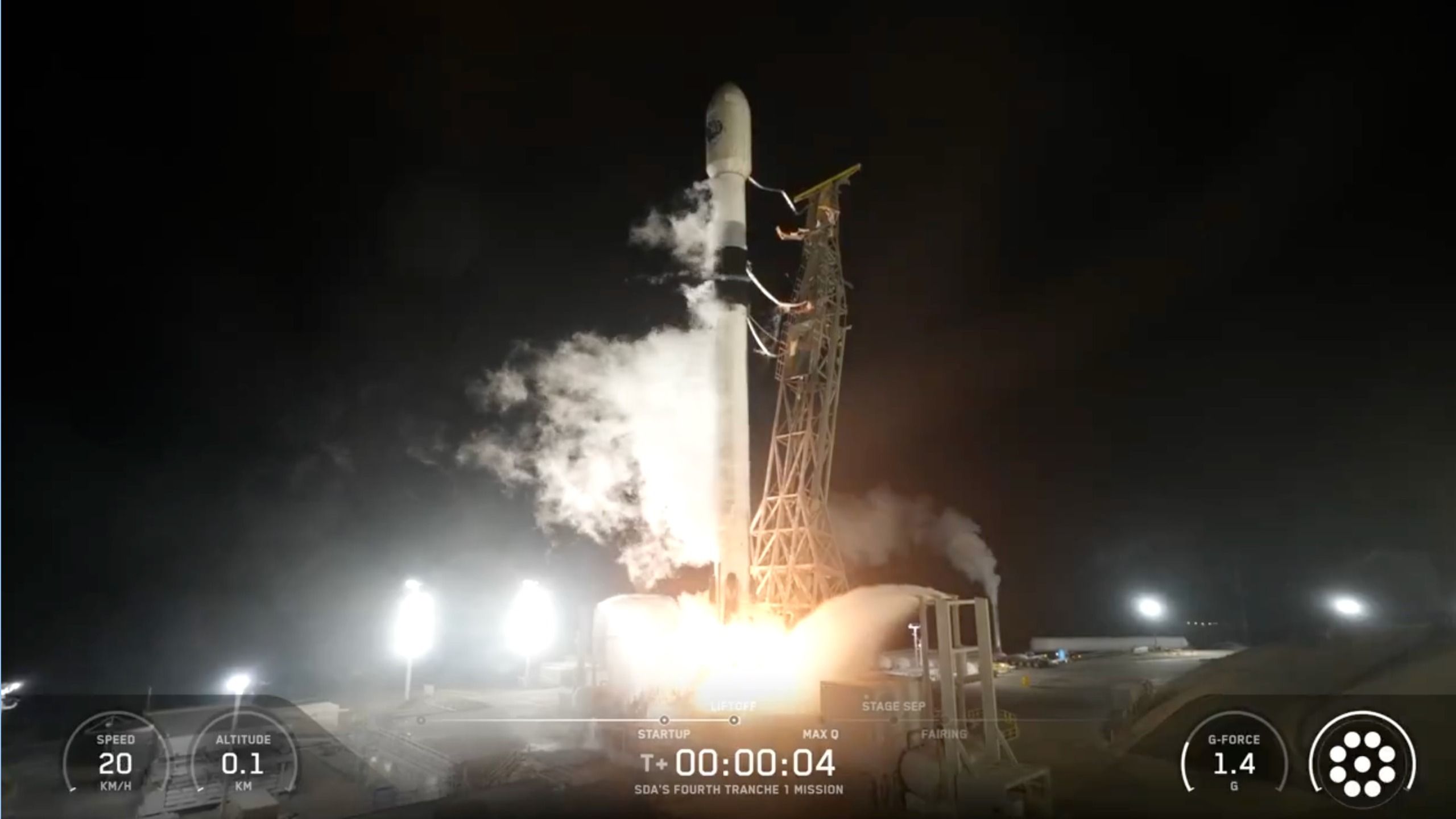
അമേരിക്കൻ സൈന്യത്തിന്റെ ആവശ്യങ്ങൾക്കായി 21 ഡാറ്റാ ട്രാൻസ്പോർട്ട് ഉപഗ്രഹങ്ങളുമായി സ്പേസ് എക്സിന്റെ ഫാൽക്കൺ 9 റോക്കറ്റ് കുതിച്ചുയർന്നു. കാലിഫോർണിയയിലെ വാൻഡൻബെർഗ് ബേസിൽ നിന്നായിരുന്നു വിക്ഷേപണം. സാങ്കേതിക തടസ്സങ്ങളെത്തുടർന്ന് അഞ്ച് ദിവസം വൈകിയാണ് ദൗത്യം പൂർത്തിയാക്കിയത്. ആഗോള സൈനിക ആശയവിനിമയത്തിനും മിസൈൽ നിരീക്ഷണത്തിനുമുള്ള ശൃംഖല ശക്തിപ്പെടുത്തുകയാണ് ഇതിന്റെ
SpaceX just sent another batch of satellites to orbit for the U.S. military.
A Falcon 9 rocket lifted off from California's Vandenberg Space Force Base today (Oct. 10) at 3:39 a.m. EDT (0739 GMT; 12:39 a.m. local time), hauling 21 "data transport" satellites to orbit for the U.S. Space Force's Space Development Agency (SDA).
That was five days later than originally planned. SpaceX tried to launch the mission on Monday (Oct. 5), but the Falcon 9 aborted that attempt in the countdown's final minute, for reasons that the company has not disclosed.
Today's launch helps build out the SDA's Proliferated Warfighter Space Architecture (PWSA), which SpaceX describes as "a mesh network of optically connected satellites in low Earth orbit [LEO] that enable global military tactical communications and missile warning, indication and tracking capabilities."
The liftoff was the fourth of nine that SpaceX will conduct to help assemble the architecture's Tranche 1 — the "initial warfighting capability tranche," according to the SDA.
Tranche 1 will eventually consist of 154 operational satellites in LEO — 126 data-transport spacecraft and 28 missile-tracking vehicles. There will also be four missile-defense test satellites, which will sport a "higher fidelity" infrared sensor than their tracking counterparts, SDA officials wrote. (Missile-tracking satellites generally hunt for the heat signatures these weapons produce during flight).
Eighty-four of the 126 data-transport satellites have now launched to date, all of them on Falcon 9s, which lifted off from Vandenberg in September 2025, October 2025, July of this year and today.
And, as its name suggests, Tranche 1 will be just the beginning, if all goes according to plan.
"SDA leverages spiral development to deploy and proliferate new capability into a new generation of the PWSA every two years, called a 'tranche,' to continually increase capability used by the warfighter," SDA officials wrote in a Tranche 1 fact sheet.
Everything seemed to go well on today's launch. The Falcon 9's first stage came back to Vandenberg for a landing a little over seven minutes after liftoff. It was the sixth mission for this particular booster, which is designated 1103. Its most recent flight was the July Tranche 1 mission for the SDA.
SpaceX ended its webcast shortly after booster touchdown, at the request of the SDA. So we'll have to wait for an update about satellite deployment.