
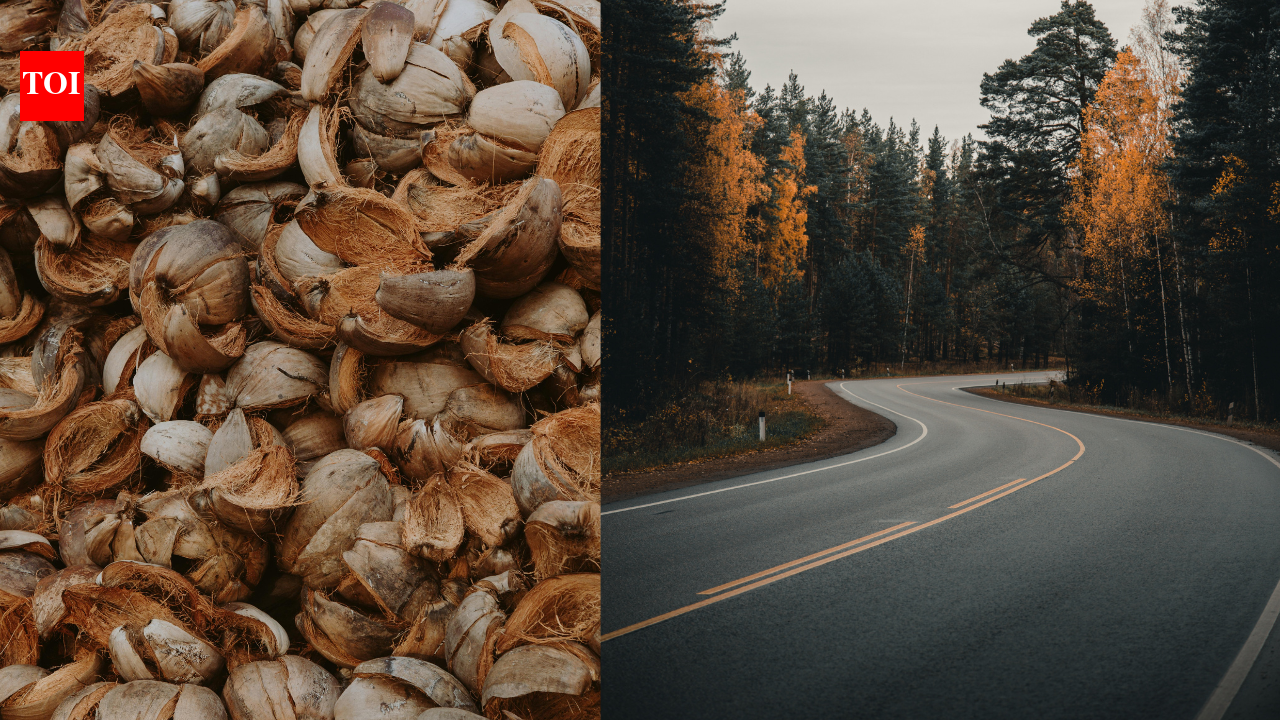
കൃഷി അവശിഷ്ടമായ തേങ്ങാത്തൊണ്ട് ഉപയോഗിച്ച് റോഡ് നിർമ്മാണത്തിനുള്ള അസ്ഫാൽറ്റിന്റെ ഗുണനിലവാരം വർദ്ധിപ്പിക്കാമെന്ന് ഗവേഷകർ. 12.5 ശതമാനം ബയോചാർ ചേർക്കുമ്പോൾ അസ്ഫാൽറ്റിന് കൂടുതൽ ബലവും ചൂടിനെ പ്രതിരോധിക്കാനുള്ള ശേഷിയും ലഭിക്കുന്നു. പരിസ്ഥിതി സൗഹൃദമായ ഈ പരീക്ഷണം റോഡ് നിർമ്മാണ മേഖലയിൽ വലിയ മാറ്റങ്ങൾക്ക് വഴിയൊരുക്കുമെന്ന് പഠനം വ്യക്തമാക്കുന്നു.
What usually ends up as agricultural waste could have another use beneath our wheels. Engineers have investigated coconut shell biochar as a material for modifying asphalt, finding that a specific proportion could make the road-building material stiffer, stronger and more stable at high temperatures.The study, published in Next Materials in 2026, examined coconut shell biochar (CSB) as a bio-based modifier for hot-mix asphalt. The researchers produced the biochar through controlled laboratory pyrolysis before adding different amounts to 40/50 penetration-grade asphalt. They then tested both the modified binder and asphalt mixtures for mechanical, thermal and moisture-related performance.The research was conducted by S. Mahalakshmi, Revathy Jayaseelan and Gajalakshmi Pandulu. Their paper, titled 'Microstructural and mechanical performance of coconut shell biochar - Modified asphalt for sustainable pavement applications,' used laboratory testing and statistical optimisation to determine how much coconut shell biochar worked best.Coconut shells are considered agricultural waste, while biochar is defined as a carbonaceous substance obtained by pyrolysing the biomass. The scientists decided to determine if it was possible to utilise coconut shells to make biochar, which could impart the desired characteristics to asphalt and thus serve as a way to make use of the waste product.The following parameters were determined for the modified asphalt, penetration, softening point, ductility, and elastic recovery. In relation to the asphalt blends, the following properties were analysed, Marshall stability, flow, indirect tensile strength, and water sensitivity. Furthermore, the microscopic and chemical analyses were performed in order to study the interactions between biochar and asphalt.The addition of biochar reduced penetration and increased the softening point of the binder, indicating a stiffer material with greater thermal stability. That matters for roads exposed to high temperatures, where asphalt can soften and become more vulnerable to deformation.Instead of adding larger amounts in the assumption that this would result in a better product, the scientists conducted experiments on various amounts of biochar. Using response surface methodology, they came to the conclusion that the optimum amount of coconut shell biochar is 12.5%.With this amount of modification, the Marshall stability achieved was 9.2 kN, while the flow value was 2.6 mm. It was also observed by the researchers that the amount of air voids was in the 3-5% range, which is considered appropriate for good compaction.The scientists discovered that there were no continuous improvements with each additional amount. In particular, tensile strength and moisture resistance increased up to 15%, but deteriorated further. That helped the researchers identify 12.5% as the balance point through their optimisation analysis.The experiment showed an improvement in the stiffness properties, tensile strength, and resistance to the effects of moisture of the mixtures with biochar. Microstructure studies, which were performed using scanning electron microscopy, energy-dispersive X-ray analysis, Fourier-transform infrared spectroscopy, and X-ray diffraction, also shed light on the structure and interaction of the studied materials.The authors believe that coconut shell biochar can find application as a material for pavement construction in areas where the roads can experience high loads and large variations in temperatures and weather conditions (for instance, in India).This does not necessarily mean that coconut shell biochar is used today as an ingredient in pavements. This study was laboratory-based, so further investigations are required to check its performance in practice. The study provides one more perspective to view coconut shells, not just as waste but as a constituent of a composite road-building material.