
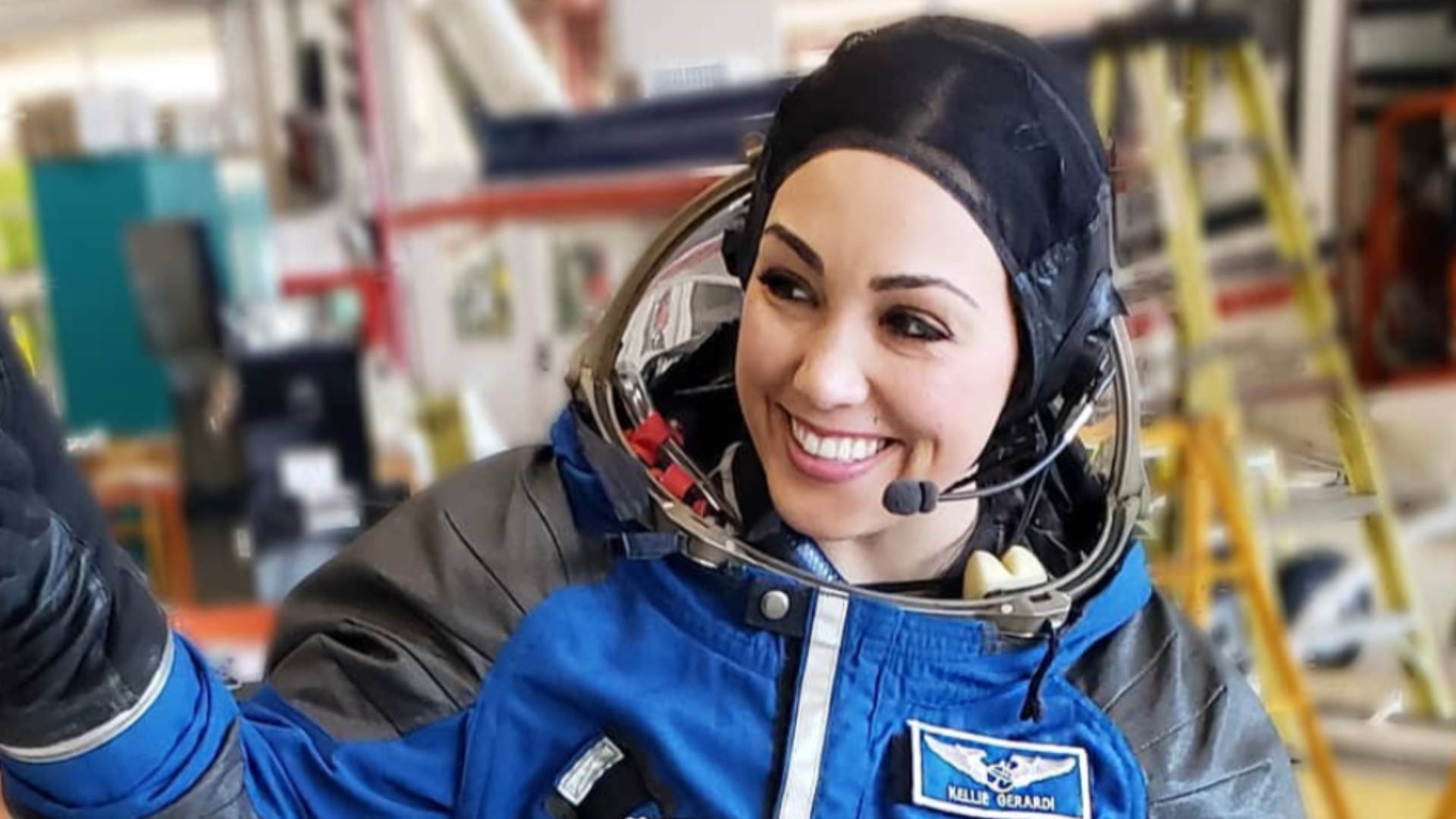
പ്രശസ്ത ബഹിരാകാശ ഗവേഷകയും സ്വകാര്യ ബഹിരാകാശ സഞ്ചാരിയുമായ കെല്ലി ജെറാർഡി തന്റെ രണ്ടാമത്തെ ബഹിരാകാശ ദൗത്യത്തിന് തയ്യാറെടുക്കുകയാണ്. ബഹിരാകാശത്ത് മനുഷ്യന്റെ ദീർഘകാല വാസം സാധ്യമാക്കാൻ മാതൃത്വവും പ്രത്യുൽപാദന ആരോഗ്യവും സംബന്ധിച്ച ചർച്ചകൾ അനിവാര്യമാണെന്ന് അവർ വ്യക്തമാക്കുന്നു. തന്റെ ഔദ്യോഗിക ജീവിതത്തിനൊപ്പം മാതൃത്വത്തിലെ വെല്ലുവിളികളും അവർ പങ്കുവെക്കുന്നു.
Kellie Gerardi is preparing for her second spaceflight. And the secret tool up her sleeve? Motherhood.
Nearly three years ago, space researcher, online STEM creator and author Kellie Gerardi flew to suborbital space on a Virgin Galactic tourist flight. With this flight, she not only became a private astronaut, but one of the first 100 women to fly to space. Today, she's preparing to leave Earth once again with her second flight. And as Gerardi prepares to fly and conduct new research in microgravity, she sat down with Space.com to discuss space, motherhood and how much we have left to learn.
"I think motherhood eventually has to become a bigger part of the conversation if we're serious when we talk about humanity having a sustained presence beyond Earth," Gerardi told Space.com. "If we're talking about people living and working in space for longer periods, then reproductive health, pregnancy, postpartum physiology, childcare, and family life aren't just peripheral issues anymore."
Space and motherhood
Gerardi has been a serious player and public figure in the space industry for a number of years. From overseeing mission operations at Palantir Technologies to working k as a payload specialist and bioastronautics researcher for the International Institute for Astronautical Sciences (IIAS), she has been conducting experiments in microgravity and working across the industry for quite some time. And over the years, she has also developed an expansive online community with whom she shares STEM videos and content about her daily life.
But while Gerardi has posted a number of fun-loving videos with her two daughters, she doesn't just share the big wins and highlights. Across social media platforms, she has also been incredibly candid with the public about her struggles with motherhood, loss, infertility and IVF (in-vitro fertilization). Among her videos discussing her life as an astronaut and researcher, she has shared incredibly personal details, bringing the public along with her as she undergoes incredibly challenging moments.
"I just remember thinking about how so many of us navigate this entire fertility odyssey invisibly while handling their careers, their families, and everything else, and I just wanted to make that a little more visible and hopefully destigmatize the topic a little bit," Gerardi shared.
"Science teaches you that a disappointing result is information, not identity. You look at the data, change variables, adjust the protocol, and try again. That doesn't mean I was able to intellectualize my way out of grief, but I do feel like I was able to borrow a little bit of the same mindset when it came time to put one foot in front of the other again, and to try to look a bit more dispassionately at the odds and our options going forward," she added.
As Gerardi prepares to return to space with her second Virgin Galactic flight, she is part of the "Mom, and More" campaign from the brand Momcozy. The campaign, which also includes Olympian Allyson Felix and Reshma Saujani, founder of Girls Who Code, "celebrates the idea that motherhood can expand what's possible for us while still leaving room for all the other passions or ambitions that make us who we are," Gerardi said.
Preparing for the future of human spaceflight
Gerardi's candid videos about her struggles have also sparked a larger conversation about motherhood as well as space exploration, especially as we look to the future. Longer-term space travel will require serious conversations about motherhood, family and health. Whether it's a long-term mission to the moon or a lifelong mission to Mars, future women astronauts will have to consider everything from menstrual cycles (which astronauts today already handle), pregnancy, motherhood, menopause and other aspects of their health.
But even in the near future, there is so much we have yet to learn about the intersection between motherhood and human spaceflight. In fact, one research team planning to study menstruation in space will be the first to ever conduct a dedicated study on the subject.
"If we're serious about building a future where more people can live and work in space, then we'll need data that reflects a much broader range of human bodies and experiences," Gerardi said. "My own experiences in motherhood have made me even more interested in questions around women's health and reproductive health in particular. There's still so much we simply don't know yet, and there's a lot of meaningful research ahead of us, and I find that really exciting!"
Pumping in zero-G
Gerardi is part of that movement to improve our understanding. From her first spaceflight to her continuing work with microgravity experiments through IIAS, she is pushing this science forward. In fact, in June of this year, she became the first person to pump breast milk in microgravity. While this was "quite the unique experience," as she put it, this was also an incredible learning moment that can help our growing understanding of the human body in microgravity.
At eight weeks postpartum, Gerardi flew on a microgravity research campaign and "given the timing of that research campaign in relation to my recent delivery, we were also curious about the postpartum body, lactation, and breastmilk expression in microgravity," she said.
"There really wasn't an evidence base for whether commercially available wearable pumps would function normally, whether milk could be safely contained, and whether altered gravity would affect comfort or milk expression, or even whether it could affect the composition of breast milk," Gerardi said.
"Scientifically, it made for interesting studies that we'll be submitting for publication, and personally, it was one of those moments where I just remember thinking that women's bodies are incredible, and there's still so much we have to learn about them in the context of altered gravity and spaceflight. And yes, I was able to bring the 'microgravity milk' home to my baby, which made it even more special," she added.
Learning from motherhood
There is still so much to be learned about the human body as it relates to human spaceflight, and we do not yet know how motherhood will be considered in longer-term space travel. But as mothers have been flying to space since Anna Lee Fisher became the first in 1984, there is much that we can learn from their experiences. Gerardi shared some of the important lessons that she's learned as a mother that have come in handy as an astronaut
"I think there are probably more parallels between motherhood and operational environments than people realize. Honestly, adaptability is probably at the top of my list. Motherhood is a constant exercise in making plans, fighting reality, and then rapidly reprioritizing without losing your mind," she said.
"Motherhood has made me much better at constantly reassessing priorities," she added." I've moved mountains for work obligations that I later realized weren't that fragile after all. Motherhood gives me a lot of practice at making those assessments in real time. That translates pretty well to research operations. You prepare as best you can, you prioritize and adapt in real-time, and you get comfortable operating without perfect control of all the variables. Those are all pretty useful qualities in life generally."
And in addition to the many lessons that can be learned from being a mother and an astronaut, Gerardi has also found how powerful the representation of seeing a woman like herself achieve her dreams can be for the next generation.
"As a society, I feel like we tell little girls that they can grow up to be anything. We give them astronaut Barbies and American Girl dolls and tell them to dream big, but then when those same little girls grow up and become mothers themselves, suddenly there's often a different expectation around how much space their own ambitions should occupy," Gerardi said. "I don't feel guilty for pursuing my dreams. Becoming their mom made my dreams bolder and my sense of purpose deeper. I feel grateful that I can set an example for my daughters to probe the farthest boundaries of their own potential in this one precious life they get."