
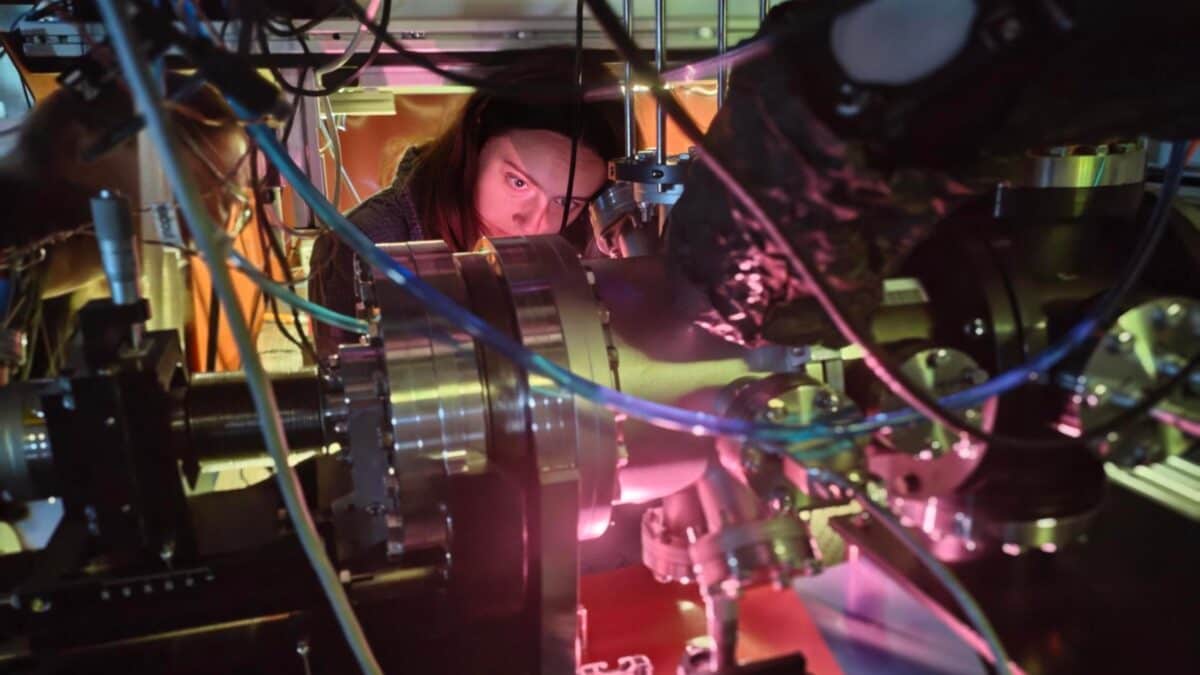
ആറ്റോമിക് ക്ലോക്കുകൾക്ക് ശേഷം ശാസ്ത്രലോകം മറ്റൊരു നാഴികക്കല്ല് പിന്നിട്ടു. വിയന്നയിലെയും ബെയ്ജിംഗിലെയും ശാസ്ത്രജ്ഞർ ലോകത്തിലെ ആദ്യത്തെ ന്യൂക്ലിയർ ക്ലോക്കുകൾ വികസിപ്പിച്ചു. ആറ്റങ്ങളുടെ ഇലക്ട്രോണുകളെ അടിസ്ഥാനമാക്കുന്ന ആറ്റോമിക് ക്ലോക്കുകളിൽ നിന്ന് വ്യത്യസ്തമായി, ആറ്റത്തിന്റെ കേന്ദ്രകത്തെ (ന്യൂക്ലിയസ്) ആശ്രയിച്ചാണ് ഇവ പ്രവർത്തിക്കുന്നത്.
Nearly eight decades after the first atomic clock was developed, scientists have achieved a milestone that could reshape the future of precision timekeeping.
Nearly eight decades after the invention of the atomic clock, scientists in Vienna and Beijing have independently developed the world's first two operating nuclear clocks, marking a significant breakthrough in timekeeping technology.
The achievement, detailed in two separate studies published in the scientific journal Nature, raises an interesting question: when existing atomic clocks can already measure time with extraordinary precision, why are scientists developing an entirely new kind of clock?
How Do Atomic Clocks Work?
Atomic clocks are among the most accurate timekeeping devices ever developed. Unlike ordinary clocks, which measure time through mechanical movements or the vibrations of quartz crystals, atomic clocks rely on the behaviour of atoms.
An atom consists of a central nucleus surrounded by electrons. These electrons occupy different energy levels and can move between them when they absorb or release specific amounts of energy.
Atomic clocks use lasers or microwaves to stimulate these transitions and measure their frequencies. Since the frequency associated with a particular atomic transition is extremely consistent, it provides a reliable reference for measuring time.
Elements such as caesium and strontium are commonly used in atomic clocks. In fact, the internationally recognised definition of a second is based on a specific energy transition in the caesium-133 atom.
First developed in 1949, atomic clocks have since become essential to modern technology. They help synchronise telecommunications networks, support satellite navigation systems and ensure precise timing across internet infrastructure.
The most advanced atomic clocks are so accurate that they would gain or lose only about one second over billions of years.
What Makes Nuclear Clocks Different?
Despite their name, nuclear clocks have nothing to do with generating electricity through nuclear fission or fusion. The term refers solely to the part of the atom used for timekeeping.
The key difference lies in the part of the atom used to measure time.
Conventional atomic clocks track energy transitions involving electrons surrounding the nucleus. Nuclear clocks, on the other hand, measure transitions between energy states within the nucleus itself.
The nucleus contains protons and neutrons, which collectively determine its energy state. Scientists use specially tuned lasers to excite the nucleus and monitor the frequency associated with its transition between two states.
Both the Vienna and Beijing teams used thorium-229, a particular isotope of the radioactive element thorium, embedded in calcium fluoride crystals.
Thorium-229 has an unusual property that makes it particularly suitable for nuclear clocks. Unlike most atomic nuclei, which require extremely high-energy radiation to excite them, thorium-229 has a relatively low-energy nuclear transition that can be stimulated using laser light.
This allows scientists to access and measure a nuclear transition with optical technology, making it possible to develop a clock based on the nucleus rather than the electrons surrounding it.
Could Nuclear Clocks Be More Accurate Than Atomic Clocks?
Although today's atomic clocks are extraordinarily precise, they face certain limitations.
The electrons used in conventional atomic clocks can be affected by external influences, including electromagnetic fields and environmental disturbances. Scientists must carefully control these conditions to prevent them from affecting measurements.
Nuclear transitions, however, can be less sensitive to certain external disturbances because the nucleus is relatively well shielded by the surrounding electrons. This could provide a more stable reference for measuring time.
In principle, a clock based on these transitions could achieve even greater precision than the best conventional atomic clocks.
However, the newly developed nuclear clocks are not yet more accurate than the most advanced atomic clocks.
Physicist Thorsten Schumm of TU Wien in Austria, who helped lead the Vienna research team, acknowledged that the technology is still "far from its target performance".
How Did Scientists In Vienna And Beijing Develop The Clocks?
The two research groups worked independently, using different experimental approaches to achieve the same goal.
"The creation of a nuclear clock was something that physicists dreamt of for almost 50 years. In my team, we have been working towards this goal since 2008," Schumm told Reuters.
Physicist Shiqian Ding of Tsinghua University in China, who helped lead the Beijing team, said the independent achievements demonstrated that the technology could work using different methods.
"The two teams worked independently and reached operating thorium-229 nuclear clocks at the same time, using different experimental approaches. I think this is very encouraging because it shows that the concept is robust and not dependent on one particular technical implementation," Ding said.
Interestingly, the two devices have different strengths.
The Vienna researchers developed thorium crystals with a higher concentration of the isotope and better optical properties, while the Beijing team used a more powerful laser.
According to Schumm, combining these technological advantages could help researchers develop a significantly improved clock.
What Could Nuclear Clocks Mean For GPS, Internet And Other Technologies?
Greater precision in timekeeping could have implications for several technologies that depend on accurately measuring and synchronising time.
Satellite navigation is one potential application. Systems such as GPS calculate positions by measuring how long signals take to travel from satellites to receivers. Even extremely small timing errors can affect the accuracy of these calculations.
More precise and stable clocks could eventually improve the performance of such systems.
Telecommunications is another area where nuclear clocks could prove useful. Precise timing helps coordinate data transmission and maintain synchronisation across telecommunications networks.
Schumm also identified surveying and metrology, the science of measurement, as possible areas of application.
Researchers believe nuclear clocks could eventually be developed into devices that are less bulky and delicate than some advanced atomic-clock systems, potentially making them useful in a wider range of settings.
These possibilities, however, remain long-term goals. The current nuclear clocks are experimental systems, and scientists must substantially improve their performance before they can be considered practical alternatives to existing atomic clocks.