
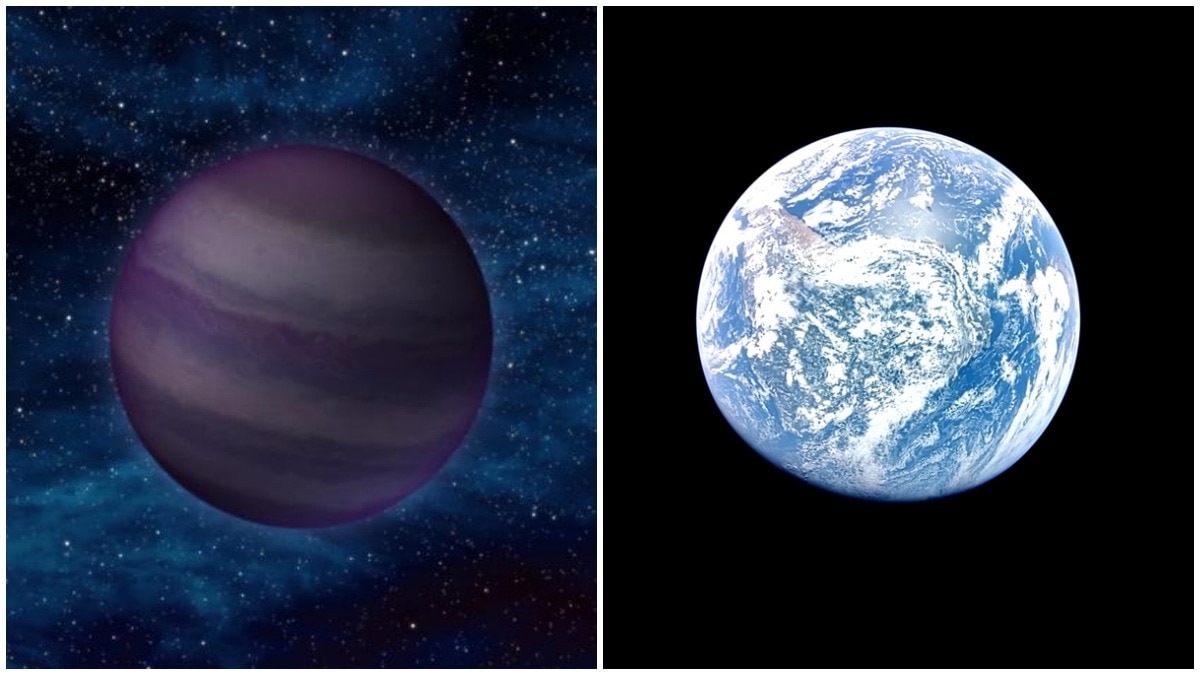
സൗരയൂഥത്തിന് പുറത്തുള്ള WISE 0855 എന്ന ബ്രൗൺ ഡ്വാർഫിൽ ഭൂമിക്ക് സമാനമായ കാലാവസ്ഥാ വ്യതിയാനങ്ങൾ ജെയിംസ് വെബ് ടെലിസ്കോപ്പ് കണ്ടെത്തി. ജലമേഘങ്ങളുടെ സാന്നിധ്യവും അന്തരീക്ഷത്തിലെ രാസമാറ്റങ്ങളും ശാസ്ത്രജ്ഞർ ആദ്യമായി വേർതിരിച്ചറിഞ്ഞു. ഭൂമിയിൽ നിന്നും 7.5 പ്രകാശവർഷം അകലെയുള്ള ഈ ഗ്രഹസമാന വസ്തുവിലെ സങ്കീർണ്ണമായ അന്തരീക്ഷ പ്രക്രിയകൾ പഠനത്തിലൂടെ വ്യക്തമായി.
Astronomers have discovered changing water clouds and complex atmospheric activity on one of the coldest known objects beyond our solar system, revealing that a world more than seven light-years away may have weather patterns remarkably similar to those on Earth and Jupiter.
Using Nasa's James Webb Space Telescope (JWST), a team led by Brittany Miles, assistant astronomer at the University of Arizona's Steward Observatory, observed WISE 0855 for 11 hours, recording its spectrum every 15 minutes.
The observations provide the most detailed time-series portrait of the object's atmosphere and offer the first direct confirmation that water clouds on another world change thickness over time.
The findings, published in The Astrophysical Journal, reveal two atmospheric processes operating simultaneously: water clouds at high altitudes becoming thicker and thinner as the object rotates, and deep chemical gases rising towards the surface through convection.
"Before JWST, we only had photometry, which mixed up the effects of clouds, chemistry, and temperature all together. Now we can actually distinguish them," Miles said.
A STRANGE WORLD BETWEEN PLANETS AND STARS
WISE 0855 is a brown dwarf, an object that is too massive to be a planet but too small to sustain the nuclear fusion that powers stars. Located around 7.5 light-years from Earth, it has roughly twice Jupiter's mass and nearly the same size.
With an estimated temperature of about 265 Kelvin, or minus 8 degrees Celsius, it is colder than the average surface temperature of Earth.
As the brown dwarf rotates, different regions with varying temperatures and cloud coverage move into view. Webb's sensitive instruments detected these changes, allowing researchers to distinguish cloud variations from signals produced by atmospheric gases.
The telescope also identified changing signals associated with carbon monoxide and phosphine. These gases are transported upwards from deeper, hotter layers through convection, a process also observed in Jupiter's atmosphere.
This phenomenon, known as disequilibrium chemistry, occurs when atmospheric gases are moved around faster than chemical reactions can restore equilibrium.
WHAT DOES THIS MEAN FOR OTHER WORLDS?
The discovery could help astronomers better understand the atmospheres of giant planets beyond our solar system.
Although brown dwarfs are not classified as true planets, they share important atmospheric processes with gas giants such as Jupiter.
Studying them offers an opportunity to test models of cloud formation, atmospheric circulation and chemistry under conditions that are difficult to reproduce on Earth.
Researchers plan further Webb observations to better understand WISE 0855's rotation and the three-dimensional movement of its atmosphere.
The findings suggest that the physics driving clouds and weather may operate across a wide range of worlds, from Jupiter to distant giant exoplanets.
Even in the cold darkness of space, weather may be far more familiar than astronomers once imagined.