
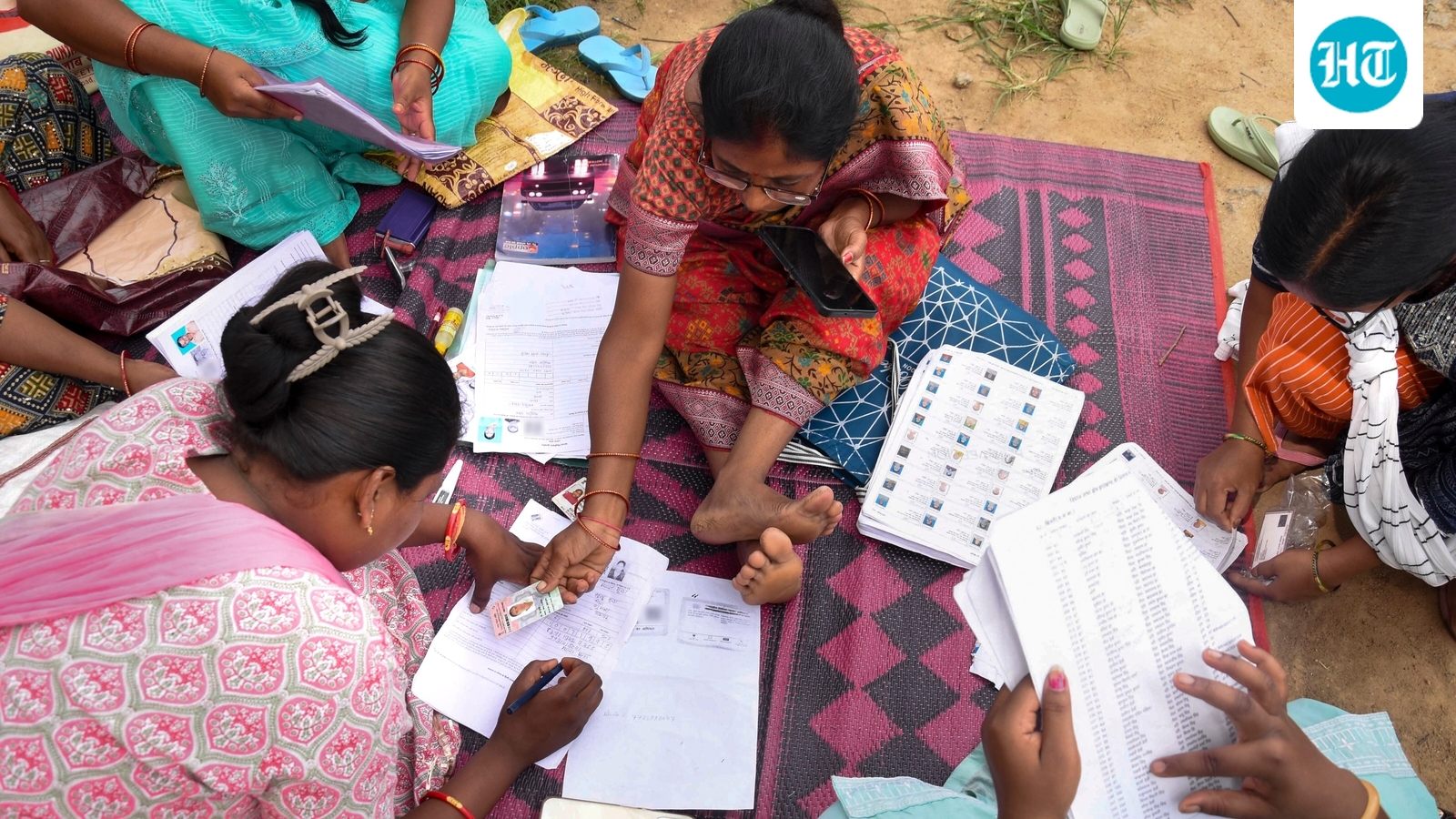
The Election Commission of India started the Special Intensive Revision of electoral rolls in June 2025. By December 10, the ECI said it had distributed more than 509.6 million forms. While the process faced controversies over added declarations, the commission continues to manage voter lists across many Indian states.
Since the Election Commission of India (ECI) began the Special Intensive Revision (SIR) of electoral rolls in June 2025, voters have been handed a series of forms to fill in, submit or check. Some are routine parts of the Registration of Electors Rules, 1960, which govern how India's voter lists are prepared and revised, and the others were created specifically for SIR.
A look at the function of each form, how some have allegedly been misused, and the controversies around them.
Every elector already on the roll receives an enumeration form, also available on ECINET, the ECI's app for voter services. It comes pre-filled with the elector's name, Electors Photo Identity Card (EPIC) number, the photograph on the roll, polling part, address and date of birth. The elector adds a current photograph, a mobile number, the EPIC numbers of family members and, optionally, Aadhaar details.
The second phase of the SIR began on November 4, 2025, in nine states and three Union Territories. By December 10, the ECI said it had distributed more than 509.6 million forms, covering 99.98% of the nearly 510 million electors in those states and UTs.
Form 6 is the statutory application to join the electoral roll. Under SIR, it is also the only way back for an elector excluded from the draft revised roll, and who must attach a declaration to it.
Before SIR, Form 6 alone was enough. Once the revision began, applicants also had to submit a declaration linking themselves or their parents to the 2002 rolls, which serve as the base for SIR.
Election commissioners Sukhbir Singh Sandhu and Vivek Joshi - who make up the three-member commission with chief election commissioner (CEC) Gyanesh Kumar - had objected to adding the declaration to the online Form 6, The Indian Express reported last month. The ECs argued that only the law ministry could change the form.
In a September 26 press note, the ECI said Form 6 was never amended, the declaration was only added to it, and the Supreme Court had upheld this power in a judgment on May 27.
From September 30, amidst calls for the electoral roll revision exercise to be called off and voter lists reverted to the earlier ones, the ECI removed the declaration from ECINET in states where the SIR has concluded.
Form 7 is used to object to a person's inclusion in the roll or to seek the deletion of a name. Each form covers one entry and must state the reason. Electors can file it to remove their own name, after moving house for instance, or to object to someone else's. An objection to someone else's inclusion can be filed only by a person whose name is already on that roll.
The most recent controversy over SIR was related to this form.
In Karnataka, where SIR is under way, booth-level officers (BLOs) in Belagavi reported receiving large batches of pre-filled Form 7 applications, with some of these targeting voters from minority communities. According to one allegation, ten people filed 1,363 of the 1,373 applications received on a single day.
Karnataka chief minister DK Shivakumar subsequently sought constituency-wise data on bulk Form 7 objections, including those that lack the prescribed reasons or mandatory details, and has alleged that some BJP leaders are filing the forms in bulk to remove voters. BJP has denied the allegations.
Before this, similar cases have been reported from Odisha and Uttarakhand, and earlier from West Bengal.
The ECI has directed electoral registration officers (EROs), the officials who prepare each constituency's roll, to act against anyone who knowingly makes a false declaration, after an inquiry under Rule 20 of the 1960 rules.
Form 7 also warns applicants that a knowingly false declaration is punishable under Section 31 of the Representation of the People Act, 1950.
Form 8 covers a change of residence, corrections to an entry, replacement of an EPIC, and marking an elector as a person with disability.
During SIR, many voters who have moved say they have been pushed to file Form 6, the form for new voters, instead. The ECI's automated system rejects a Form 8 application if the applicant has not submitted a pre-filled enumeration form at their previous address.
The Bombay high court on October 1 observed that this forces a voter who has moved to sign a form for an address they have left, which amounts to a false declaration.
The ECI argues that Form 8 assumes the person is already on the draft roll at the old address, and that voters who never reported a change of address cannot insist on Form 8 when Form 6 is available.
The Voter Adhikaar Manch, a transparency group, has argued that making such voters file Form 6 treats a long-standing voter like a first-time one.
Form 6A registers overseas electors, Indian citizens living abroad who have not taken another country's citizenship. Form 6B lets an elector submit their Aadhaar number to authenticate their entry on the roll. Filing it is voluntary, and Aadhaar is also optional on the SIR enumeration form.
These forms are lists that the ERO maintains and puts up on the office notice board under Rule 16 of the 1960 rules, so voters can track the claims and objections filed in their constituency. Officers designated to receive applications keep the same lists under Rule 15. Under the rules, a claim or objection can be allowed without a hearing a week after it is listed, unless someone demands an inquiry in writing.
Form 9: List of Form 6 applications received
Form 10: List of Form 7 applications received
Form 11: List of Form 8 applications received other than those for a change of address
Form 11A: List of Form 8 applications for a change of address within the constituency
Form 11B: List of Form 8 applications for a change of address outside the constituency