
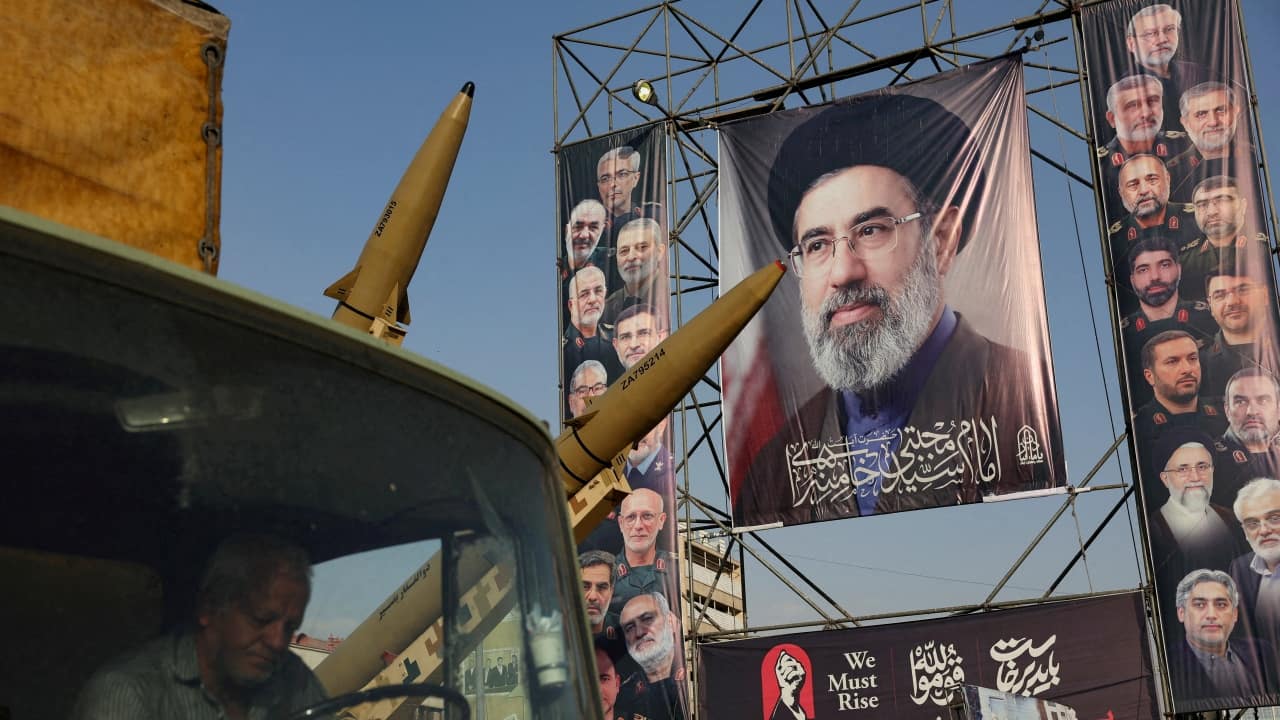
Qatar said on Tuesday that indirect talks between the United States and Iran are still continuing. Despite stalled efforts to end the war, Doha keeps relaying messages between both sides. "I can confirm that the talks are continuing," said Ibrahim Al-Hashmi. Many hope these efforts lead to a peaceful solution.
Qatar on Tuesday said indirect negotiations between the United States and Iran were still continuing despite months of stalled efforts to end the Middle East war, with Doha and regional partners continuing to relay messages between the two sides. Ibrahim Al-Hashmi, a Qatari foreign ministry official, said the talks were taking into account the concerns of the various parties involved in the conflict. "I can confirm that the talks are continuing and the exchange of messages between different parties is continuing via Qatar and its regional partners," Al-Hashmi said at a regular press briefing. He said the scale of the conflict and its global economic consequences made a negotiated settlement necessary. "As you know, the scale of this conflict and the magnitude of the price that the whole world is paying require us to put our best efforts to end this immediately through a negotiable solution on the negotiation table," he added. The comments came a day after Iranian President Masoud Pezeshkian described negotiations with Washington as "meaningless", accusing the US of using talks while continuing pressure and military action against Iran. "So far, they have attacked us three times after talks, and this shows that they are not seeking dialogue; rather, their goal is to overthrow the Islamic Republic of Iran," Pezeshkian was quoted as saying by Iran's state news agency IRNA. "With an enemy that every day resorts to assassination, sanctions, pressure and threats, and that breaks its commitments, negotiations are meaningless." Why US-Iran talks remain stuck The war began in late February when the US and Israel launched a wave of surprise attacks against Iran, even as Washington and Tehran were engaged in negotiations over Iran's nuclear programme. The two sides later agreed to a memorandum of understanding in June that outlined a framework for a permanent resolution. However, the situation deteriorated again after Iranian attacks on vessels in the Strait of Hormuz, leading to a resumption of US military operations. Indirect negotiations have remained largely stalled since then. Recent talks held on the sidelines of the United Nations General Assembly also failed to produce a breakthrough. Washington has subsequently shifted greater emphasis towards economic pressure. The US has not carried out a strike on Iran since September 1. Iranian Foreign Minister Abbas Araghchi said on Sunday that the conflict could not be resolved through military action or additional sanctions. "There is no military solution, nor any solution based on new sanctions," Araghchi said. "Only negotiations based on justice and fairness" could end the conflict, he added. Strait of Hormuz remains the biggest sticking point The Strait of Hormuz has emerged as one of the central disputes between Washington and Tehran. The US and Israel have said their military campaign is aimed at preventing Iran from acquiring nuclear weapons, a goal Tehran has repeatedly denied pursuing. But the conflict soon shifted towards the strategically vital waterway after its disruption sent shockwaves through global energy markets. Iran has sought to control shipping through the strait since the beginning of the war and has attacked vessels attempting to transit without its authorisation. The US, meanwhile, has imposed a counterblockade of Iranian ports and has also targeted vessels it accuses of violating the blockade. The confrontation around the waterway continued this week. According to the British maritime agency UKMTO, a tanker was struck while attempting to transit the strait on Sunday, while another vessel turned back on Monday after Iranian forces threatened to attack it. Qatar keeps diplomatic channel open Qatar's role as an intermediary remains central to the indirect US-Iran dialogue. Doha has continued to facilitate the exchange of messages between Washington and Tehran even as public statements from both sides suggest that a breakthrough remains distant. Qatari Emir Sheikh Tamim bin Hamad Al Thani also met Iranian Interior Minister Eskandar Momeni in Doha on Tuesday, according to a statement from the royal palace. The latest diplomatic efforts come after a ceasefire in April, the June memorandum of understanding and unsuccessful negotiations during the UN General Assembly last month. With the dispute over Hormuz unresolved and both sides maintaining sharply different positions on the war, Qatar's latest comments indicate that the diplomatic channel remains open despite the prolonged impasse.