
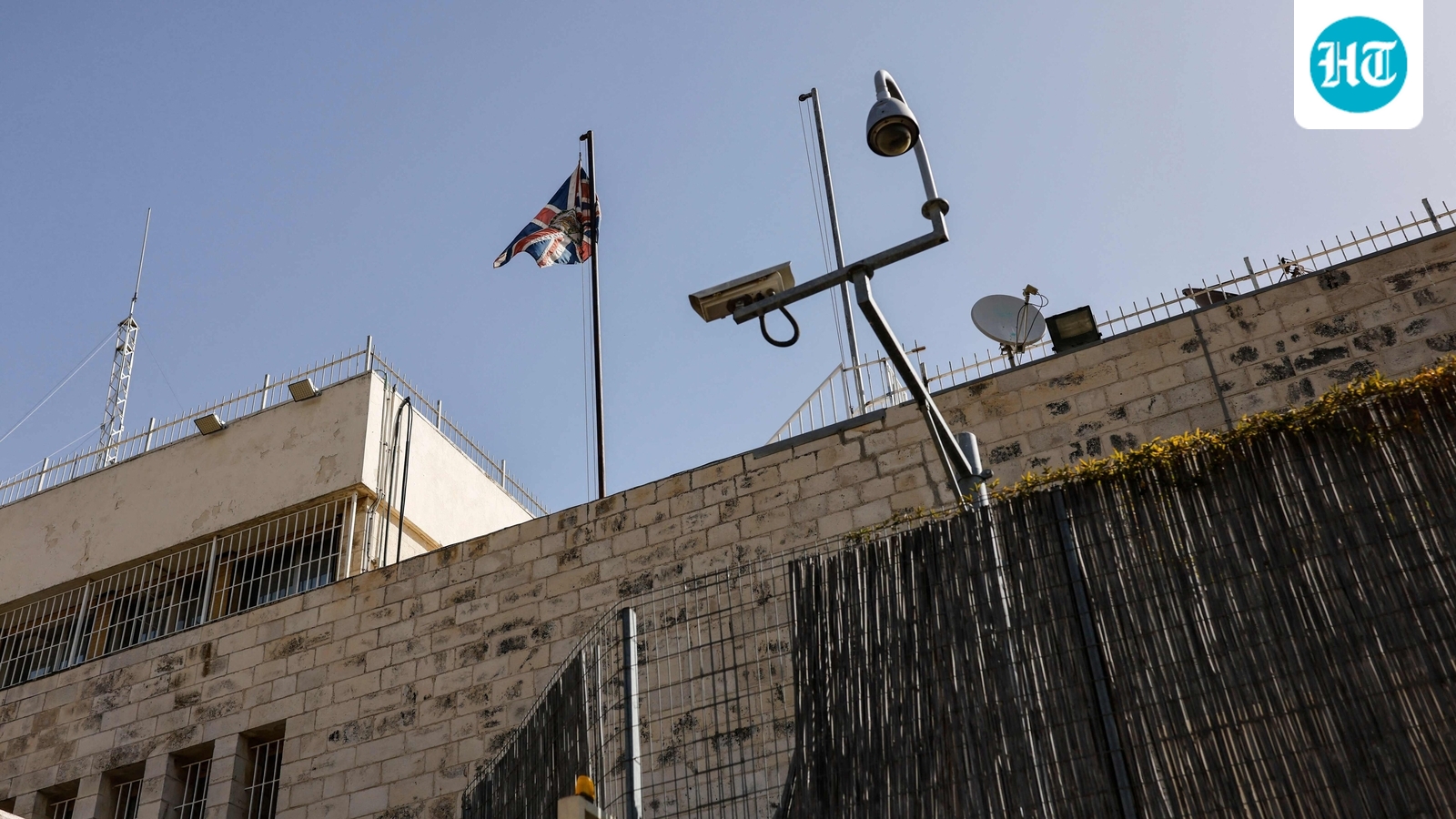
The UK officially renamed its Jerusalem consulate to the "UK Mission in Jerusalem" on Thursday following a row with Israel. Foreign Secretary Ed Miliband said, "We have been clear that we do not accept that the Government of Israel has the legal right to close the British Consulate General."
The UK has officially scaled down its consular operations in Jerusalem on Thursday, following a row with Israel. According to a statement from UK Foreign Secretary Ed Miliband, the consulate will now be referred to as the "UK Mission in Jerusalem," with a focus on delivering vital services in East Jerusalem and Palestine.
The UK foreign secretary's remarks come after Israel called for the closing of the East Jerusalem consulate in response to UK-led sanctions, which call for a ban on trade of goods made in Israeli settlements.
Miliband added that the UK has always stood by its view that East Jerusalem is an occupied territory, based on the recognition followed by the United Nations.
"We have been clear that we do not accept that the Government of Israel has the legal right to close the British Consulate General in Jerusalem, which has been there for nearly 200 years. The UK government reiterates its long-standing view that East Jerusalem is occupied territory," read the statement from the Foreign, Commonwealth & Development Office.
With the decision to rename, the UK has stated that it will continue "vital services" and will ensure that it "maintains our longstanding British presence and the UK's role in support of a two-state solution."
On September 8, 2026, the UK designated five settler under the Global Human Rights Sanctions Regulations 2020 and announced that it will also introduce a new sanctions regime targeting settlements in the occupied West Bank over the next six to nine months.
Based on this order, the UK proposed to introduce -
"The Bedouin communities I met in Khan al-Ahmar had lived on that land for generations. E1 proposals would evict them and place settlements directly between East Jerusalem and the West Bank, cutting through the heart of Palestine. Let us be absolutely clear what this means: the creation of a set of facts on the ground to make the two-state solution unviable," said Ed Miliband in an address to the House of Commons on September 8.
The foreign secretary also raised the issue for an increase in settler violence and "terrorism" against Palestinians in the West Bank region.
"The British Government agree that there is ethnic cleansing of Palestinians in areas of the West Bank, perpetrated by settler terrorists. All too often, the Israeli Government have turned a blind eye to that," Miliband added.
Introducing the sanctions, the UK added that the order aims to target "illegal settlements and expansion," and not the state of Israel.
France and Canada also joined in the initiative against Israeli settlements in the occupied territory.
Israel lambasted the UK for its sanctions, with Israeli President Isaac Herzog calling the move a "grave sanction."
"It's directly intervening in Israeli politics, which shouldn't have happened," he said. "You want to move things, have a dialogue with Israel and don't blame Israel," Herzog said in an interview with Axel Springer Global Reporter Network's Jan Philipp Burgard.
In response to the UK, Israel called on the British government to close its operations in Jerusalem and ordered the recall of its diplomats by October 8.
As of October 8, the UK announced it will continue to operate the UK Mission in Jerusalem rather than a consulate, and Israel has called on almost all British diplomats to leave.
Furthermore, Israeli foreign minister Gideon Sa'ar has also called for the following actions -