
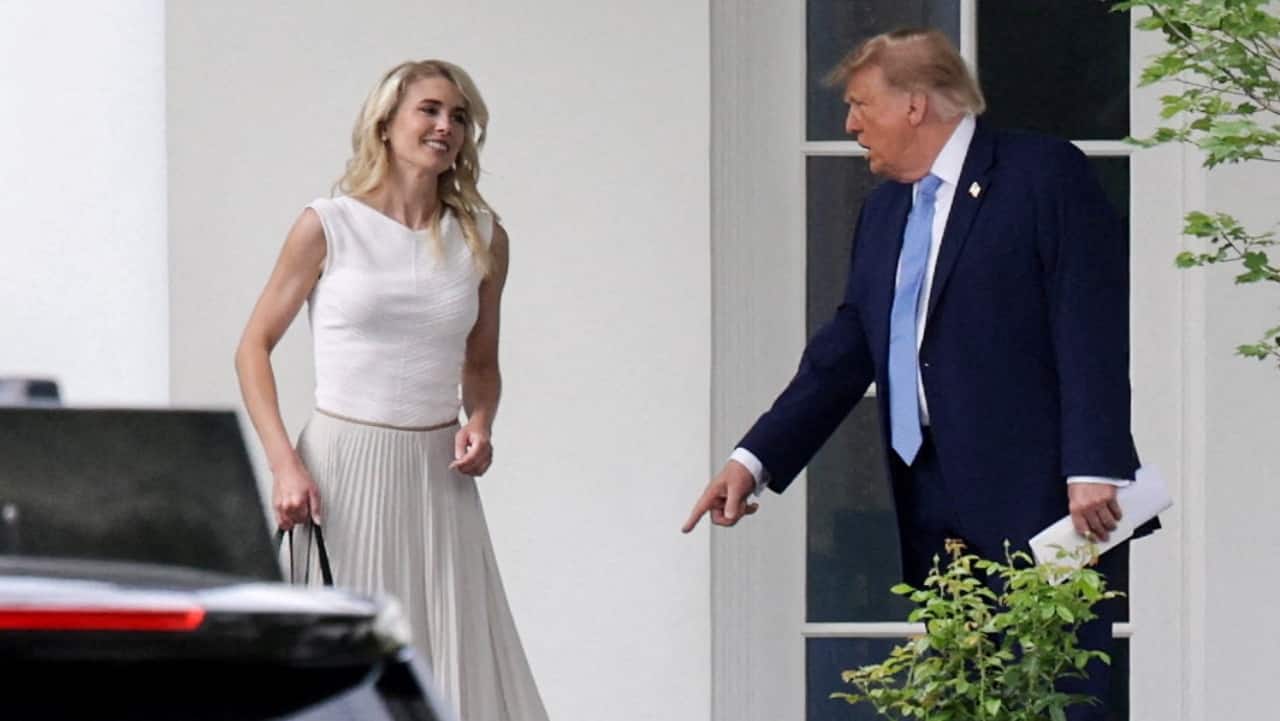
The Trump administration used $20 million in taxpayer funds for ads praising Donald Trump. On August 7, Trump met advisers to discuss campaign strategy, but he asked aide Natalie Harp to show videos featuring himself instead. Critics now question why government money paid for these ads that highlight his personal record.
The Trump administration has come under scrutiny over millions of dollars in taxpayer-funded advertising that has prominently featured US President Donald Trump, while his close aide Natalie Harp has also drawn attention over her reported role in preparing material for him. According to a report by The New York Times, Trump met advisers and political strategists in the Oval Office on August 7 to discuss using money from his political action committee to support Republican candidates in the upcoming US midterm elections. Instead of focusing primarily on candidates, Trump reportedly asked Harp to show him videos and images produced by the White House digital team that portrayed him favourably. Harp reportedly played several pieces of content for Trump, including a video featuring UFC president Dana White praising the president. The meeting highlighted concerns among some of Trump's political advisers that he remained more interested in keeping himself at the centre of the political message than in directly supporting candidates. Trump-focused ads raise questions Since September, the administration has run a series of television advertisements during football games, on news networks and across other platforms. The ads have highlighted Trump's policies and actions, including his military operations and administration record. The White House has described the advertisements as public service announcements. However, critics have questioned their political character, particularly because some of the material reportedly resembles content used during Trump's election campaign. The New York Times reported that 13 advertisements were produced, with several focusing heavily on Trump. One advertisement reportedly declared that "God made Trump" because the president was needed to help the country. The campaign has also drawn attention because the advertisements were reportedly financed with government money. Millions in taxpayer funds According to the New York Times, around $20 million in taxpayer funds from the Department of Homeland Security were used for the advertising campaign. Trump has separately claimed that his political super PAC, MAGA Inc., has access to "close to $1 billion". Official filings cited by the newspaper, however, put the figure at around $415 million. The Daily Beast reported that Trump had asked Office of Management and Budget Director Russell Vought to identify government funds that could be used to finance the advertisements. The spending has prompted criticism from members of both parties. Republican Senator John Kennedy said, "I don't think any public official, including President Trump or Kristi Noem or John Kennedy, should spend public money on private ads for themselves," according to Face the Nation. Democratic Representative Jamie Raskin, the ranking member of the House Judiciary Committee, said on X that the advertisements "may be felony criminal theft and conversion of government property for political campaign purposes." Trump has defended the spending. "If somebody said that that's wrong, I'll gladly pay the money," he said. He added: "You have to understand. I'm not promoting a candidate. I'm not promoting myself because I'm not running for office. I'm promoting the country." "This is my money that I control," Trump said. Natalie Harp's role draws attention The controversy has also brought fresh attention to Natalie Harp, Trump's executive assistant, who has been a prominent presence around the president since the beginning of his second term. Harp, 35, frequently travels with Trump and has gained attention for her close access to him. She has previously been described as the president's "human printer" because of reports that she prints messages, social media posts and other material for him to review. She has also reportedly served as a gatekeeper, with people attempting to communicate with Trump sometimes passing messages through her. The Daily Beast previously published private letters that Harp reportedly wrote to Trump. In one of them, she referred to him as her "guardian and protector in this life." Harp's relationship with Trump has also generated speculation on social media and among political opponents. In August, an alleged photograph purporting to show Trump kissing a woman circulated online, with claims that the woman was Harp. Those claims were not verified. Georgia Democratic Senator Jon Ossoff also criticised the pair in August, claiming Trump appeared more interested in spending time with Harp than focusing on his presidential responsibilities. "He golfs and trades stocks," Ossoff said, adding: "See, he doesn't want to do the job. He wants to build his ballroom and travel with Natalie on their apparently defenseless flying palace gifted by the emir of Qatar." There has been no official statement from the Trump administration confirming Harp's involvement in producing the taxpayer-funded advertisements.