
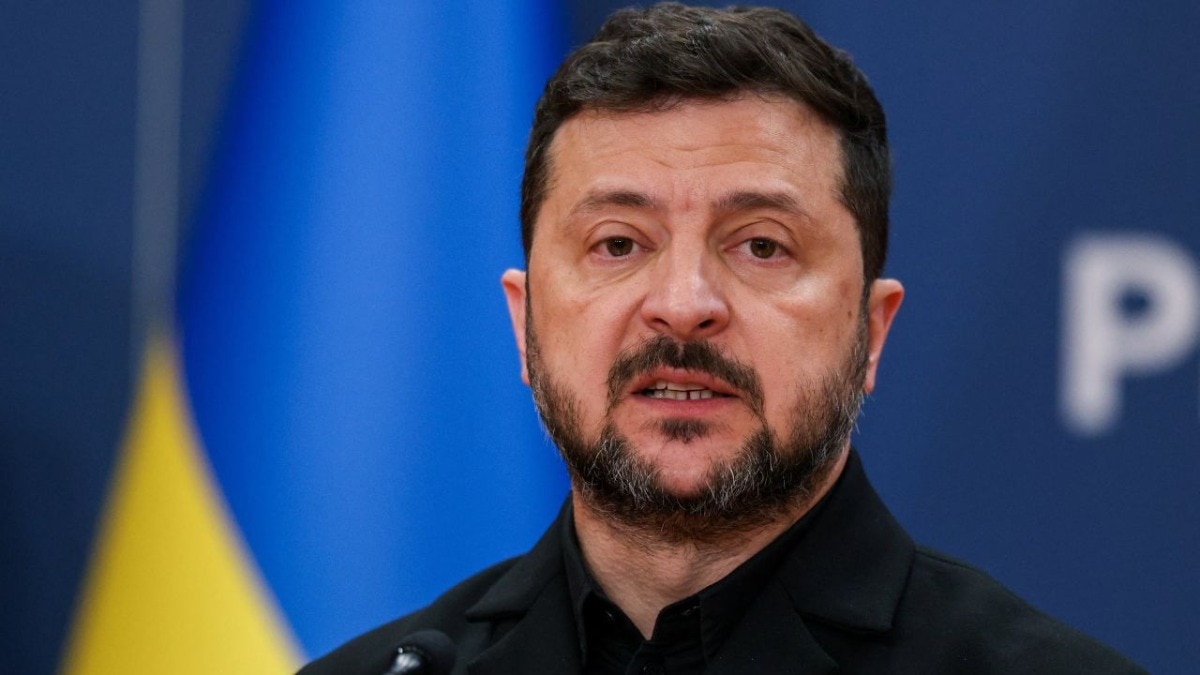
President Volodymyr Zelenskyy said on Sunday that Ukraine will stop attacking Russian oil refineries only if Moscow halts strikes on Ukrainian energy infrastructure. This rejected Donald Trump’s demand to stop the attacks. Zelenskyy said, "It's possible to stop strikes on energy infrastructure as early as today, but Putin does not."
Ukraine is ready to stop attacking Russian oil refineries if Moscow halts its strikes on Ukrainian energy infrastructure, President Volodymyr Zelenskyy said on Sunday, rejecting the unilateral concession demanded by US President Donald Trump.
The disagreement brings together two pressures: Kyiv's demand for protection against Russian attacks and Trump's effort to contain rising fuel prices ahead of next month's US midterm elections.
On Saturday, Trump blamed Ukrainian strikes on Russian refineries for higher US diesel prices and said Zelenskyy had "better damn well stop". He also suggested that Ukraine replace its president, accusing him of missing opportunities to reach a deal with Moscow.
Zelenskyy's response maintained Ukraine's long-standing position: a halt to refinery attacks must be matched by Russia ending strikes on Ukrainian power infrastructure, and any agreement must come with "real guarantees".
"The real cause of the war in Europe is Russia and Russia alone," Zelenskyy said, without directly referring to Trump's comments. "It's possible to stop strikes on energy infrastructure as early as today, but Putin does not want to do so."
DIESEL DEAL ADDS TO DISAGREEMENT
Trump's demand came after he announced a diesel supply agreement with Russia, which Zelenskyy criticised on Saturday, saying it would embolden Moscow's attacks.
Global diesel prices have risen sharply since the Iran war began in February. That has become a political problem for Republicans ahead of elections that could give Democrats control of one or both chambers of Congress.
The Russian supply deal's ability to ease prices, however, remains uncertain.
Analysts said the agreed volumes were well below Russia's usual exports when its refineries were operating without attacks, making a sustained reduction in fuel prices unlikely.
The agreement has also drawn criticism from US lawmakers, including Republican Representative Don Bacon, who said it was time to impose more sanctions on Russia rather than lift them.
For Ukraine, the proposed halt raises a separate concern. Stopping its refinery strikes without a reciprocal commitment would remove one source of pressure on Moscow while leaving Ukrainian energy infrastructure exposed.
UKRAINE LOOKS TO EU FOR MILITARY SUPPORT
Amid Trump's pressure on Kyiv and his diesel deal with Moscow, Ukraine is seeking stronger European support to strengthen its defences and maintain pressure on Russia.
Zelenskyy said he would continue discussions with European leaders on Sunday, with daily talks on additional air defence packages, including ammunition for aircraft used to intercept Russian jet-powered drones.
Those requests come as Europe expands its own military capabilities in response to Russia's war against Ukraine. Defence spending by the EU reached €418 billion in 2025, up 20% from the previous year, according to the European Defence Agency.
Ukraine is also seeking stronger sanctions on Moscow. Foreign Minister Andrii Sybiha is due to attend an EU Foreign Affairs Council meeting on Monday, where ministers are expected to discuss sanctions and Ukraine's accession negotiations.
For Kyiv, the next step is securing concrete European commitments as differences with Washington deepen.