
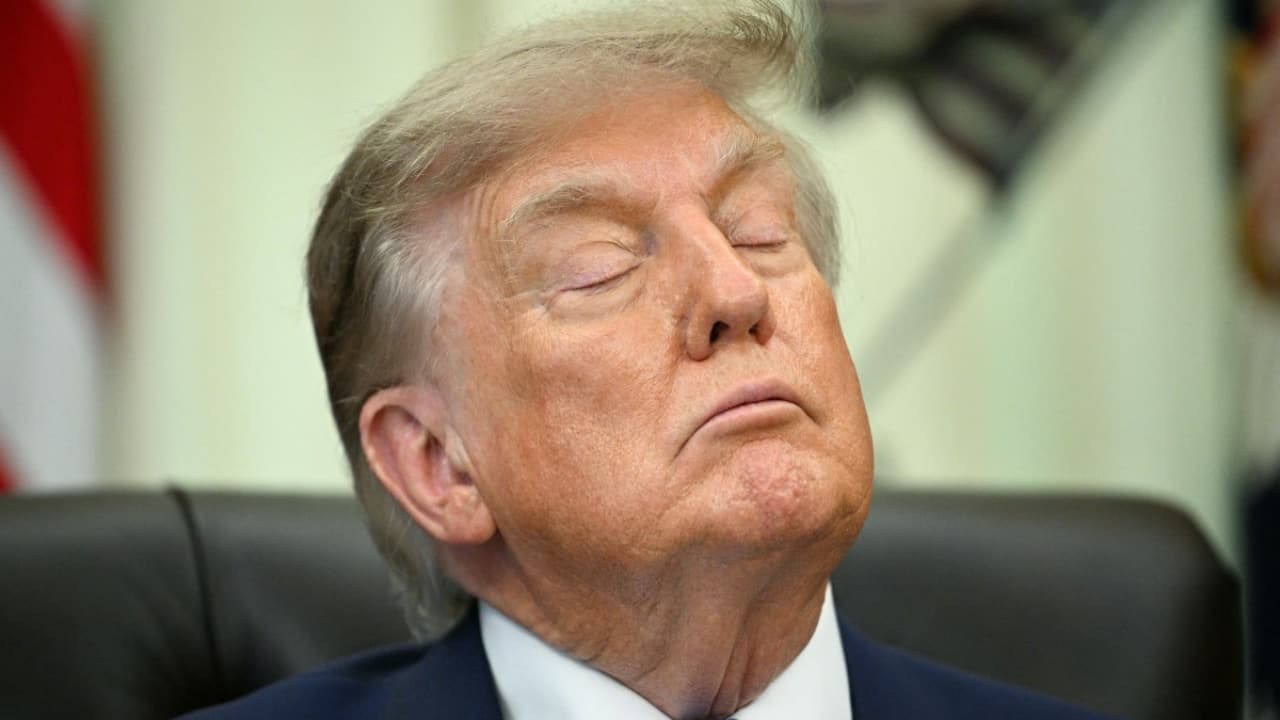
Donald Trump said he does not believe lasting peace with Iran is possible in a TIME Magazine interview. He also defended his extensive White House renovations, calling the building a disgraceful dump when he took office. Additionally, Trump expressed frustration with several Supreme Court justices he appointed during his presidency.
Donald Trump has said he does not believe lasting peace with Iran may be possible, while defending his extensive renovation of the White House and expressing frustration with several Supreme Court justices he appointed. In a 75-minute interview with TIME Magazine, the US president ranged across foreign policy, the transformation of the White House, the future of the Kennedy Center and the possibility of issuing pre-emptive pardons to members of his administration. The interview comes a little over a month before the US midterm elections and around seven months into the war with Iran. Trump says peace with Iran may not be possible According to CNN, Trump struck a particularly uncompromising tone on Iran, suggesting that the conflict may not ultimately end in a lasting peace. "By annihilating Iran, we've created peace in the world," Trump said, before adding that he did not think peace with Iran was possible. Asked whether he could follow through on repeated threats to "annihilate" the country, Trump said it remained possible. His comments came even as efforts continued to bring the United States and Iran back to negotiations. Just a day before the TIME interview, Trump had said that he expected further talks with Tehran. Trump defends White House transformation The president also devoted considerable attention to his extensive changes to the White House, describing the building he inherited as a "disgraceful dump" that badly needed repairs. Changes during his second term have included gilding the Oval Office, paving and redesigning the Rose Garden, installing a "Presidential Walk of Fame" along the West Colonnade and adding new flagpoles and a helipad. The Palm Room flooring and Lincoln Bedroom bathroom have also been redone in marble, while Trump is overseeing construction of a 90,000-square-foot ballroom addition that he says can double as a military complex. Asked why such projects should matter to Americans struggling with their bills, Trump described the White House as one of the country's most important symbols. He said doors and locks had been broken and exterior mouldings were falling apart when he took office. He also claimed the Secret Service had recommended demolishing and rebuilding the historic Oval Office, something he said he prevented. Trump criticises his own Supreme Court picks Trump also renewed his criticism of Supreme Court justices Neil Gorsuch, Brett Kavanaugh and Amy Coney Barrett, all of whom he appointed during his first presidency. He complained that the three had ruled against him too frequently despite receiving what he called the "position of a lifetime". Trump pointed specifically to US Supreme Court decisions involving his tariffs and birthright citizenship. He contrasted the conservative justices with the court's Democratic-appointed members, whom he characterised as more likely to vote together. Asked whether he expected loyalty from the justices he appointed, Trump said he did not. Instead, he said he wanted them to make what he regarded as good decisions for the country. Kennedy Center demolition remains an option Trump also declined to rule out demolishing the Kennedy Center, which remains caught up in legal proceedings and has been undergoing a review of the building's safety. Asked directly whether he would commit to preserving the building, Trump refused to do so. He described the arts centre as being in poor condition and said he would be willing to save it, but added that he was "not committing to anything" while the legal battle continued. The centre's remaining staff have been told that the building remains temporarily closed while its condition is assessed. Pre-emptive pardons could be considered Trump also said he would consider issuing pardons to members of his administration before leaving office. Asked about the possibility, he said he would be prepared to do so and pointed to the pre-emptive pardons issued by Joe Biden before he left the White House. Those included pardons for former Joint Chiefs chairman Mark Milley, Anthony Fauci, members of the congressional committee that investigated the January 6 attack and members of Biden's family. Trump also raised the prospect of further political and legal confrontation if Republicans lose control of the House of Representatives in the November midterms. "If Republicans lose the House," he said, Democrats would "probably go after me and I'll go after them."