
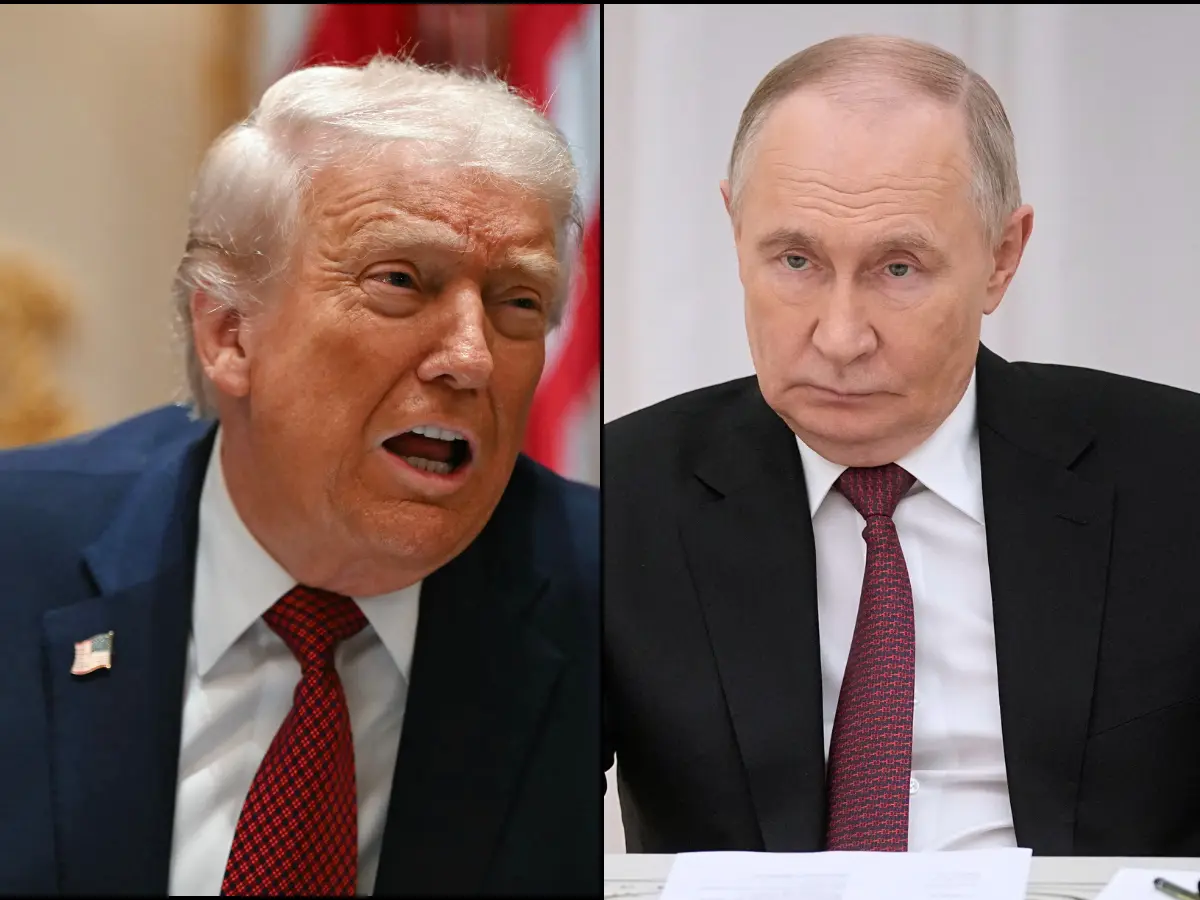
US President Donald Trump said on Friday that Russia agreed to supply diesel to lower fuel prices. Trump announced that "Russia will immediately supply over 300,000 Tons of Diesel Fuel to the American and Global Marketplace." Ukrainian President Zelensky criticised the move, calling it an unworthy and weak decision by Washington.
Trump eases Russia energy sanctions to secure diesel supplies and lower US fuel prices, drawing criticism from Ukraine's President Zelensky
US President Donald Trump said on Friday that Russia had agreed to release substantial quantities of diesel fuel into American and international markets, as Washington eased certain restrictions on Russian energy exports in an effort to bring down rising fuel prices ahead of crucial US midterm elections. The announcement has drawn criticism from Ukrainian President Volodymyr Zelensky, who described the decision as an 'unworthy' and 'weak' move, highlighting growing tensions over Washington's approach to Moscow while Russia's war against Ukraine continues.
Russia has faced multiple rounds of sanctions imposed by the United States and its allies since its full-scale invasion of neighboring Ukraine in 2022. The latest move comes just weeks before the US midterm elections, with Trump's Republican Party facing political pressure as voters express concerns about the rising cost of living. Fuel prices in the United States have climbed sharply since late February, when US-Israeli strikes against Iran prompted Tehran to block the Strait of Hormuz, a vital shipping route for global energy supplies.
Following talks with Russian President Vladimir Putin, Trump announced the proposed diesel deliveries on social media. "Russia will immediately supply over 300,000 Tons of Diesel Fuel to the American and Global Marketplace," Trump said. The Kremlin confirmed Moscow's willingness to supply energy products, stating that Russia "reaffirmed its readiness to supply oil and oil products to the American and world markets."
Trump also announced plans for additional deliveries of 500,000 tons in November, followed by another one million tons, with further supplies expected afterward. Zelensky criticized the decision, expressing concern that easing restrictions on Russian energy exports could undermine efforts to pressure Moscow over its invasion of Ukraine. "It is certainly not honest, it is certainly unworthy of our partners, and it is, in my view, a weak decision," Zelensky told reporters. The US Treasury Department issued a temporary license on Friday allowing Russian diesel to enter global markets through April 2027. Trump defended the move by emphasizing its potential benefits for American consumers and businesses. "Lower prices for Americans, especially our Great Farmers, Ranchers, and Truckers, is my Greatest Priority," Trump posted on social media.
The announcement comes as American households and businesses face significantly higher fuel costs. The average price of regular gasoline in the United States has risen by more than 46 percent since late February, reaching $4.37 per gallon. Diesel prices have climbed approximately 67 percent over the same period to $6.28 per gallon. Trump has blamed Ukrainian attacks on Russian oil refineries for contributing to rising fuel prices. However, the US-Israeli conflict with Iran and the resulting disruption to energy shipments through the Strait of Hormuz have been major factors affecting global supplies. The proposed Russian diesel deliveries could add supply to international markets, although the extent to which they would reduce prices remains uncertain. The impact will depend on the timing of shipments, market demand and the broader geopolitical situation.
The energy announcement coincided with a meeting between American and Ukrainian negotiators in Miami on Friday, as Washington renewed efforts to break the stalemate in Russia's war against Ukraine. US envoy Steve Witkoff described the discussions as constructive, saying the sides had explored possible ways to reduce hostilities and bring the conflict to an end before winter.
The meeting followed visits to Moscow and Kyiv last month by Witkoff, a longtime Trump confidant, and Jared Kushner, Trump's son-in-law. Washington has continued to pursue negotiations, although previous diplomatic efforts have made limited progress. With winter approaching, concerns are growing over the potential consequences of continued fighting and attacks on critical infrastructure. On Thursday, a Russian strike on buses in the frontline Ukrainian city of Kramatorsk reportedly killed 30 people, underscoring the continuing human cost of the conflict.
Trump's efforts to broker a peace agreement have repeatedly encountered difficulties over Russia's territorial demands.
Moscow has insisted on controlling the entire eastern Donbas region of Ukraine, including areas that remain under Ukrainian control. Zelensky has rejected surrendering Ukrainian-held territory, warning that Russia could use any additional territorial gains as a base for future military action.
Russia currently occupies approximately one-fifth of Ukrainian territory. The Miami discussions also addressed Ukraine's future security arrangements. According to Witkoff, the agenda included "security guarantees, as well as longer-term arrangements for Ukraine's and Europe's security to prevent future conflicts, and support Ukraine's post-war reconstruction." Representatives from Britain, France and Germany attended the talks, alongside officials from NATO and the European Union.
The negotiations highlight the complex challenges facing Washington as it attempts to pursue a peace settlement while balancing energy affordability, relations with Moscow and support for Ukraine. Whether the Russian diesel arrangement will deliver meaningful relief for American consumers remains to be seen. Meanwhile, disagreements over territorial control, security guarantees and sanctions continue to complicate efforts to end the war.