
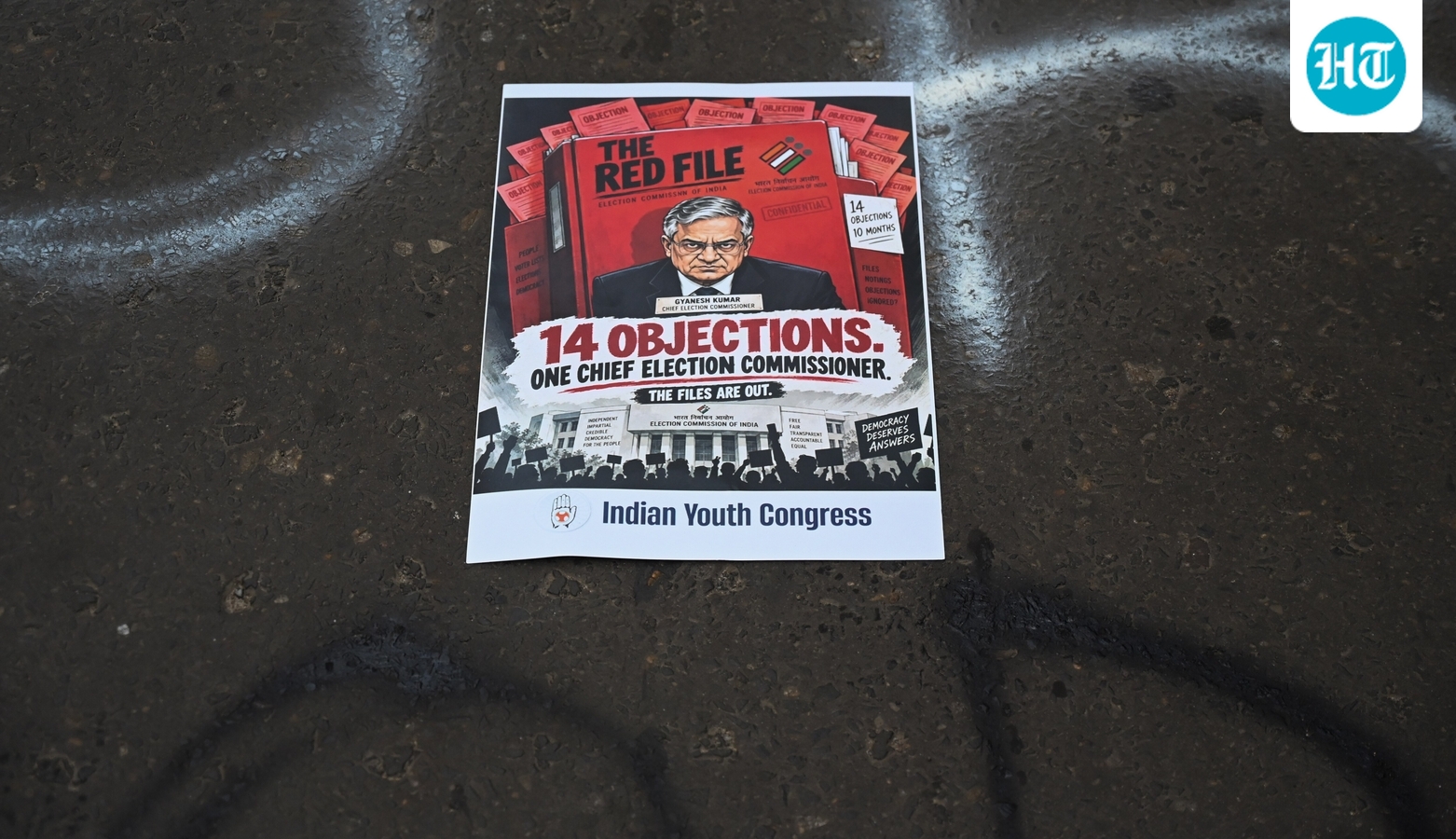
The Election Commission of India faced criticism over the Special Intensive Revision process, which allegedly excluded many voters. While the Supreme Court continues to hear petitions, the commission recently tweaked norms to allow booth level officers to visit homes. Still, many people remain worried about their voting rights in states.
In the ideal world of textbooks which claim to tell us how societies work and prosper, institutions and the rule-of-law are extremely valued. Economics, a discipline I studied in university, and continue to follow today, has awarded its highest academic honour to one such theory. Those who care to follow the real world should know better (China, of course, is the elephant in the room). Some economists do. This interview by economist Yuen Yuen Ang is an excellent non-jargonish read on the issue.
Readers must be wondering what institutions and economic growth have to do with Special Intensive Revision (SIR), the headline of the column. Stay with me for a while.
Indian Express's expose and a host of follow-ups by various newsrooms, including ours, have established beyond doubt that the manner in which SIR has been conducted smacks of gross institutional impropriety, if not outright subversion. What is at stake is not some academic debate about constitutional law. We are talking about voting rights of real people here. This makes SIR's wrong exclusions strike at the very heart of universal franchise-based democracy. Wrongfully deny a person welfare rights, or property, or a livelihood, and they can seek political vengeance in an election. But take away the right to vote and what is left? The institution which has allowed the Election Commission of India (ECI) to get away with all this is the Supreme Court. For all practical purposes, it has endorsed the logic of disenfranchised-until-cleared (in overworked courts).
What now? The Opposition is planning rallies, the Supreme Court is planning to hear fresh petitions, and the ECI has tweaked some of its most grotesque norms, which made it very difficult to get back on the roll. The nearly disenfranchised (those issued notices), at least in some places, need not run around and now can expect the booth level officer - I love the irony of the poorly paid, overworked government employee being called an officer - to visit their homes.
As far as my understanding of politics goes, none of these things is going to undo SIR, cost the Chief Election Commissioner (CEC) his job or even expedite the proceedings in ongoing SIR-related hearings for what could be a lot of wrongly excluded people in SIR in states such as West Bengal. The parliamentary and new non-parliamentary Opposition, meanwhile, is demanding outright ridiculous things such as reverting to paper ballots or boycotting elections. Between the government claiming that SIR has deleted illegal Bangladeshi nationals in India and the Opposition asking for paper ballots, we now have a full theatre of the absurd.
Is it possible to distil the larger picture a bit as far as SIR is concerned? Here is my take, based on the data analysis our newsroom has been conducting.
As of the end of August, the latest period for which we did the national analysis - things would not be very different right now - SIR had deleted about 118 million people from the pre-SIR electoral roll. This is 11.6% of India's estimated adult population. This standalone number can only mean two things. Either there has been mass disenfranchisement or India's population projections are gross overestimates. This binary need not be applied mechanically; our data shows.
SIR purges people from the roll, many of them wrongly, but does not freeze the roll forever. The electoral roll seems to gain voters once again at every subsequent step from the draft-SIR roll. The SIR process is at three stages: category one includes 17 states/UTs that have published a draft-SIR roll but have yet to finalise it, category two includes eight states/UTs that have finalised their post-SIR roll but have not held an election yet; and category three includes five states/UTs that have held one election after SIR. This list does not include Assam which conducted a Special Revision rather than SIR. The first round of deletions - pre-SIR to draft roll after SIR - were to the tune of 17%, 14% and 9.9%% in the category one, two and three regions. Pre-SIR to final SIR deletions were 10.7% and 8.9% in category two and three regions. Pre-SIR to post-SIR-post-poll deletions was 8.1% in category three regions.
To be sure, there are state-wise differences here. Also, I am talking macro numbers here, and do not seek to diminish the suffering and uncertainty which individual voters might have to endure to get back on the roll. Some, especially the poor, might not be able to do so despite all their efforts. West Bengal, the state of affairs as of now, suggests will perhaps join the notorious club of Assam which has been persecuting people over their citizenship for decades. These concerns notwithstanding, I do not see a significantly large deletion of voters in post-SIR India, and, definitely do not expect those from the ranks of the privileged - some were privileged enough to write opinion pieces in newspapers on getting SIR notices - to be left out.
What does one make of all this then? Here is what I believe.
One, SIR will go down as one of the more damning chapters in India's history of institutional servility/complicity vis-à-vis the powers that be. This has violated the ideas of constitutional morality and even fundamental rights. It will definitely not be the worst such instance. The highest court in the land, the custodian of fundamental rights as per the constitution, had agreed to put habeas corpus in suspension during the Emergency. India's elite, especially those entrusted with guarding its institutions tend to have a pro-cyclical fluctuation in the strength of their spine. It is inversely proportional to the strength of the political executive. What we can get in periods of strong executives are delayed course corrections which claim to do justice after regimes have fulfilled their political cycle requirements.
Two, what SIR has also done for sure is facilitate an undermining of basic constitutional principles by vitiating the debate along sectarian lines. This wave reached its crest in West Bengal where SIR was blatantly used for communal dog-whistling even as basic constitutional principles were violated. SIR has served its most important political purpose by now. Lest you get me wrong, I am not implying that the BJP could not have won the West Bengal elections without SIR. We have written on this issue after the West Bengal results.
Three, and most importantly in my view, SIR has been a perfect sidetracking strategy deployed by the BJP amounting to throwing down the gauntlet against an Opposition which was accusing it of rigging elections in the aftermath of 2024 Lok Sabha elections. ECI's serious errors of commission notwithstanding, it indeed looks absurd now that the Leader of Opposition, who was doing press conferences questioning bogus voters on the rolls before the SIR exercise, is now demanding that all deletions under SIR be undone.
It is on these counts that the entire SIR exercise has very strong demonetisation vibes. The first Modi government did demonetisation in the aftermath of two big assembly election losses: 2015 Delhi and Bihar. Demonetisation was promised as a decisive purge against stashed black money and even fake notes. It became a procedural nightmare without any difference to long-term outcomes. Most of the money came back into the system. The pain of the exercise was borne disproportionately by the underprivileged in the economy. Institutional/judicial questions were finally settled much later, by which time they were already redundant. The similarities with SIR are difficult to miss.
Tactical schadenfreude is often a useful ploy in politics. It is more useful when the overall political climate feels adverse. Such tactical diversions almost always involve collateral damage. But politics is not a tradecraft of saints and ends often justify unsavoury means.
To say all this is not to endorse SIR's problems. It is to make a point that when the fog of SIR has settled, what we might end up with is not mass disenfranchisement but wasted time in the public sphere about more important issues which matter for national and mass well-being. The latter set of questions, are more often than not, decided not by institutional health but by the dialectics of political economy, which is what Ang's interview quoted at the beginning tells us. Of course, a democratic society must worry about institutions and journalists must continue to expose their subversions. But this column's big beef has always been that we worry a lot more about institutions than political economy.