
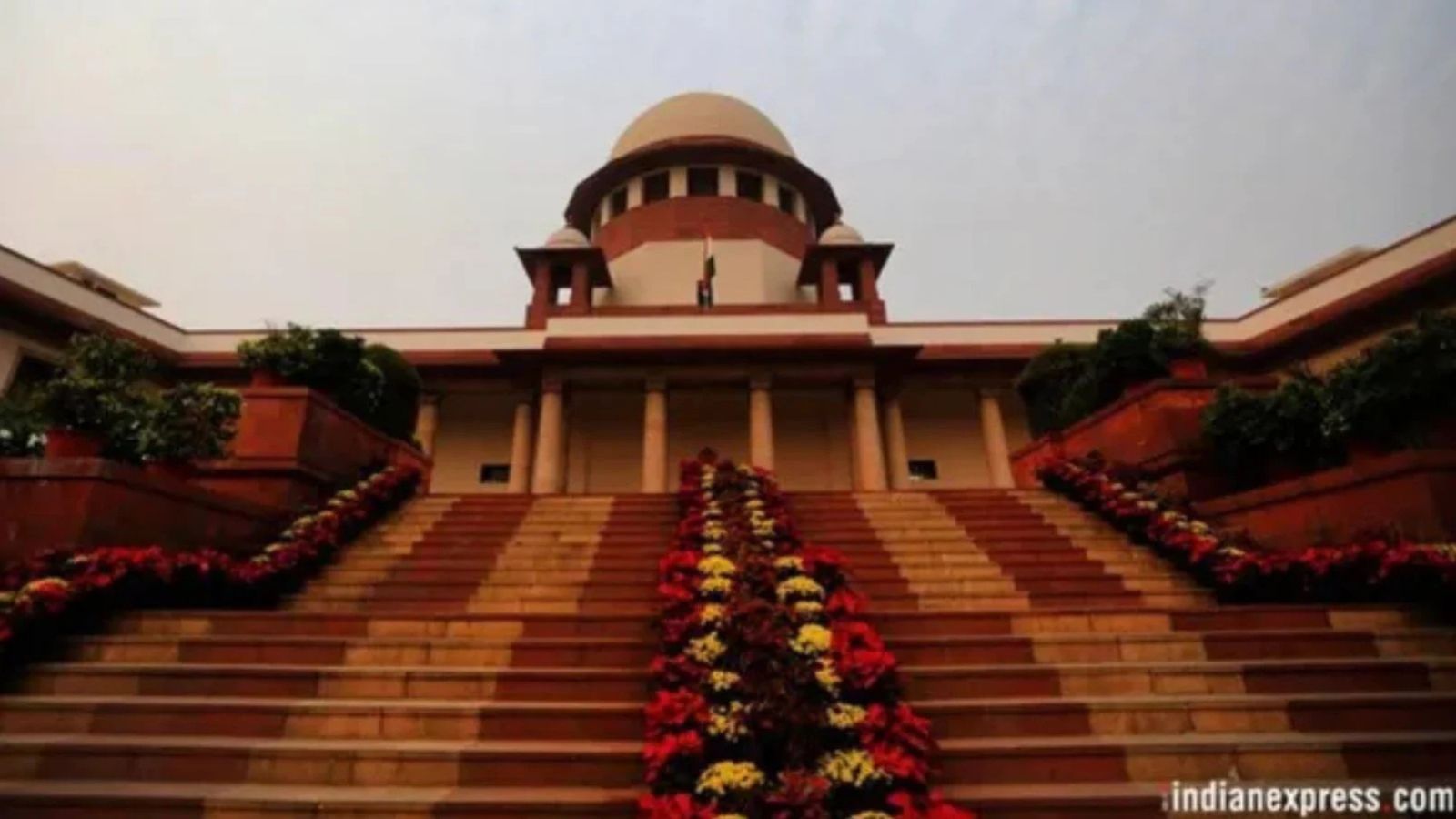
The Supreme Court ordered enhanced patrolling and strict driver verification to prevent crimes against women in Delhi. An order dated October 5 directed authorities to integrate vehicle tracking systems and close unauthorised liquor shops. The bench said, "Public safety cannot be viewed solely through the prism of a response."
The Supreme Court, which is currently monitoring measures being undertaken to prevent crime against women in the National Capital Territory (NCT), has ordered enhanced beat patrolling, strict verification of drivers and assistants engaged in public transport vehicles, effective integration of vehicle tracking devices with police emergency response system besides action against unauthorised liquor shops and establishments.
An order dated October 5, issued by a bench of Justices J B Pardiwala and K Vinod Chandran, was made available on Thursday.
The bench has on September 28 taken suo motu cognisance of incidents of alleged rape of a minor in August on a sleeper bus that travelled nearly 47 km from Greater Noida to Old Delhi's Kashmere Gate, the alleged gangrape of a 17-year-old at Astha Kunj Park in South Delhi by three men posing as policemen and an alleged gangrape and murder in Northwest Delhi last month -- had issued a series of directions for "examining the broader institutional failures" that may have led to the crimes.
Reiterating the need to strengthen preventive measures, the bench on Monday said: "Public safety ... cannot be viewed solely through the prism of a response to a crime after it has occurred. The manner in which public spaces are maintained, the visibility of police patrolling and surveillance, and the promptness with which reported deficiencies are addressed are equally relevant to crime prevention. These would simultaneously instil confidence amongst citizens and fear amongst potential perpetrators that public spaces all across the city are being effectively watched and monitored."
Read | 'Painful parallel to Nirbhaya case': Supreme Court takes note of Delhi rapes
The court said that "deficiencies which are capable of being identified and remedied ought not to be left unattended until they manifest themselves in an actual incident of crime. The objective must be to intervene at the stage at which signs of neglect or vulnerability first emerge, so that public spaces, by reason of avoidable deficiencies in lighting, surveillance and patrolling, do not create conditions conducive to disorder or facilitate the commission of crimes."
The top court also said that although solving a crime and ensuring expeditious prosecution with commensurate punishment is imperative, crime detection and prevention are equally important and this calls for constant surveillance and quick response.
Stressing on the need for real-time monitoring of police patrolling and CCTV infrastructure, through dedicated control-room command centres or "war rooms", the bench asked the Delhi Police Commissioner and the Chief Secretary to furnish a joint report on whether dedicated control room command centres of this nature currently exist within the NCT of Delhi and, if so, their exact number and the corresponding areas of coverage.
It also sought details of the protocols presently in place for real-time coordination, communication and deployment of emergency intervention once information is received by the command centres.
Stating that citizen participation is important to effectively prevent crimes, the apex court said: "Citizens are often the first to notice recurring disorderly conduct, poorly lit stretches, unauthorised establishments, abandoned vehicles, dilapidated buildings or other conditions which may affect the safety of an area."
It further asked the police and local administration to "consider instituting regular citizen-engagement meetings, under the supervision of an officer to be designated for the purpose, so that grievances may be received directly and their follow-up monitored efficiently."
The bench also said that "preventive policing must, however, become an institutional practice and not remain dependent upon individual initiative".
The court on Monday also said there was a need to prevent crimes against women and not just arrest the accused after an offence is committed, to ensure that the NCT remains safe even during late hours and asked the Delhi Police to put in place a 24-hour monitoring cell for continued surveillance in vulnerable areas.
Justice J B Pardiwala said, "... create fear in the minds of all these criminals. Something goes wrong, you are doomed. You need to prevent this at any cost".
"...there appears to be a feeling that women are not safe in the city, more particularly some vulnerable pockets of the city ... So, we need to deliberate a little ... the only concern is that the deficiencies, if any, should not lead to, should not facilitate the commission of a crime," Justice Pardiwala also said.
The court will hear the matter next on November 16.