
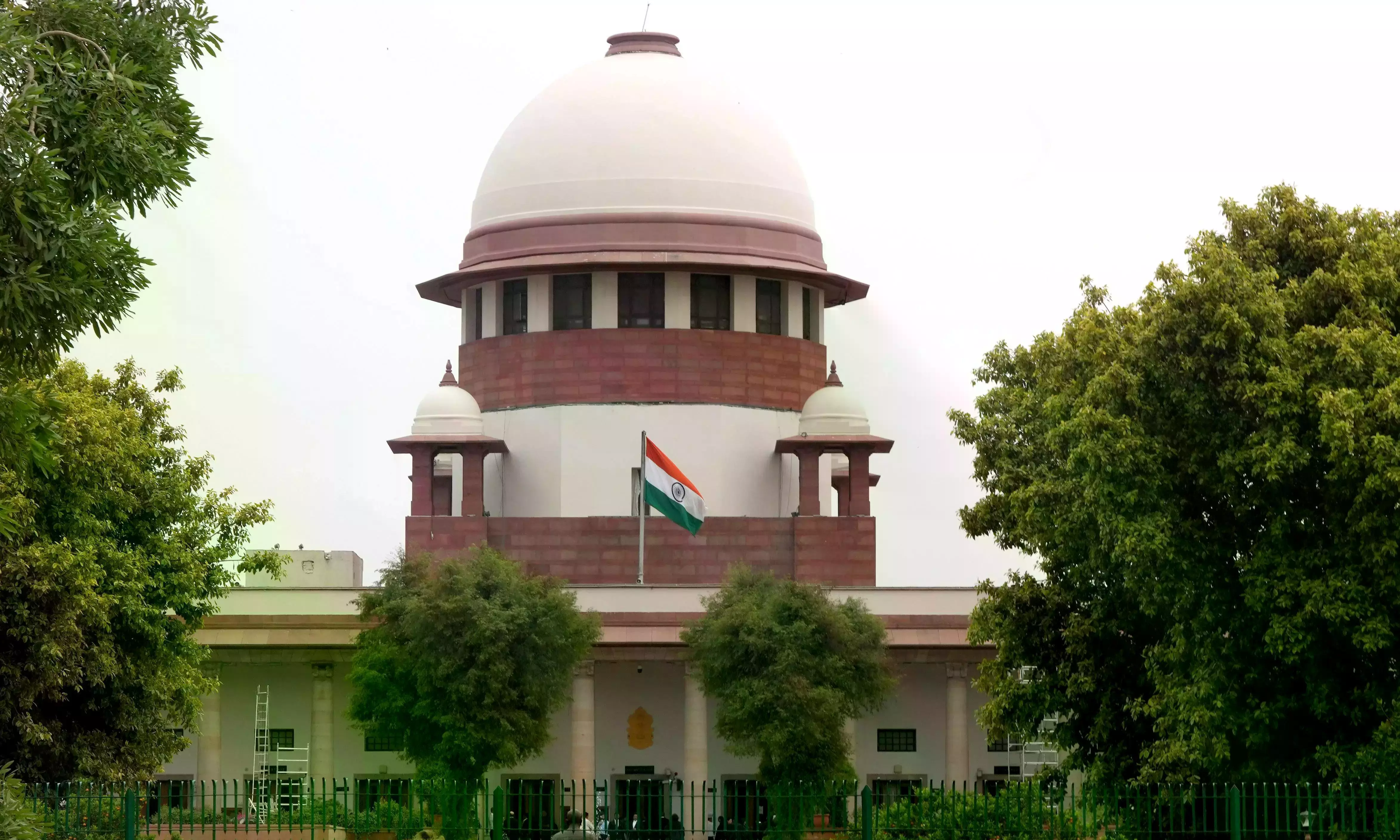
The Supreme Court on Monday agreed to list pleas seeking directions to Delhi Police to permit peaceful protests. A lawyer told the bench that students and citizens are not allowed to protest. The court said it would check if similar matters are pending before deciding on a formal hearing date.
New Delhi, Oct 5 (PTI) The Supreme Court on Monday agreed to list pleas seeking directions to Delhi Police to permit peaceful protests in the national capital.A bench comprising Chief Justice of India (CJI) Surya Kant and Justices Joymalya Bagchi and V Mohana was approached by a counsel alleging that police were not allowing citizens, students and office-bearers of registered political parties, including Members of Parliament, to hold peaceful protests.
Agreeing to list the plea for a hearing, the bench said it would ascertain whether similar matters were already pending before the court. "Delhi Police is not allowing peaceful protests. This is a very important issue. Neither students nor citizens are being allowed (to protest)," the lawyer said.
"What is the relief sought? Who is the petitioner? Is it a PIL?" the CJI asked. The lawyer said that the petitioner was seeking specific directions to ensure that Delhi Police permit peaceful protests in accordance with law.
The bench said it would examine the issue before deciding the listing. "If some similar matters are there, we will find out. We will only list it, then you argue," the CJI said.
Over the past few days, the capital has witnessed several protests by political parties and others against the Election Commission (EC) after a report by The Indian Express claimed that Election Commissioners Sukhbir Singh Sandhu and Vivek Joshi objected on record at least 14 times over the last 10 months to decisions and orders on the Special Intensive Revision (SIR) of electoral rolls that they said were issued without their knowledge or recommendation.
Under fire over the red flags raised by two of its commissioners, the EC, headed by Chief Election Commissioner Gyanesh Kumar, has asserted that differing views and observations are a normal part of deliberations in any institution and that all its orders carry full legal sanction and follow established statutory procedures.